
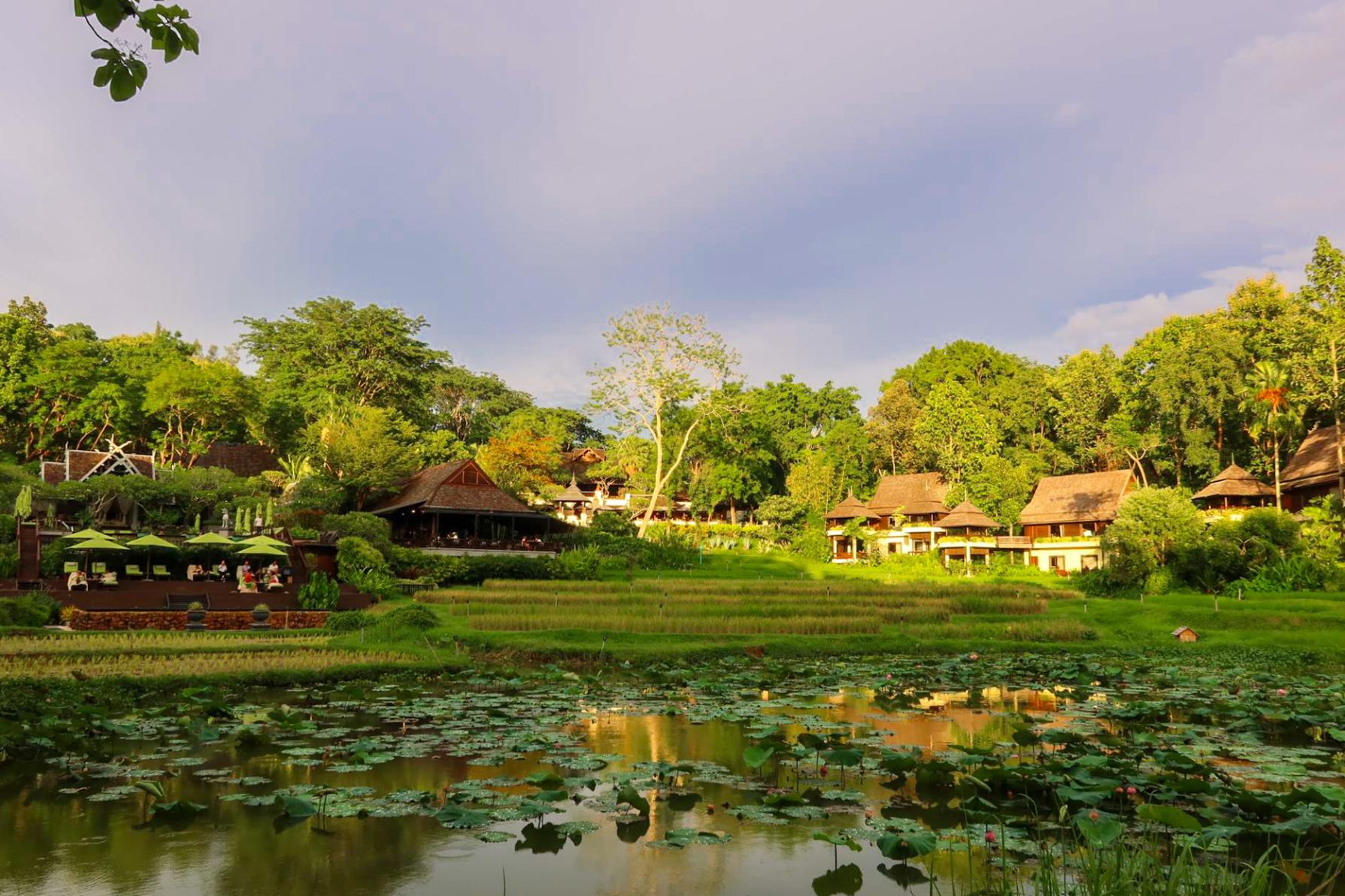
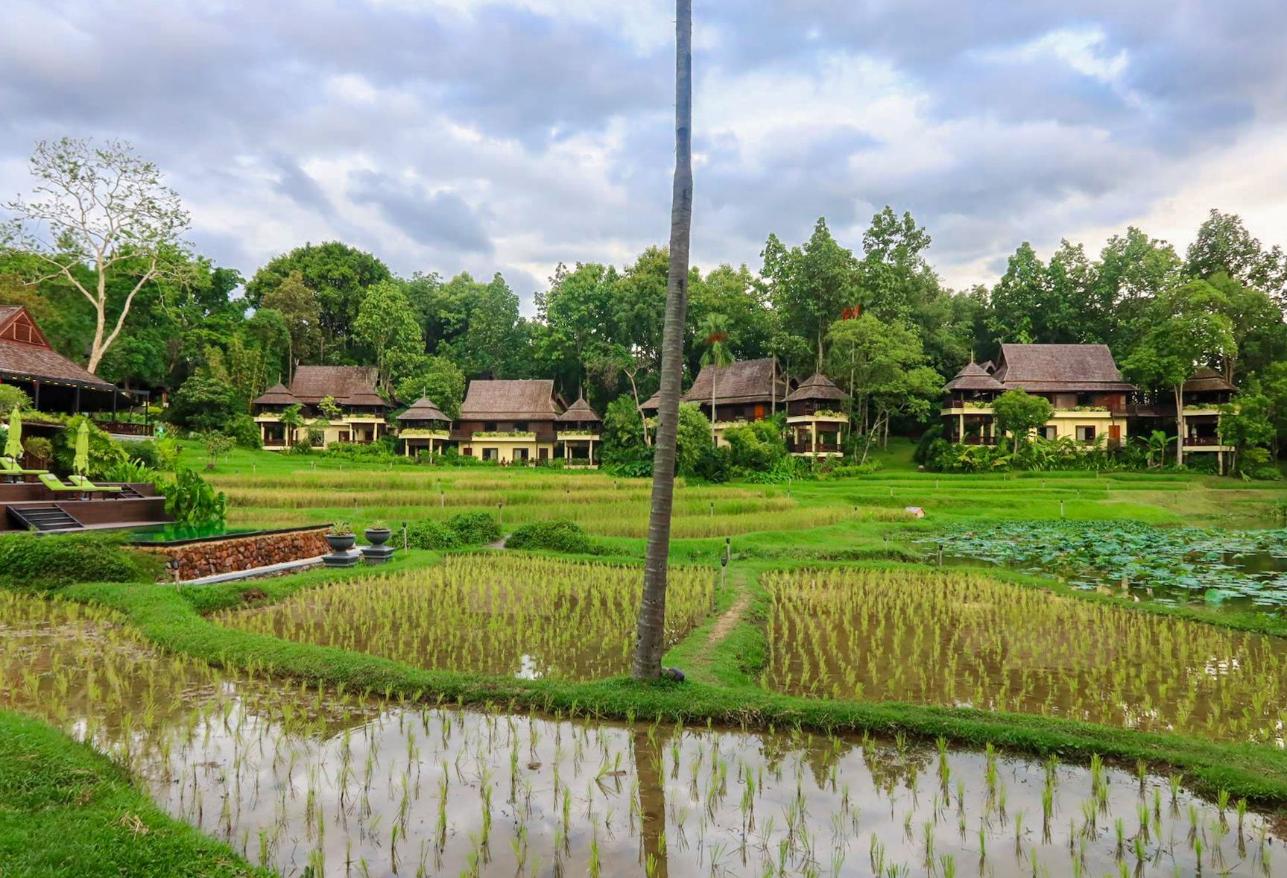
The impeccably manicured pastoral grounds (a horticultural oxymoron, if ever there was one) and tiered pool of the Four Seasons Chiang Mai have been so heavily photographed that—for someone in possession of social media and opposable thumbs—it’s virtually impossible to go in blind. And yet, stepping past the striking hand-crafted silver lantern dangling from the vaulted ceiling of the open-air lobby and looking out onto the landscaped grounds backdropped by the verdant rolling hills of the Mae Rim valley, one is overcome with a not insignificant sense of awe that even the most adroitly captured photographs and drone videos are unable to convey.
Traditional notions of wellness travel often involve ensconcing oneself in a remote locale and having every ounce of tension banished from your limbs and psyche courtesy of daily massages and meditation. However, a growing number of travellers are seeking out experiences that not only serve as an escape from urban minutiae, but immerse them within a wholly new world. Call it a result of our increasingly digital lives, but reclining on a sun lounger by the pool no longer proves effective at such — no doubt due to the palm-sized device one is likely scrolling through while doing so.
A search for meaning coupled with a desire for authentic local and cultural experiences has led to a rise in popularity for agritourism, which combines travel with a connection to the land. Proposing that the antidote to overstimulation is not to remove all stimuli and attempt to escape the world, but rather to replace it with real, hands-on experiences that serve to ground us in the world. Offering freedom and connection in equal measure, agritourism experiences like farmstays often centre on regenerative farming, giving guests the opportunity to get their hands dirty and contribute to the cultivation of fertile land, while allowing them to interact with locals and immerse themselves in the idiosyncrasies of their destination.
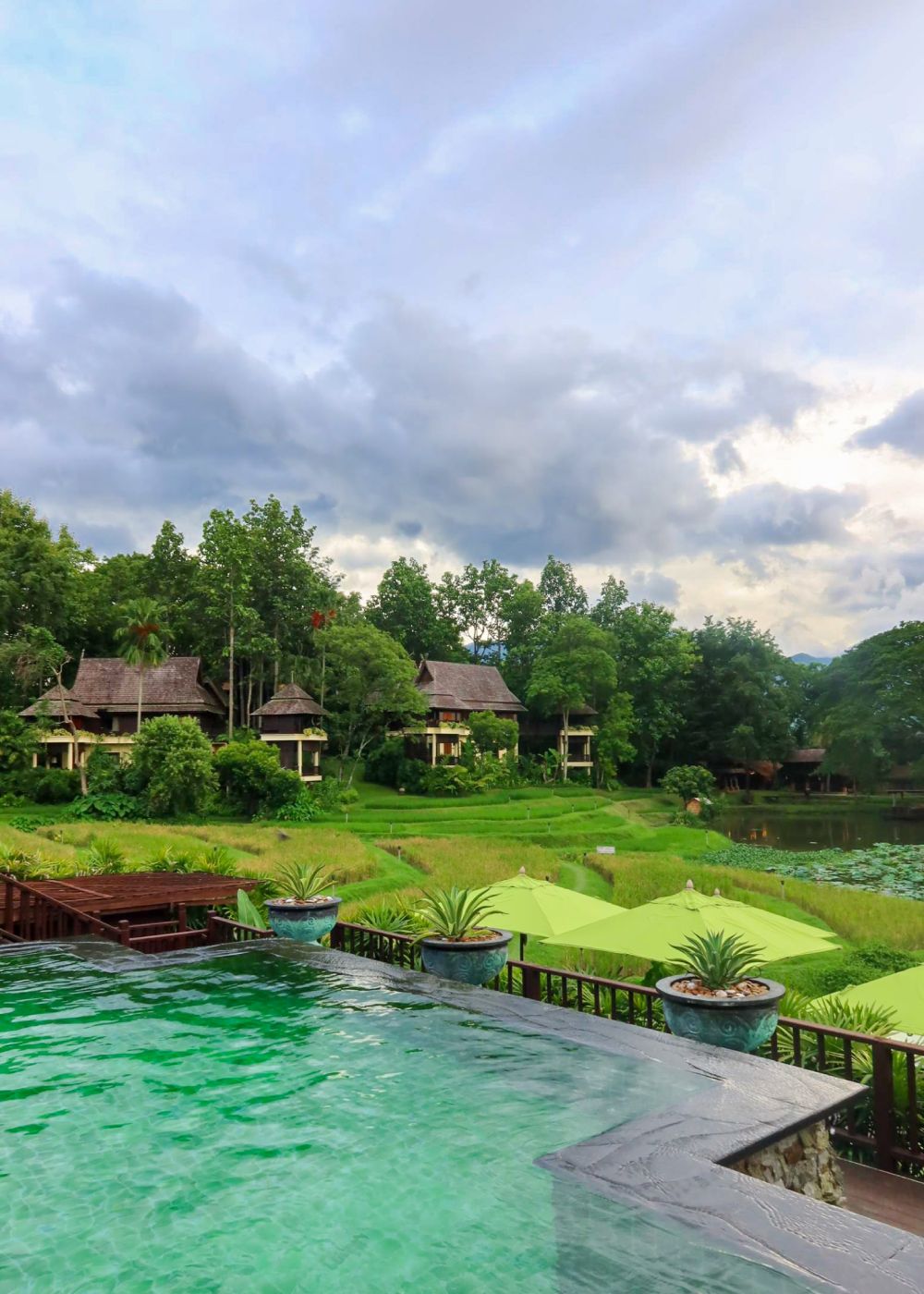
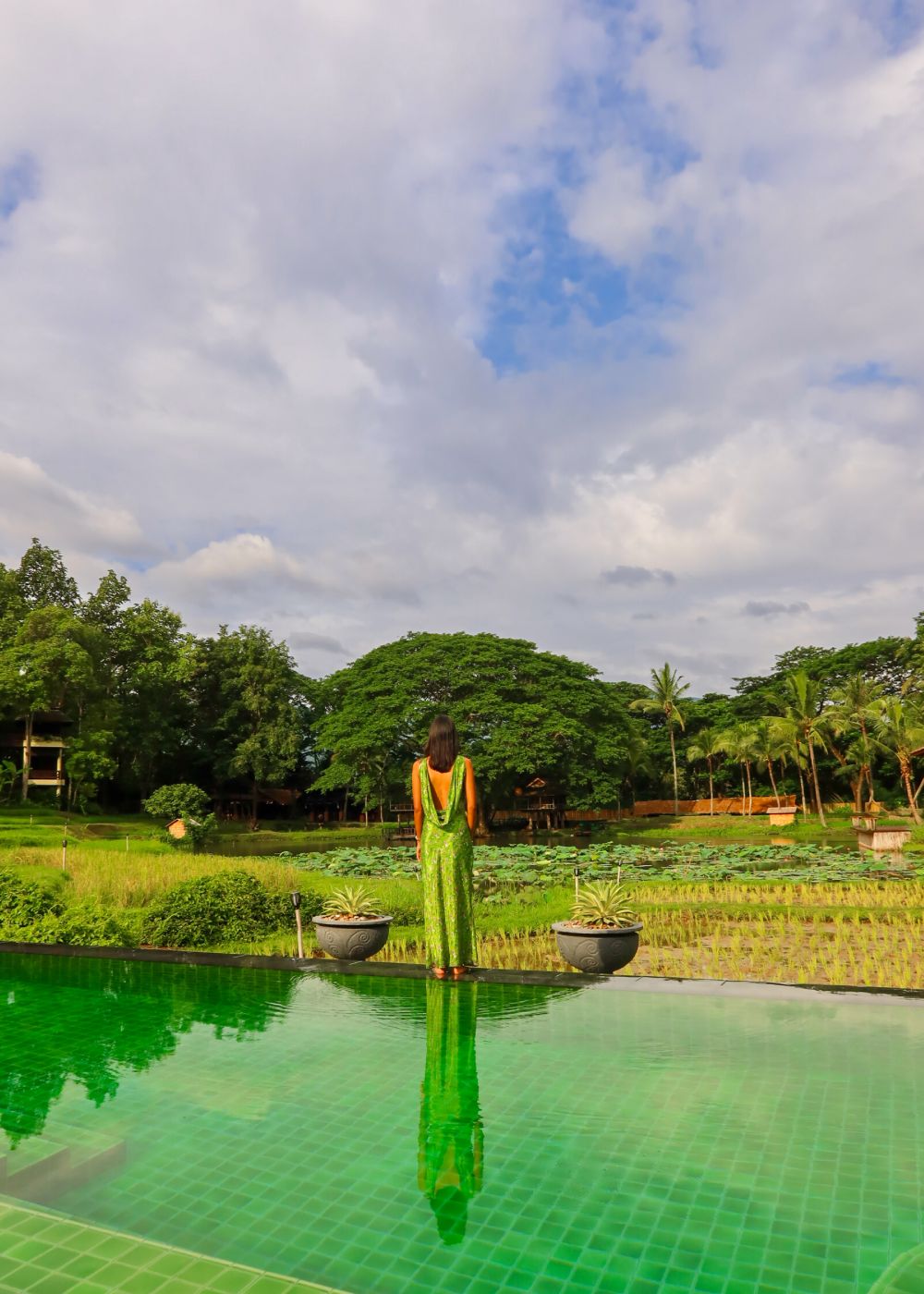
Now, the Four Seasons Chiang Mai is clearly no humble farmstay, nor does it explicitly market itself as a dedicated agritourism destination. Yet, set within endless greenery and surrounded by the Doi Suthep mountain range, the resort has crafted a microcosm of northern Thailand that extends beyond the visual and invites guests to engage in traditional rural farm life. Cynics may question how authentic an agrarian experience delivered by a multinational company really can be — and fair play to them. To be sure, it’s unlikely the average northern Thai farmer bookends their day planting rice with a full-body massage or a potter retreats to the comfort of a cloud-like bed within a pavilion appointed with heritage Thai silks after a long session at the wheel. But for the average well-heeled traveller for whom creature comforts are something of a necessity, the deviation from absolute authenticity is a welcome one.
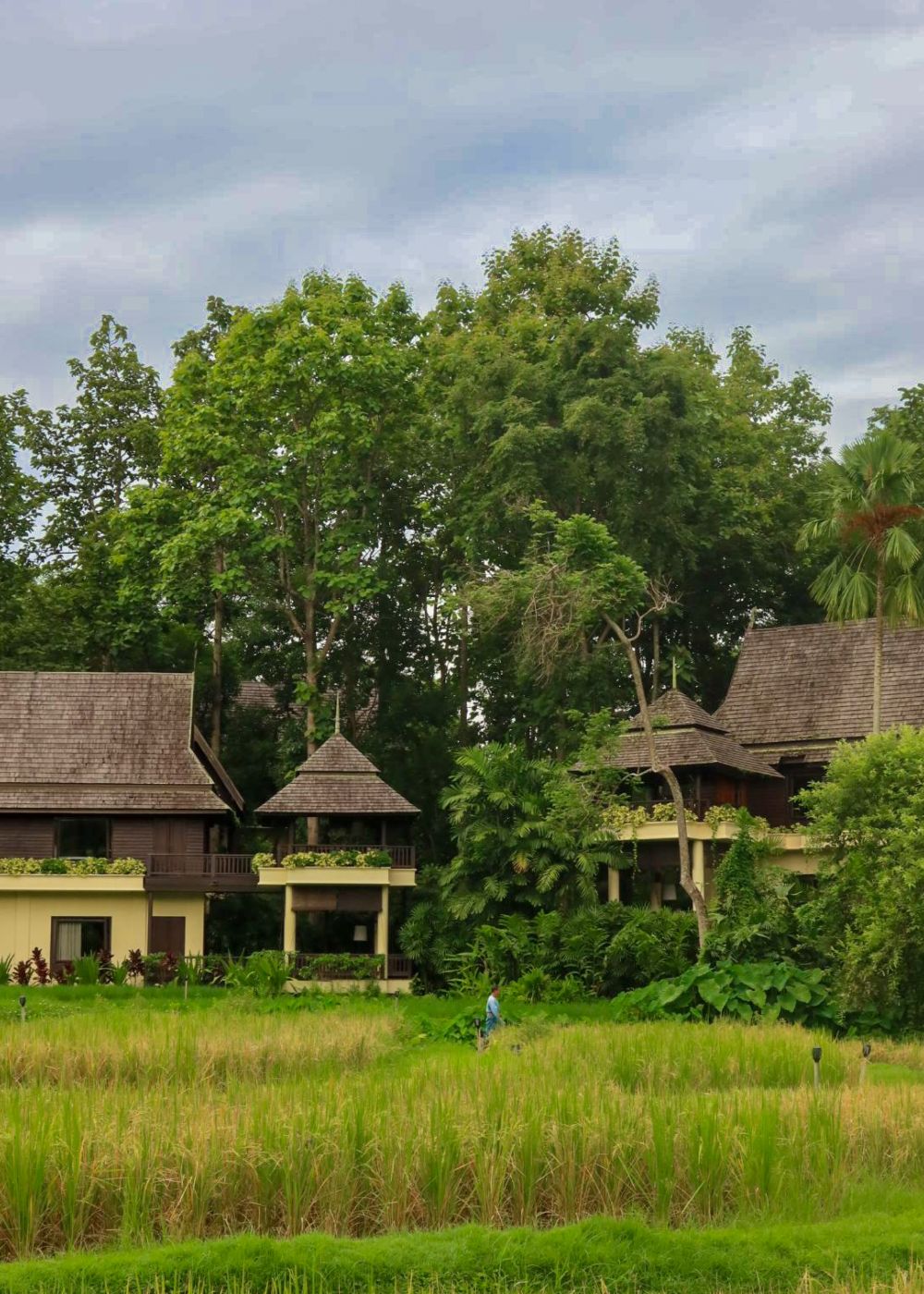
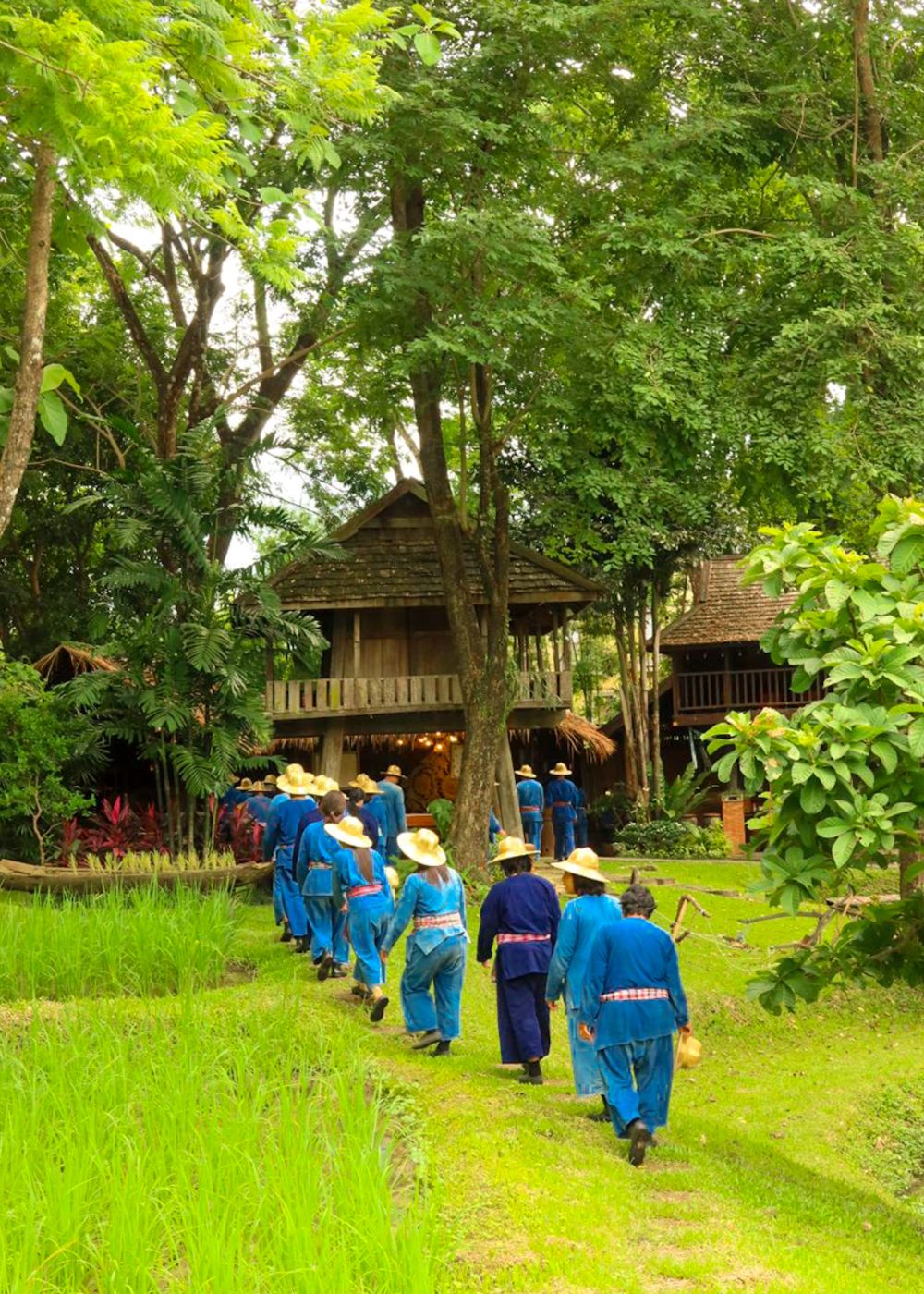
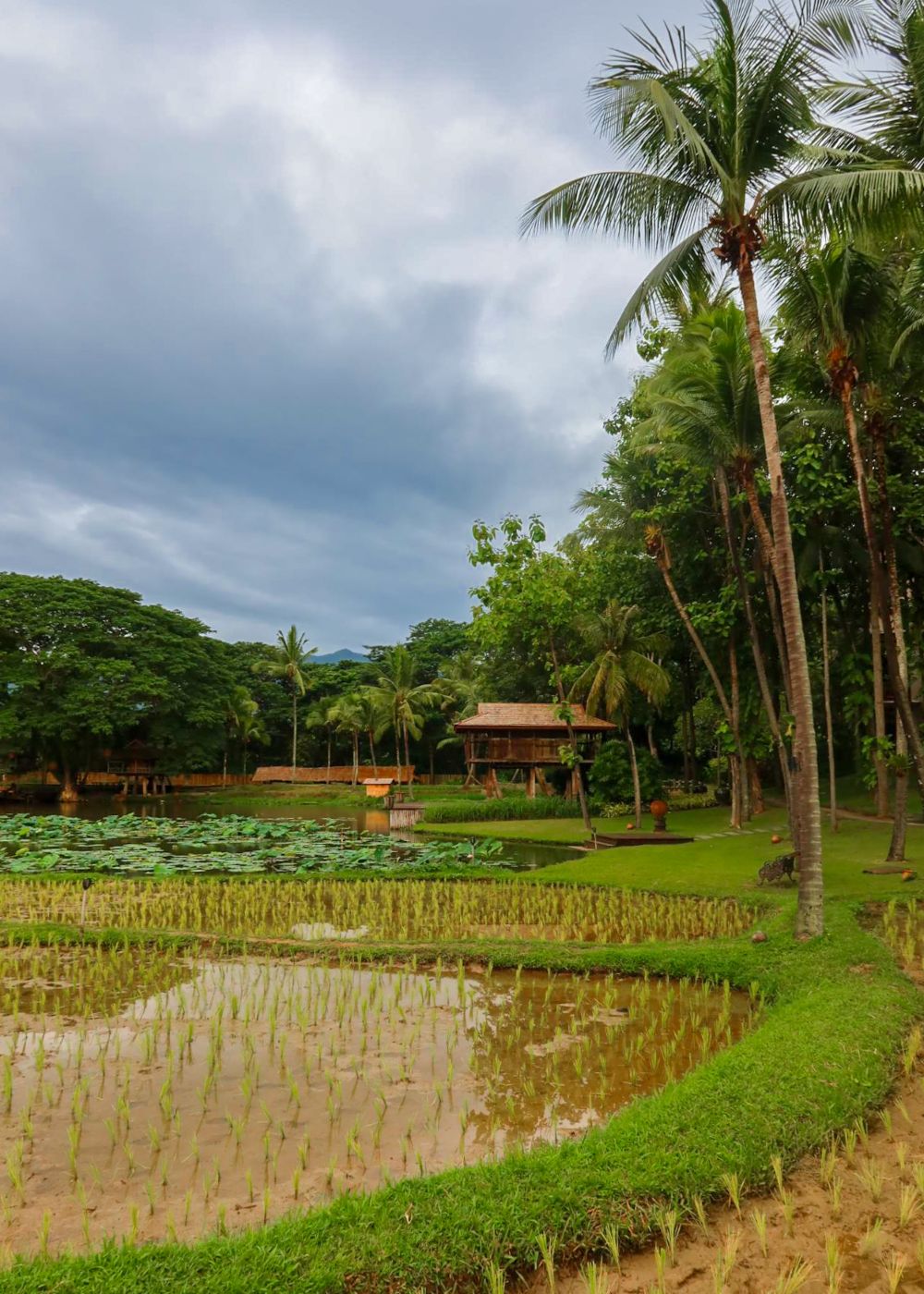
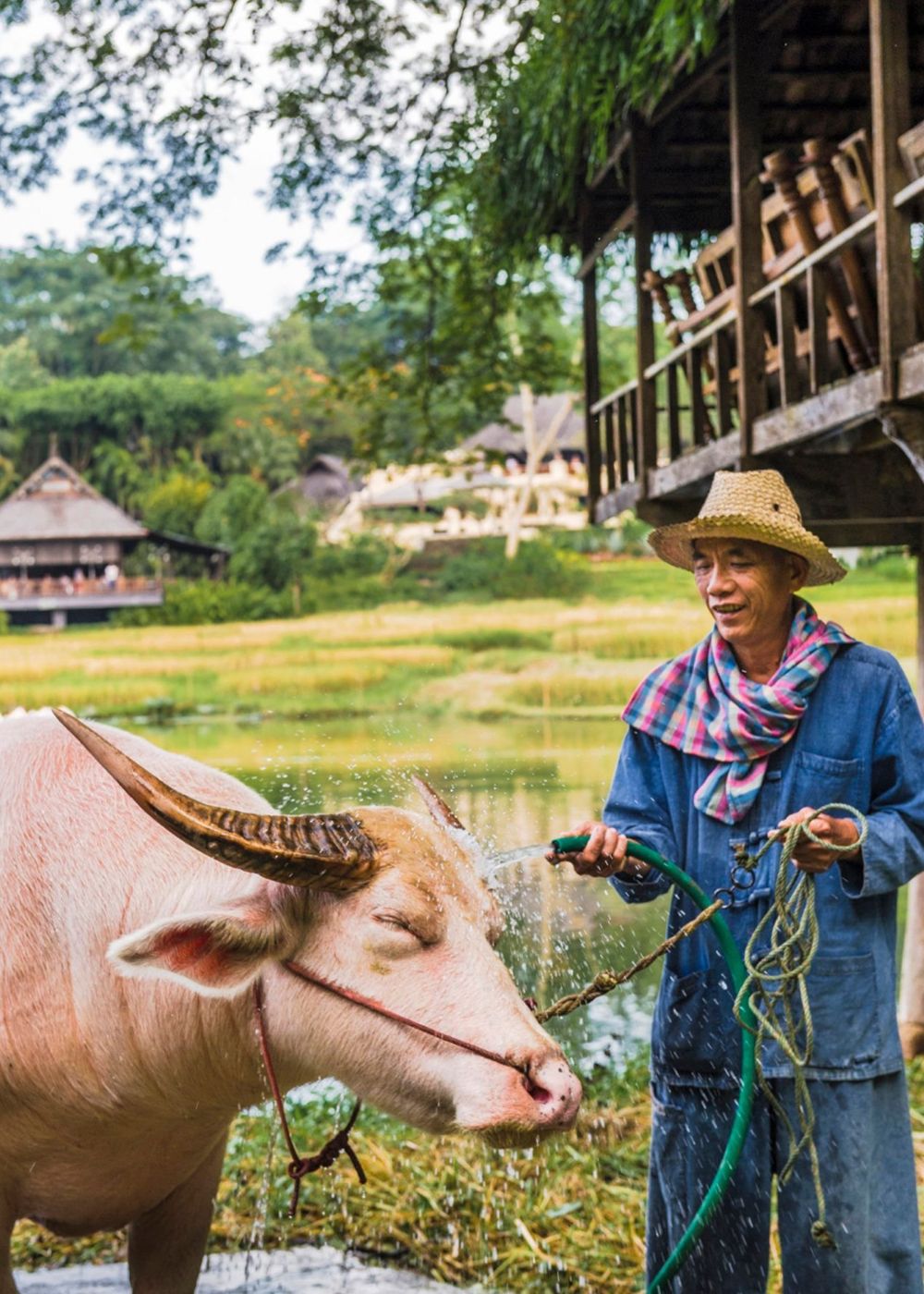
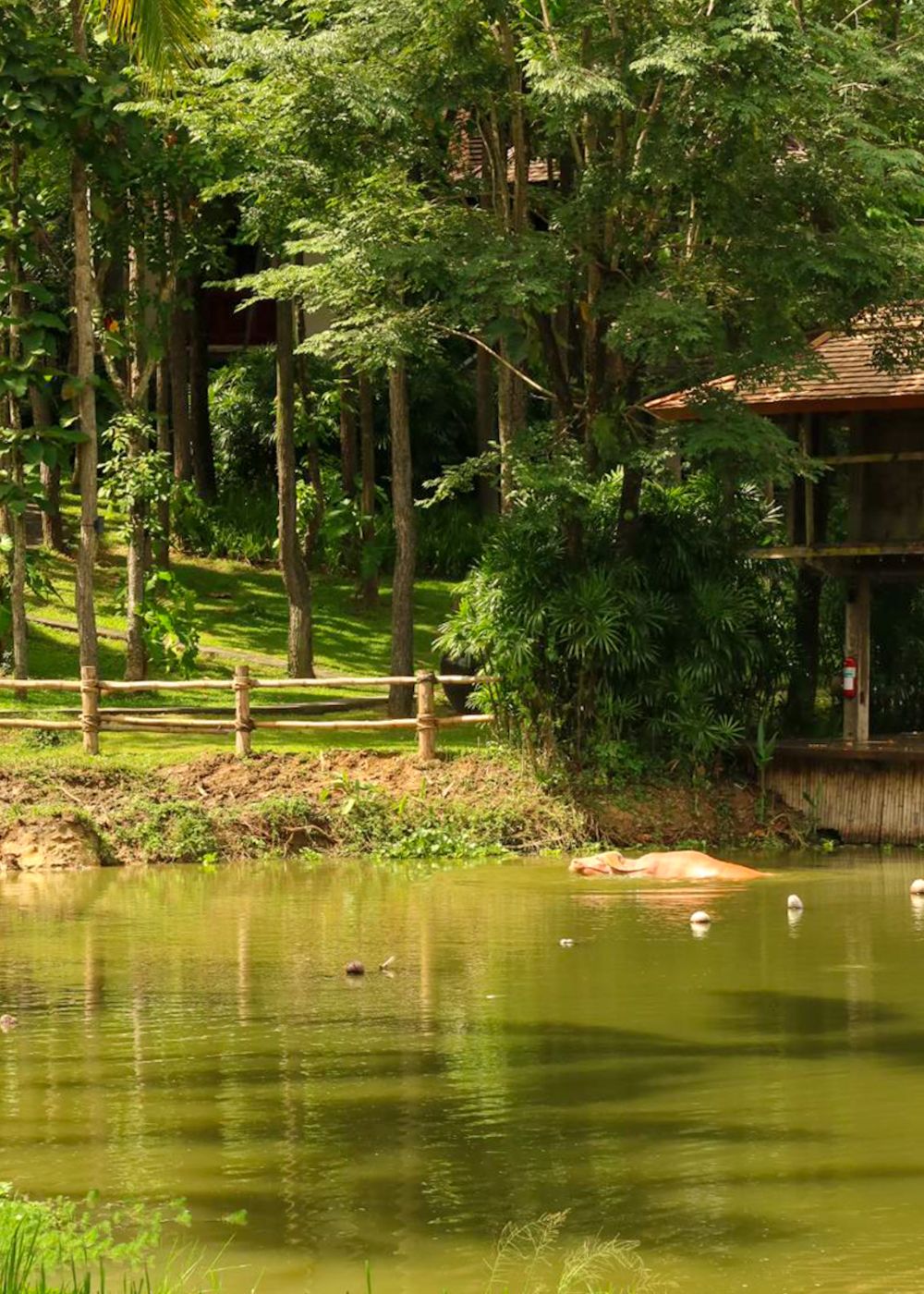
Authenticity is retained where it matters. The lush rice paddy fields form part of the working farm that employs local farmers and donates a portion of the rice cultivated on the property to local charities; here, guests can dress in a mor hom—a traditional Thai farmer’s outfit—and join the resident duo of water buffaloes in the centuries-old tradition of rice planting. Afterwards, help the hard workers hose off, with water buffalo bathing taking place every afternoon.
In the Chaan Baan—styled to resemble a traditional Thai farmer’s house with its stilt construction, indoor-outdoor connection, and thatched roof—Chiang Mai’s longstanding association with traditional Thai handicrafts is celebrated, with local creatives teaching natural indigo tie-dyeing and the soothing art of pottery. Should your efforts at the pottery wheel yield a result more akin to an amorphous blob than a cup or plate, the in-house boutique has a number of covetable handmade artisanal ceramics from local artisans and studios.
A little manual labour is all the more worth it when there’s a lucullan repast to be had at its conclusion, and the private cooking class at Rim Tai Kitchen makes you work for your feast. Despite typically being averse to organised cooking classes, the one at the Four Seasons Chiang Mai is both culturally and sensorially enriching, and was our favourite activity during our stay.
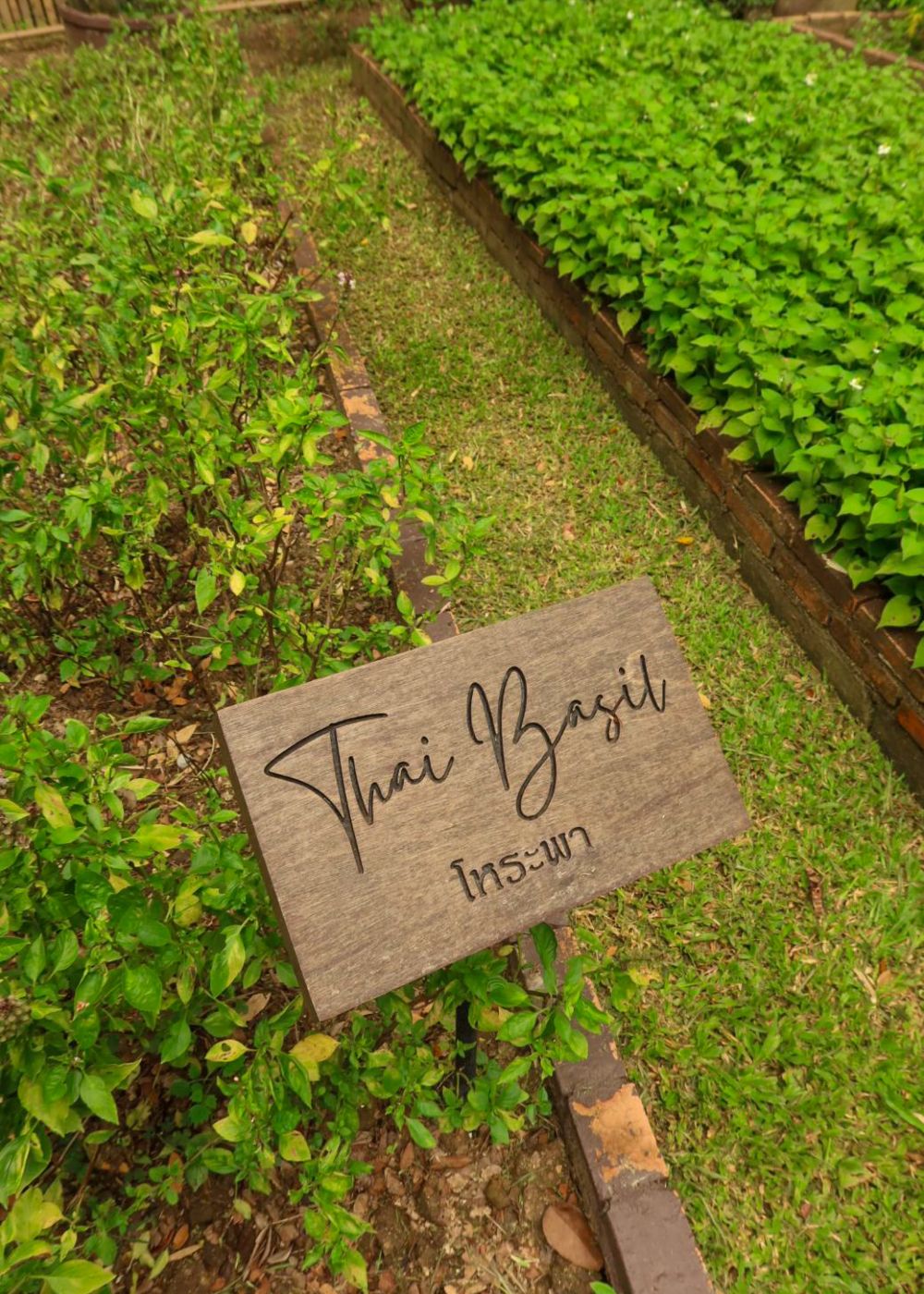
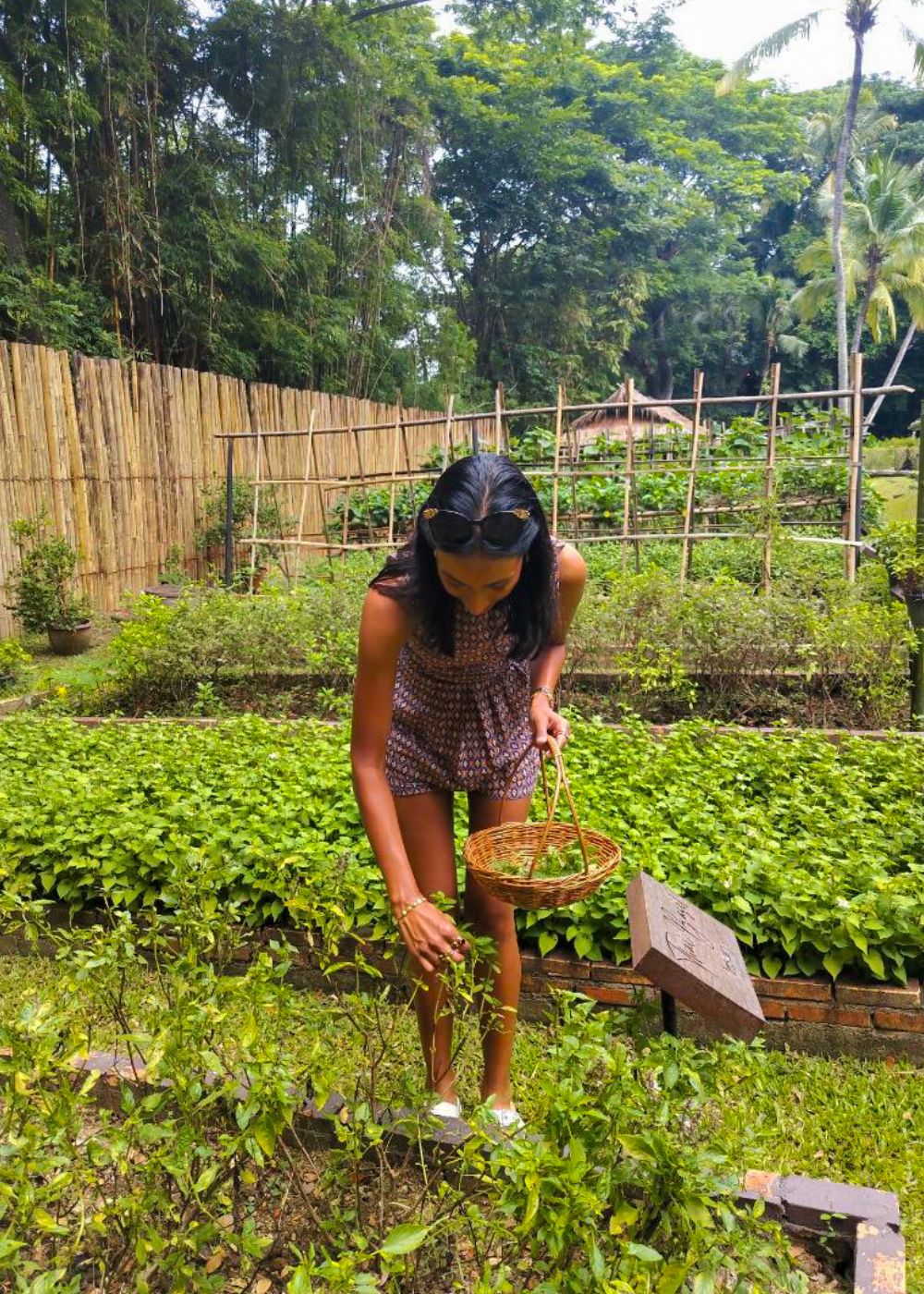
Led by the gregarious Chef Tor, our private cooking class began at the herb garden, with some necessary education on the foundations of Thai cooking. Wicker baskets laden with kaffir lime leaves, lemon grass, Thai coriander, sweet basil, and chillies, it was back to Rim Tai Kitchen. Before any slicing or sauteeing could take place, we were led to the Spirit House to give an offering to the elders (affectionately referred to by Chef Tor as “grandma and grandpa”) and receive a blessing in return, lending a sacred sense of gravitas to the occasion.
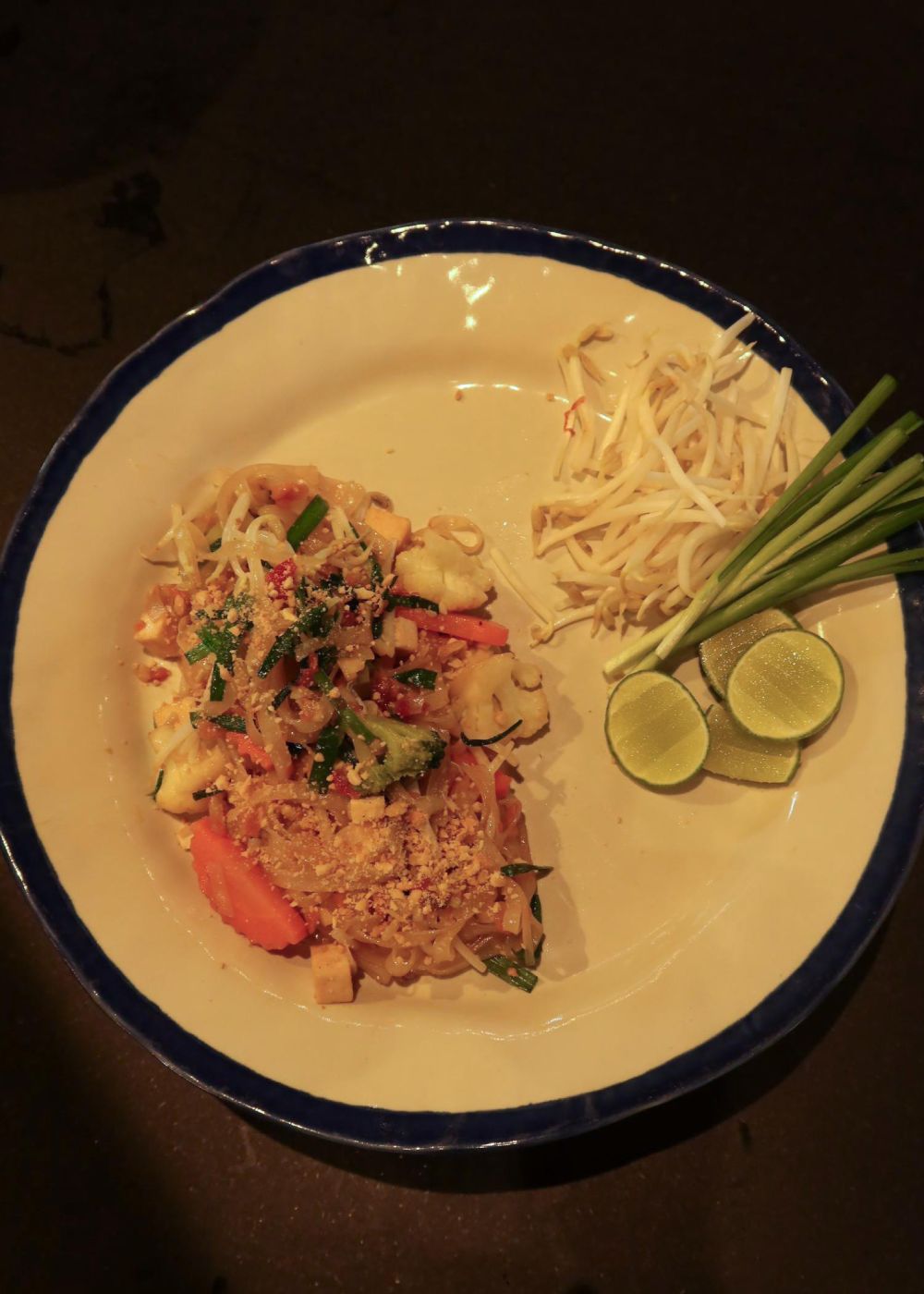
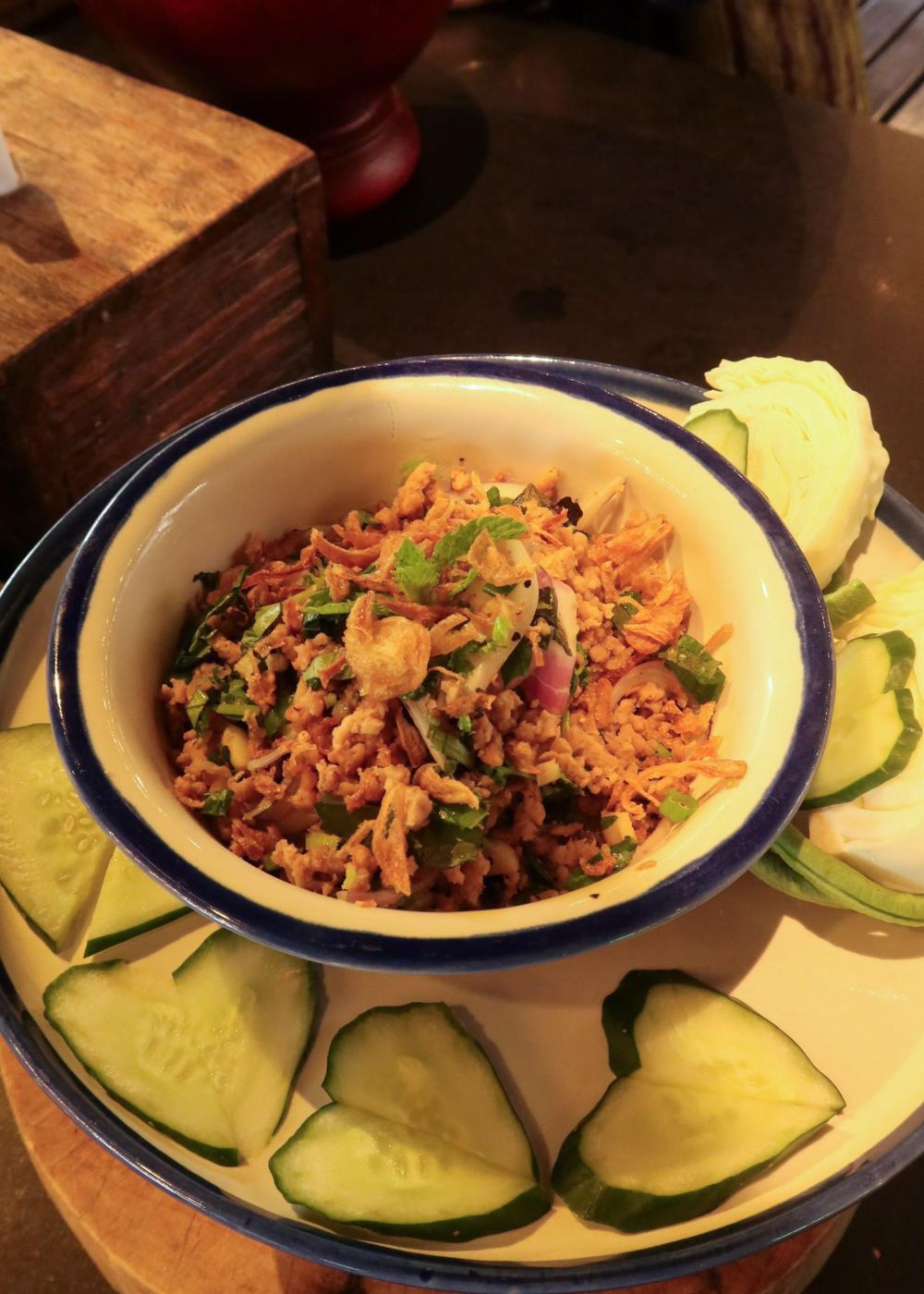
There are a variety of cooking classes on offer (think contemporary, street food, curries, and classics), however the most appealing is the ‘Tour of Thailand’ set, which takes a gustatory journey around the country with dishes from the northern, southern, and central regions (with the menu modified to cater to vegetarians). Three hours and four courses later, we sat down to a lunch of gaeng leung malagor pak (southern style spicy green papaya curry), tom zaab e-san pal (north-eastern style spicy vegetable soup), larb muang (northern style spicy minced tofu salad), and phad thai jae (vegetarian pad thai), each dish made all the more satisfying by the fact that we’d prepared them ourselves.
To be clear, not all of the activities at the Four Seasons Chiang Mai involve getting your hands dirty. The resort has traditional wellness offerings in spades, with the palatial Wara Cheewa spa home to a comprehensive suite of treatments that unite cultural wisdom with new age techniques. Our herbal compress massage harnessed the benefits of local botanicals to soothe the senses and alleviate muscular tension, while a subsequent reiki session aimed to rebalance the body’s energy — though the efficacy of the latter is heavily reliant on one’s own belief in the modality.
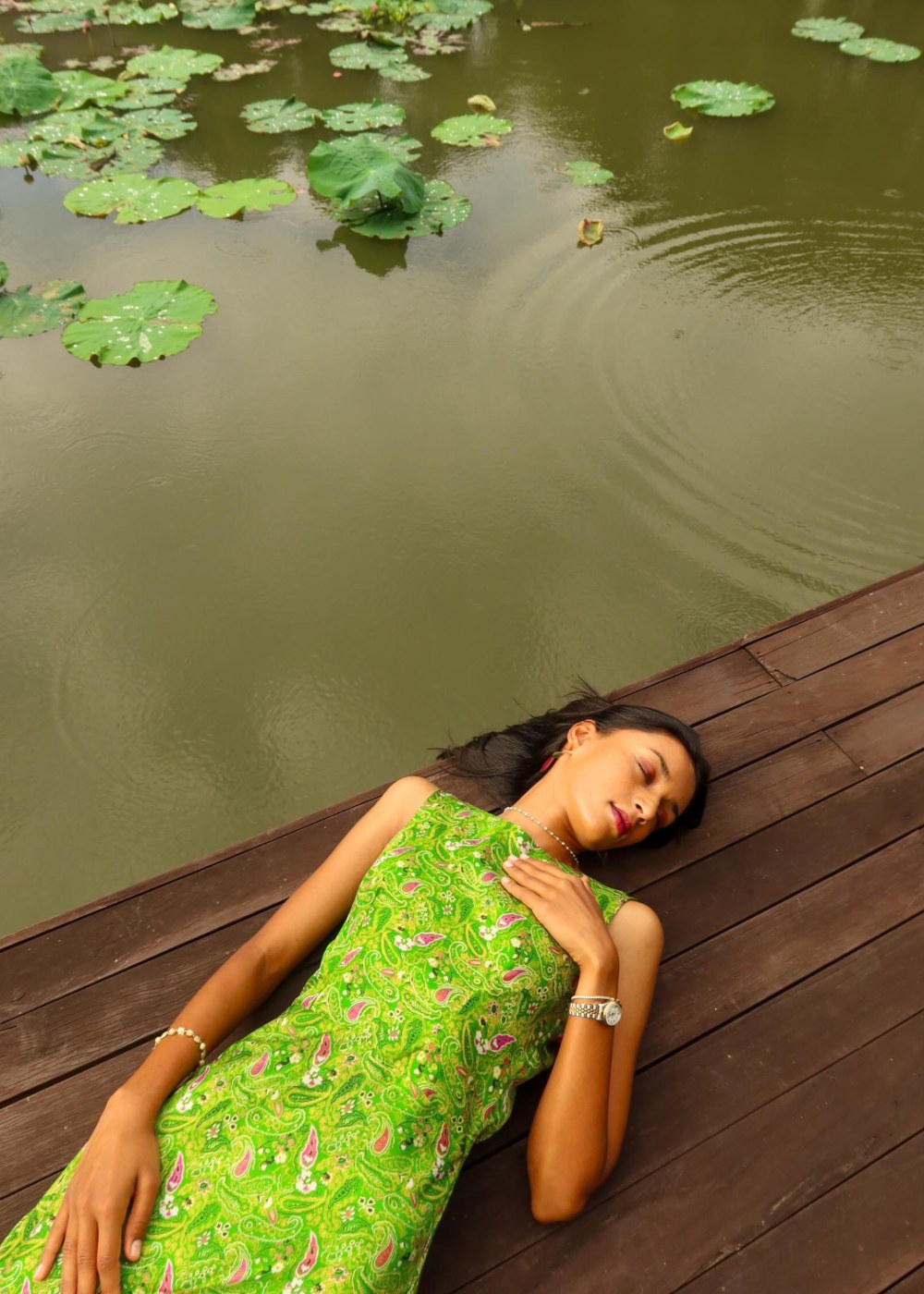
Proposing a form of wellness that’s active rather than passive, the Four Seasons Chiang Mai shows guests salvation through action and engagement rather than endless rest and detachment. But, a full-body oil massage and eight hours of uninterrupted sleep in those deliciously soft Supima cotton sheets doesn’t hurt either. It’s all about balance.
Read on for our full review of Four Seasons Chiang Mai.
The lowdown: Four Seasons Chiang Mai
The hook; why stay at Four Seasons Chiang Mai?
The Four Seasons Chiang Mai offers the chance to get your hands dirty and experience facets of rural living—albiet through an idealised lens—before retreating into unparalleled comfort. Throw in a trio of appealing dining options, and it’s a microcosmic environment you’ll be reluctant to leave.
How to get there
Four Seasons Chiang Mai is located in Mae Rim, a district in the central part of the Chiang Rai province. It’s around a 35-minute (21km) drive from the Chiang Mai city centre or a 40-minute (23km) drive from Chiang Mai International Airport.
Design and architecture
The Four Seasons Chiang Mai unfolds across 32 acres, with the immersive design the result of close collaboration between Bill Bensley of Bensley Design Studios, Chiang Mai Architects Collaborative, Bunnag Architects, and interior design firm Abacus Design.
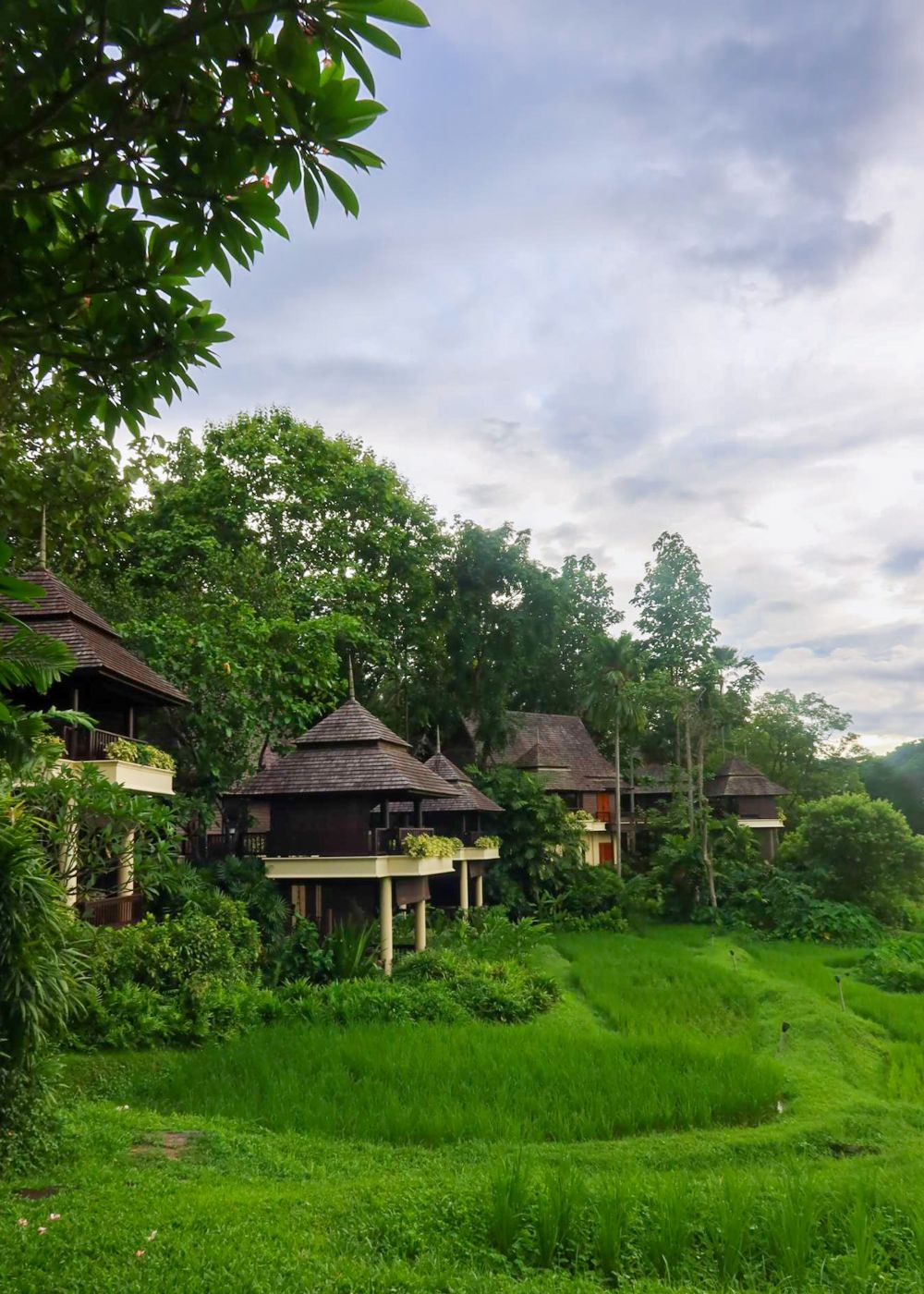
Nestled within the Mae Rim valley, the forested mountains surrounding the Four Seasons Chiang Mai serve double duty as an aesthetically pleasing backdrop while bestowing the resort with a welcome sense of seclusion from the outside world.
The landscaping shapes and sets the tone for the resort, with the Four Seasons Chiang Mai marking Bill Bensley’s first resort garden design, with the acclaimed architect, interior designer, and landscape designer having revisited the space several times since its opening in 1992 to ensure it remains consistent with the overarching concept.
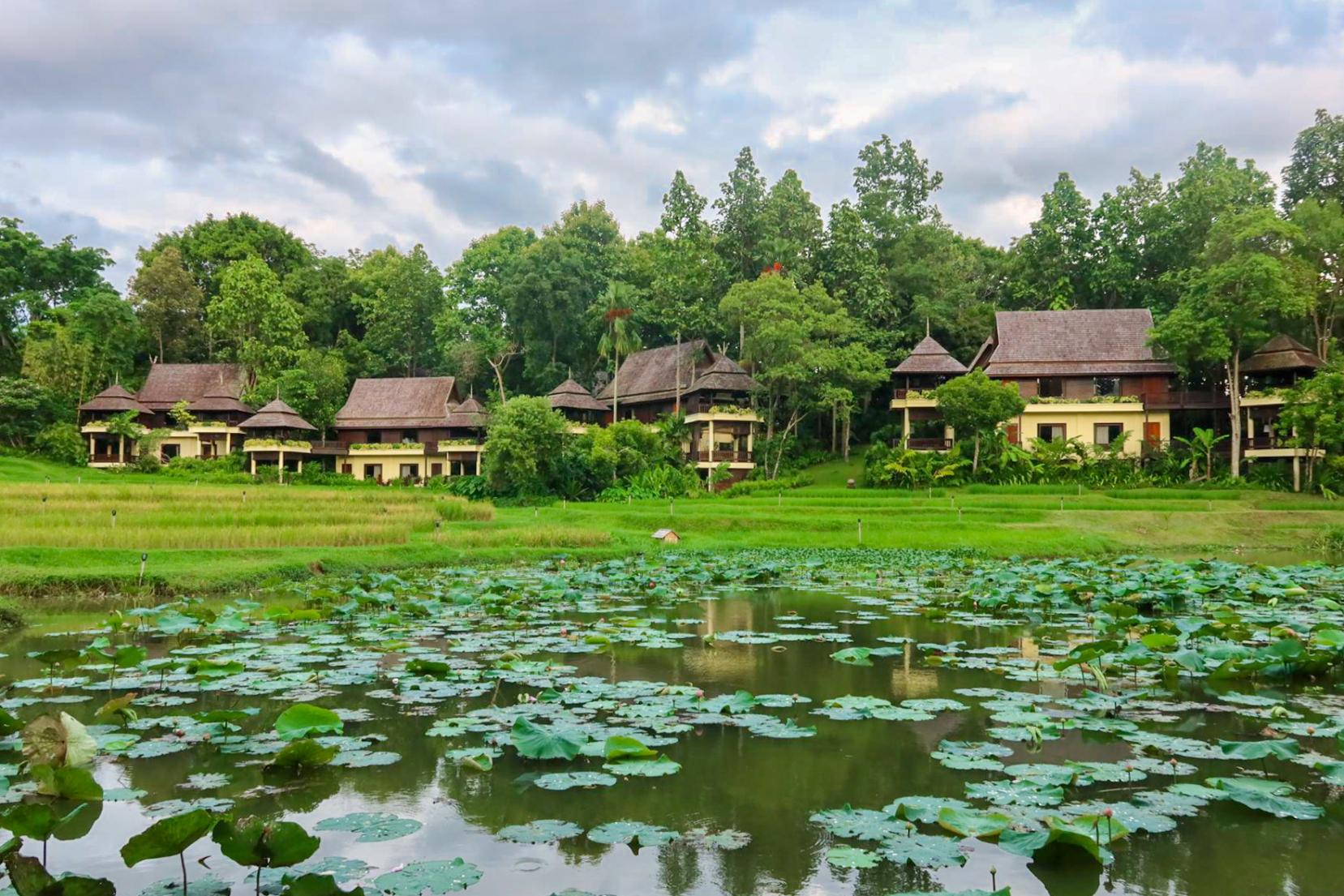
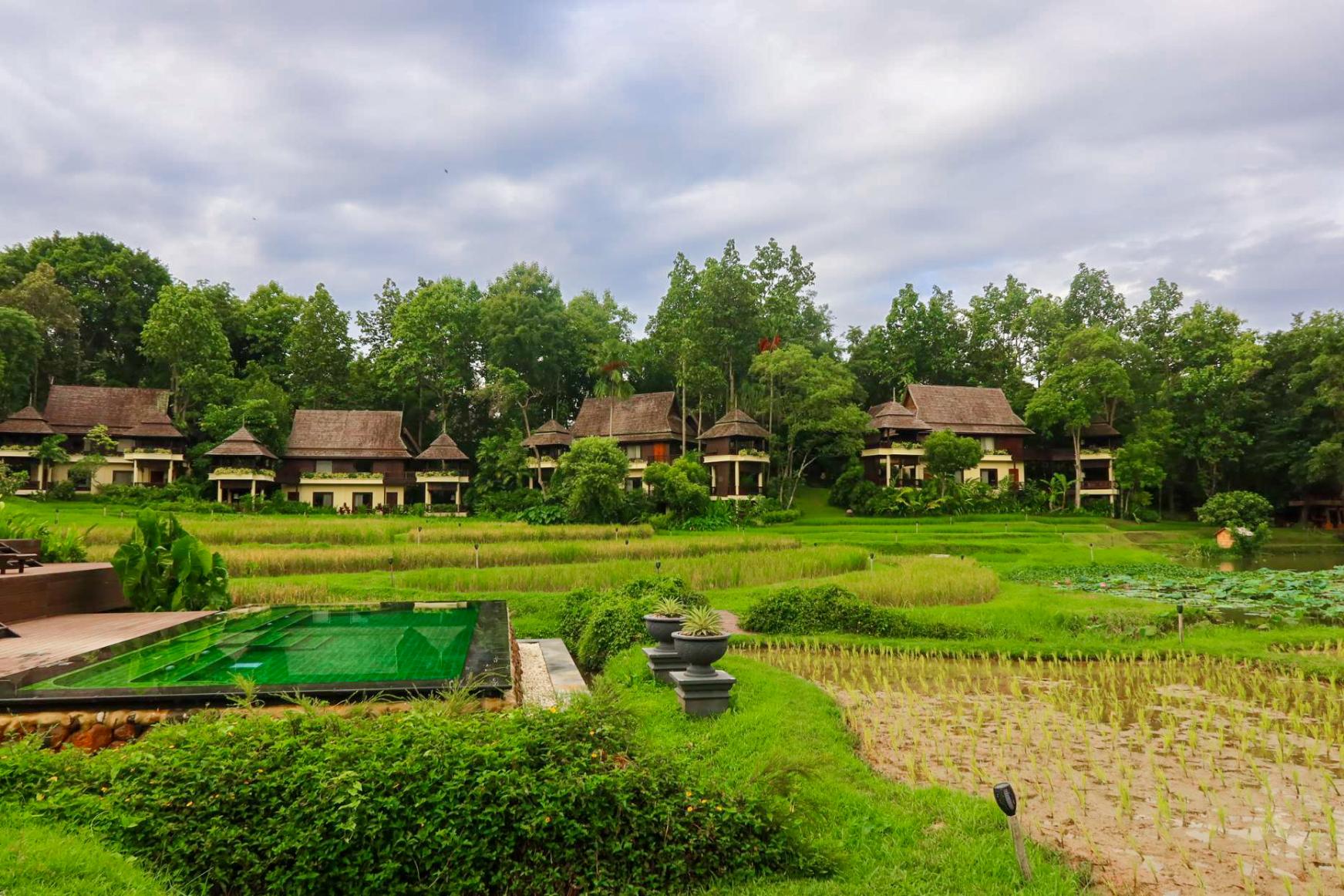
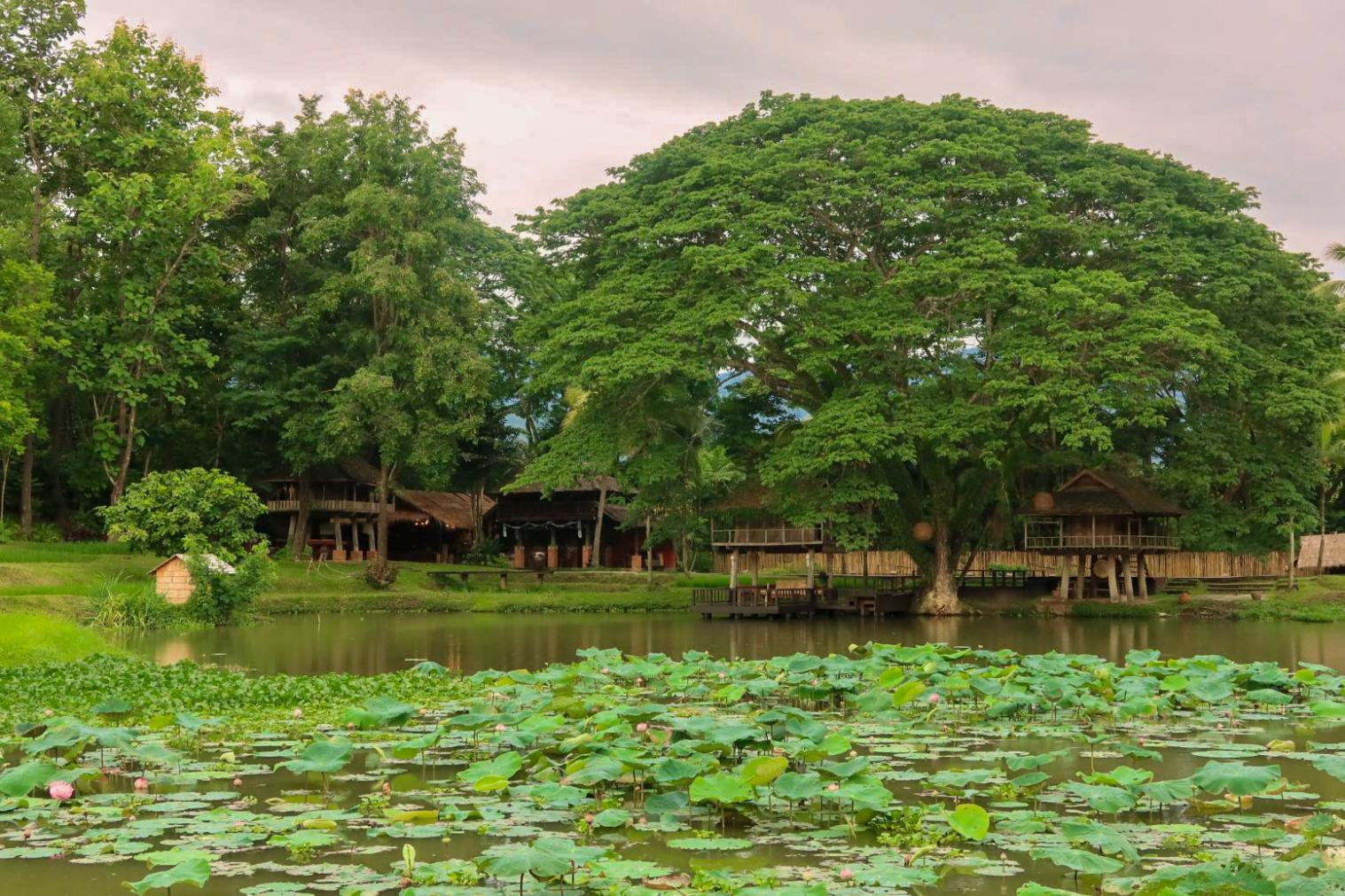
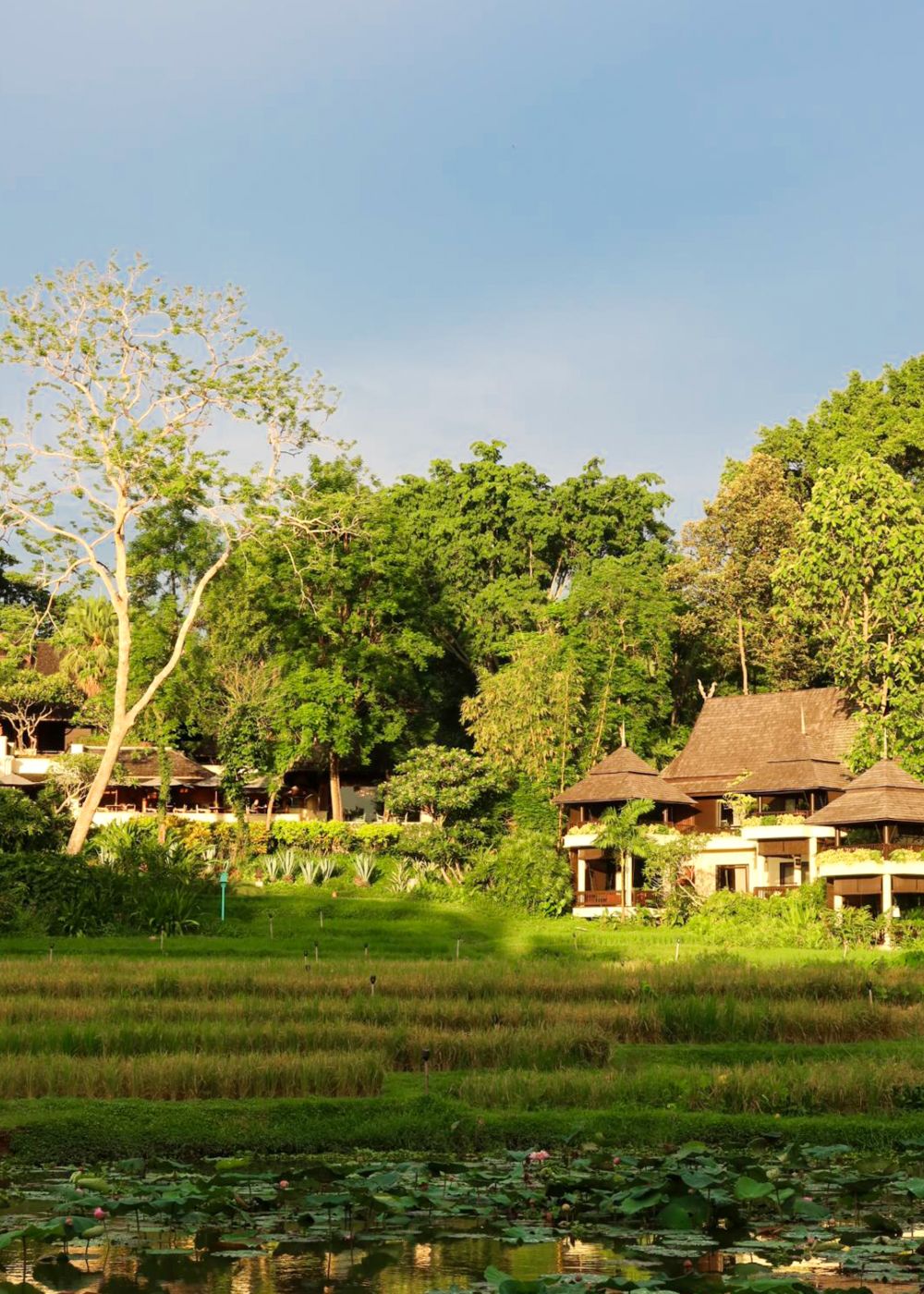
Designed to blend into the surrounding landscape, the Four Seasons Chiang Mai looks to the ancient Lanna Kingdom, with this inspiration suffusing the landscape, architecture, and interior design. Working rice paddy fields—complete with a duo of hard-working water buffaloes—sit at the heart of the resort, with the gardens and built environment radiating outwards. Evocative of a small rural Thai farming village, the rice fields are surrounded by a lush subtropical jungle, with volcanic stone paths weaving between villas and bridges and wooden footbridges set over streams and rivulets.
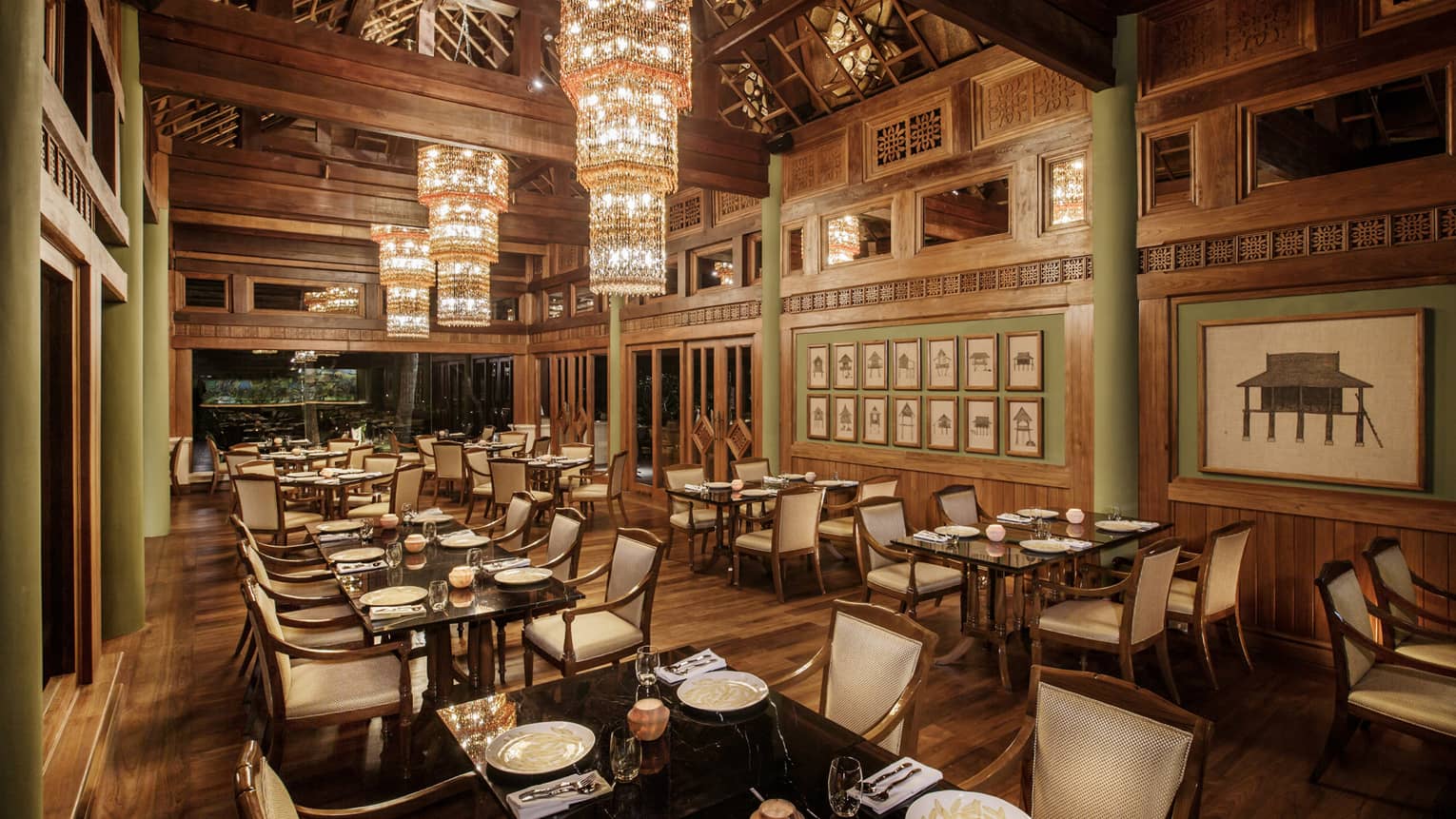
Bensley Design Studios is also responsible for the design of the resort’s restaurants, North and Khao, and the cooking school, Rim Tai Kitchen. Holding court in the centre of the resort, overlooking the rice paddy fields and pool, Khao serves up modern takes on northern Thai cuisine, but the decor is old world Thai opulence. Sage green accents complement the warm wooden interiors, with dramatic crystal chandeliers, carved wood latticework, and high-backed upholstered chairs, with floor-to-ceiling windows offering views of the rice paddies and mountains beyond.
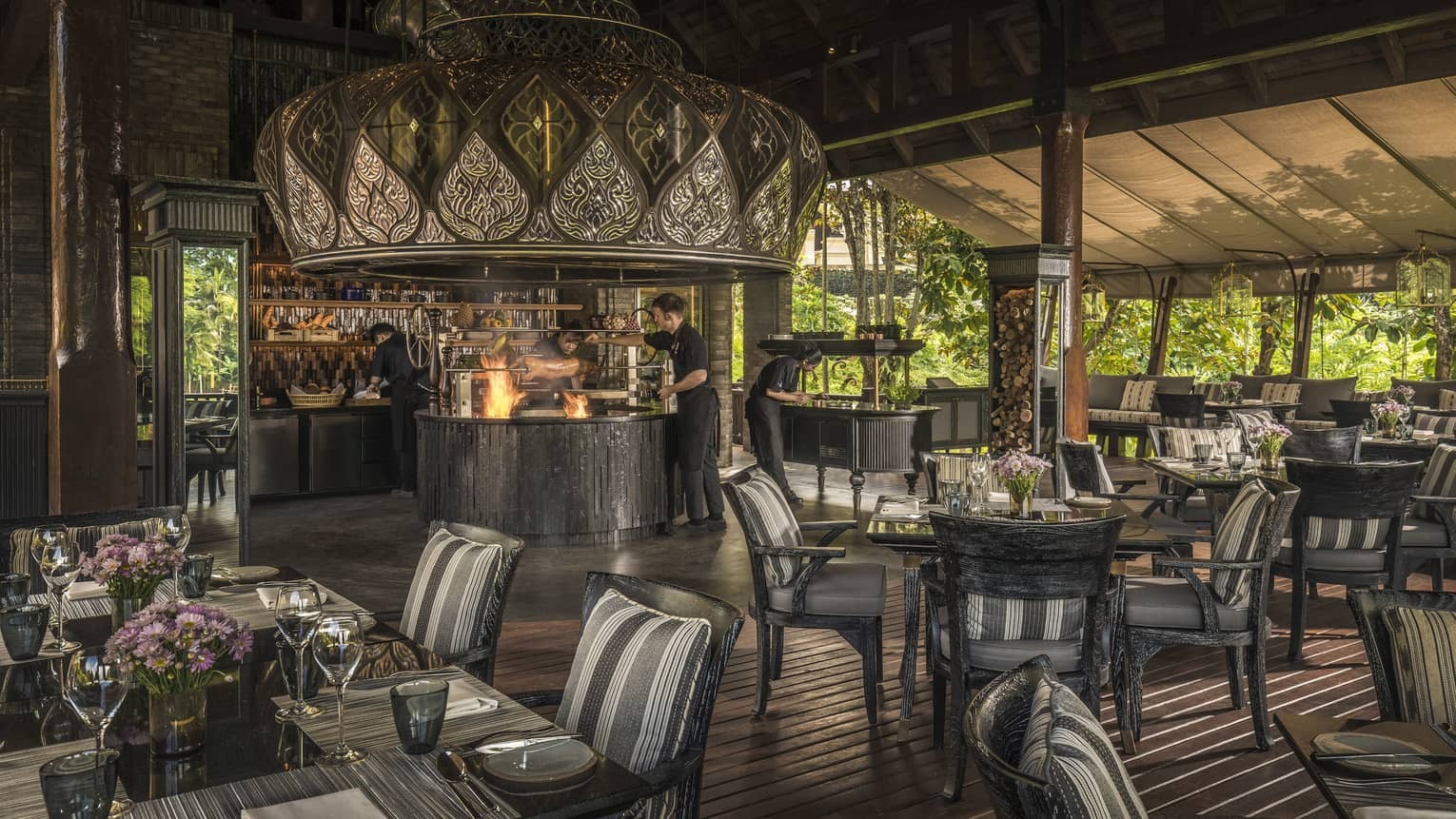
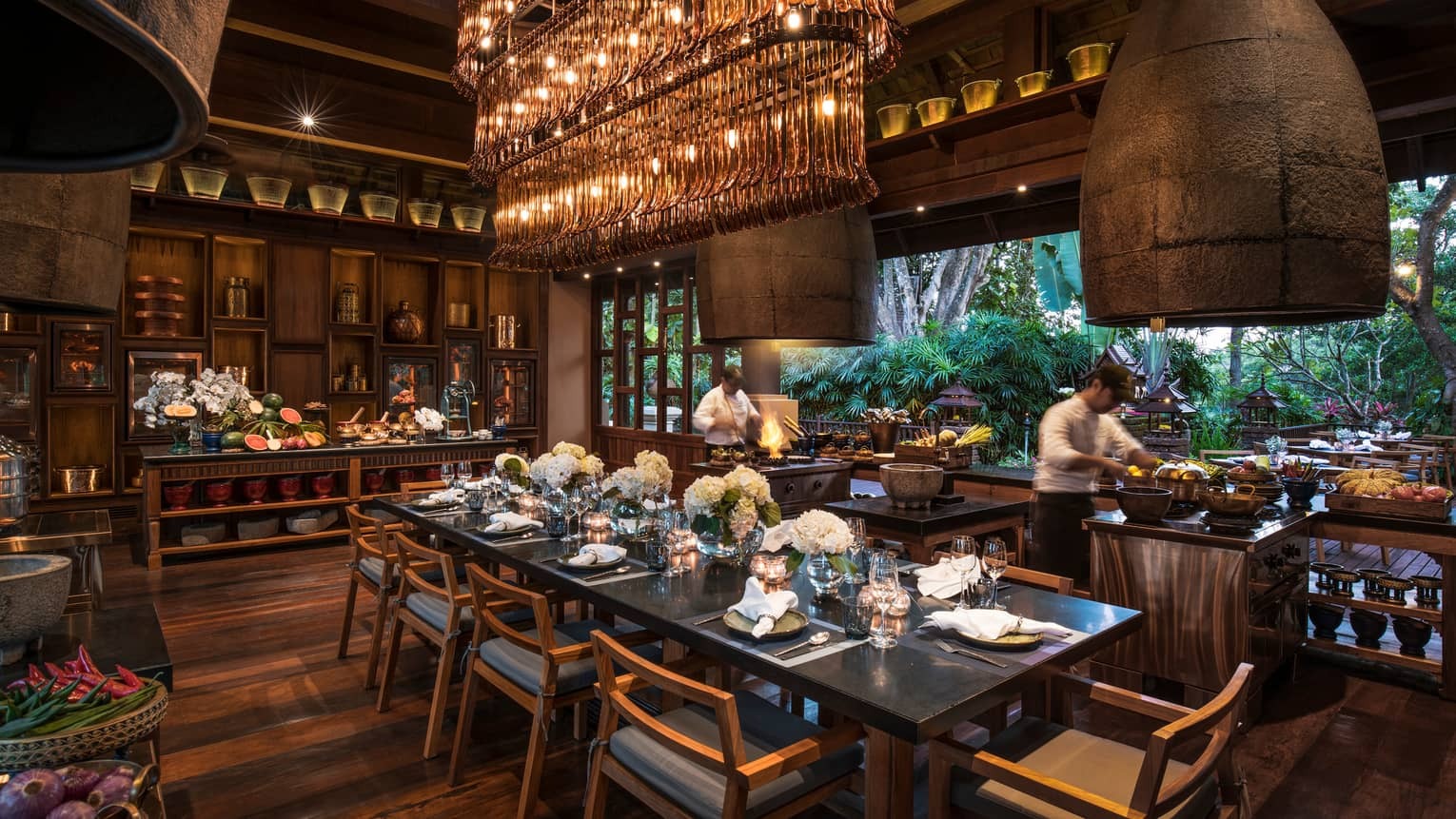
Meanwhile, North focuses on grilled and wood-fired food, with the open-air restaurant naturally oriented around an ornate fire pit, where the majority of the restaurant’s dishes are cooked. It’s Rim Tai Kitchen that’s the highlight though, with the cooking school and event space set within an elegant teak house appointed with traditional Thai ceramics. The open-plan cooking area features dramatic bell hoods above each stove and looks out at the shrine and surrounding gardens, while a statement custom amber glass chandelier serves to visually tie the communal dining table to the rest of the space. Elsewhere, ornate wall paintings reference Thai, Indian, and Chinese folklore, while the outdoor sinks of the bathroom serve as a design masterclass in and of themselves.
On the periphery of the rice paddy fields situated next to the thriving herb garden supplying the cooking school, the Chaan Baan transports guests back in time. The name refers to the terrace outside a traditional Thai home, with the set of wood-and-bamboo huts built on stilts and designed like a traditional Thai farmer’s quarters. Complete with a traditional kiln and pottery wheel, it sets the scene for the Four Seasons Chiang Mai’s robust cultural programming, which encourages guests to immerse themselves in pastoral life with activities like pottery, indigo dyeing, saa paper making, water buffalo bathing, and rice planting.
Away from the central rice paddy fields, the subtropical jungle continues to thrive, with the private residences and—exceedingly private—pool villas surreptitiously ensconced within the foliage. The expansive nature of the resort means that to get to destinations like the Wara Cheewa Spa, designed by Bunnag Architects in the style of an ancient Lanna kingdom temple, it’s advisable to take a buggy (catch a lift by flagging one of the staff down or order one from your room in advance).
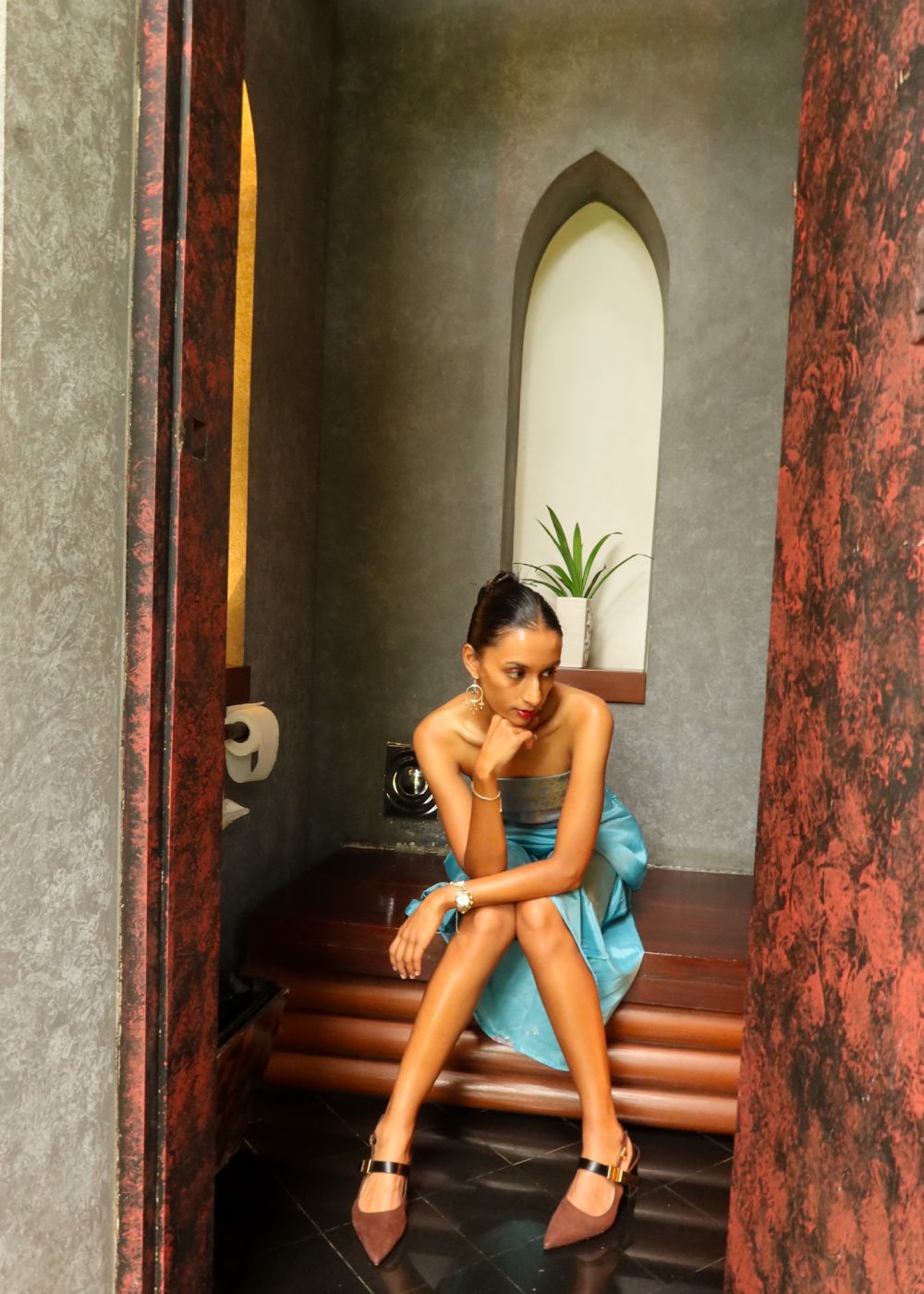
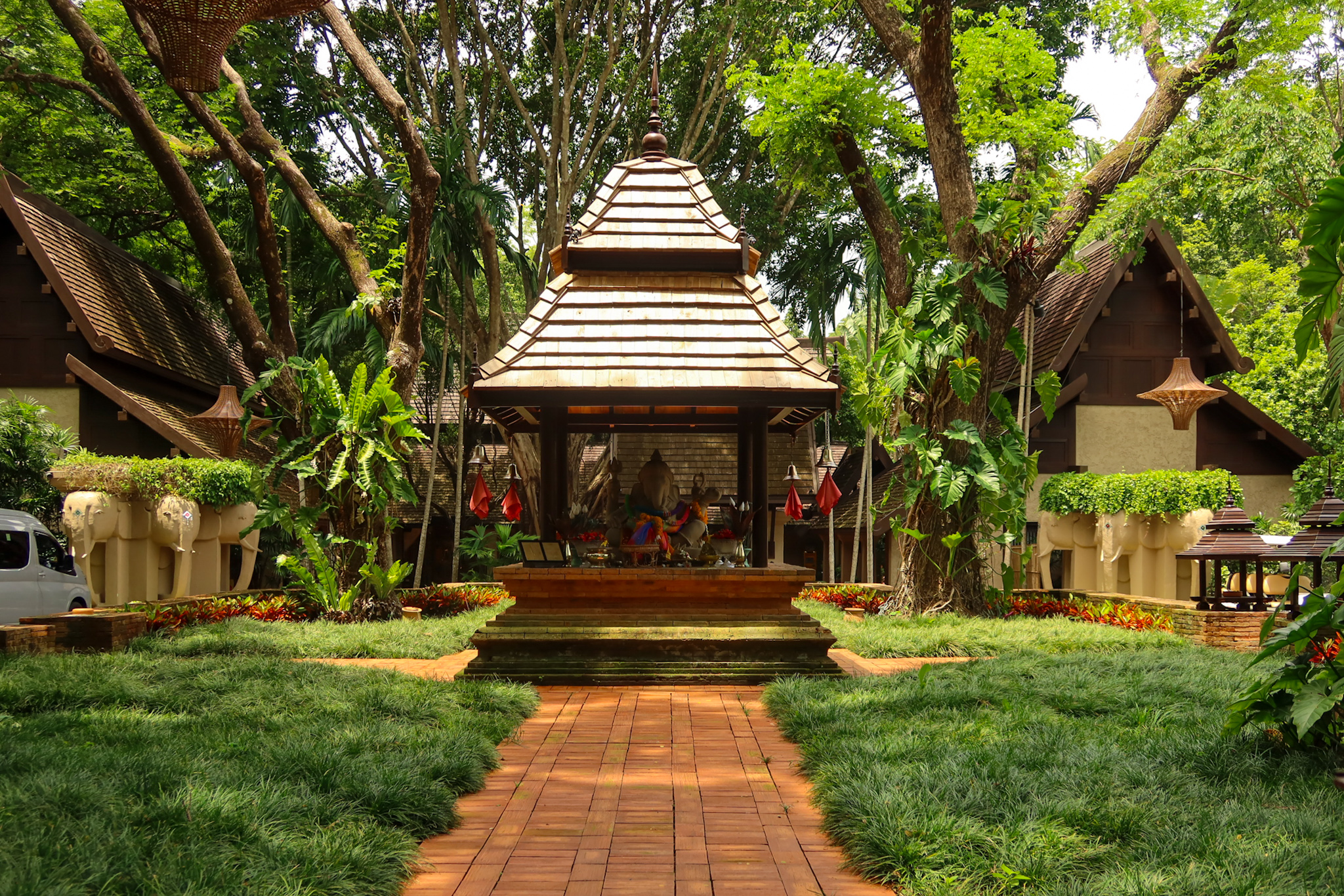
The beauty of the Four Seasons Chiang Mai lies in its layered design and attention to detail. Despite its sprawling layout, no corner has gone unnoticed; if it’s not a unique subtropical flower, it’s a gold-gilded Indian or Burmese painting on a seemingly innocuous outdoor wall, or a Buddhist stone statue peeking out from the foliage along a stone path.
Rooms and suites
The Four Seasons Chiang Mai is a 98-key resort, with 64 pavilions, 22 private residences, and 12 pool villas. All pavilions are generously sized at 70m², with the only differences being whether they look out upon the rice paddies or gardens; the pool villas are 403m²; and the private residences range from 244m² one-bedroom options to the positively palatial 855m² four-bedroom grand residence.
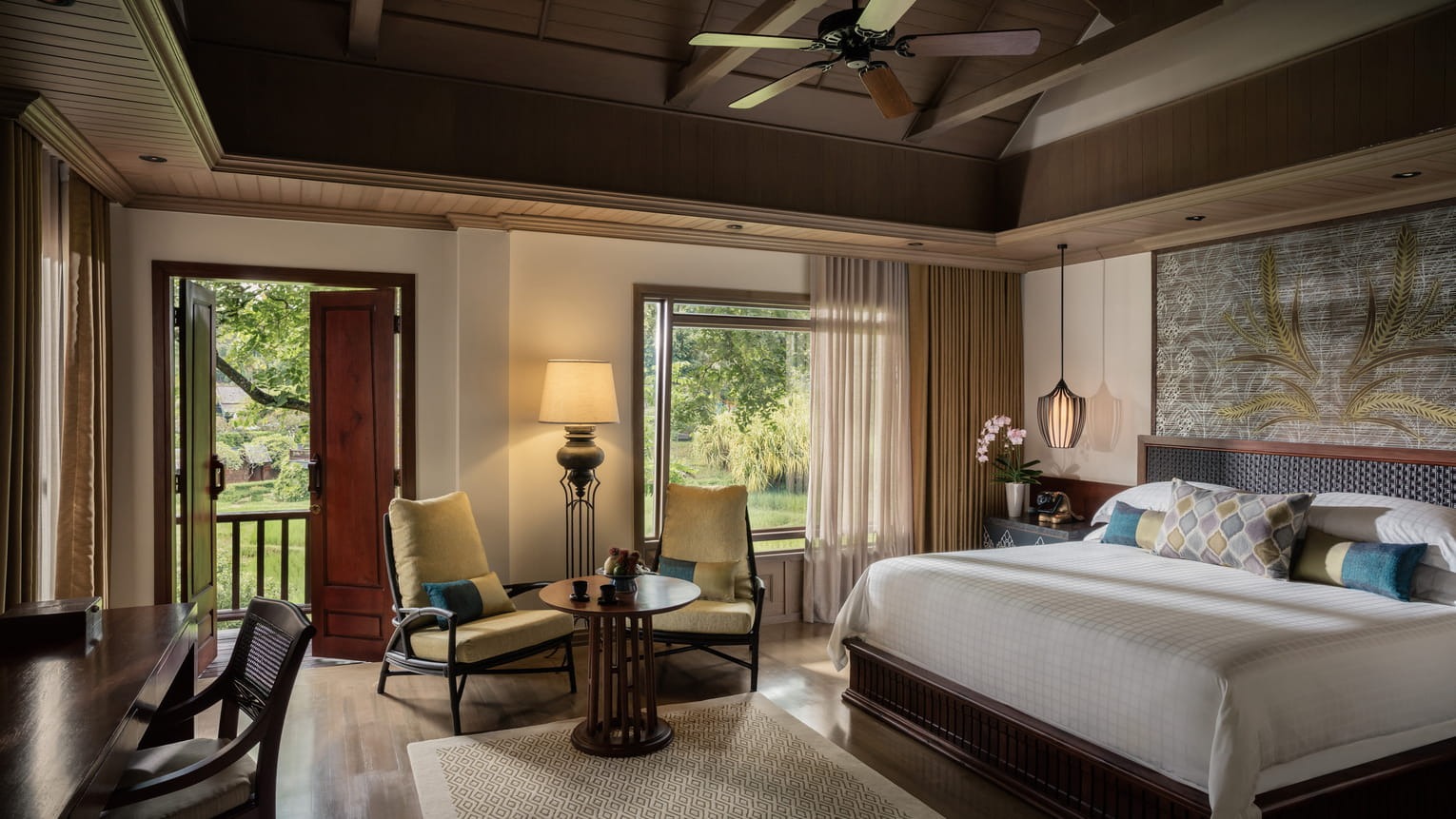
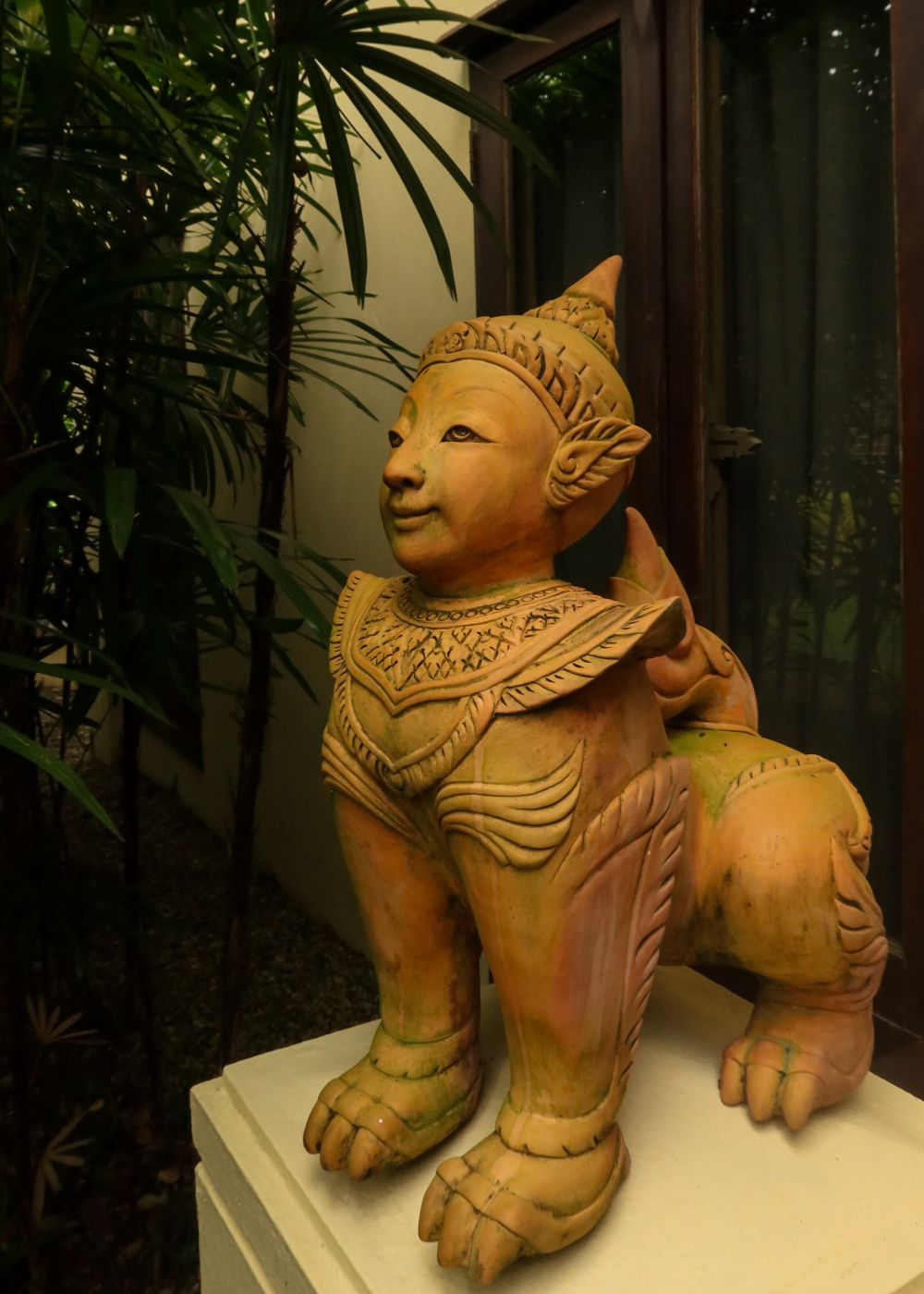
We were hosted within one of the Garden Pavilions, with each of the pavilions decorated in a similar fashion. The design is executed by Bangkok-based Abacus Design and reconciles Lanna style design with regional influences from nearby India, Burma, and China. Guests are greeted with a neotenic statue of Chinthe—a guardian spirit that takes on a lion-dog form, often found in front of Buddhist temples—holding court at the entrance to each pavilion.
Inside, the 70m² Garden Pavilion takes on a vertical layout, with guests entering into the main bedroom and living area. The generously sized bathroom is on one side and comprises a double vanity with seating and a floor-to-ceiling wardrobe, with the shower and toilet neatly tucked away behind frosted glass, and a deep soaking bathtub that looks out upon a small leafy courtyard area.
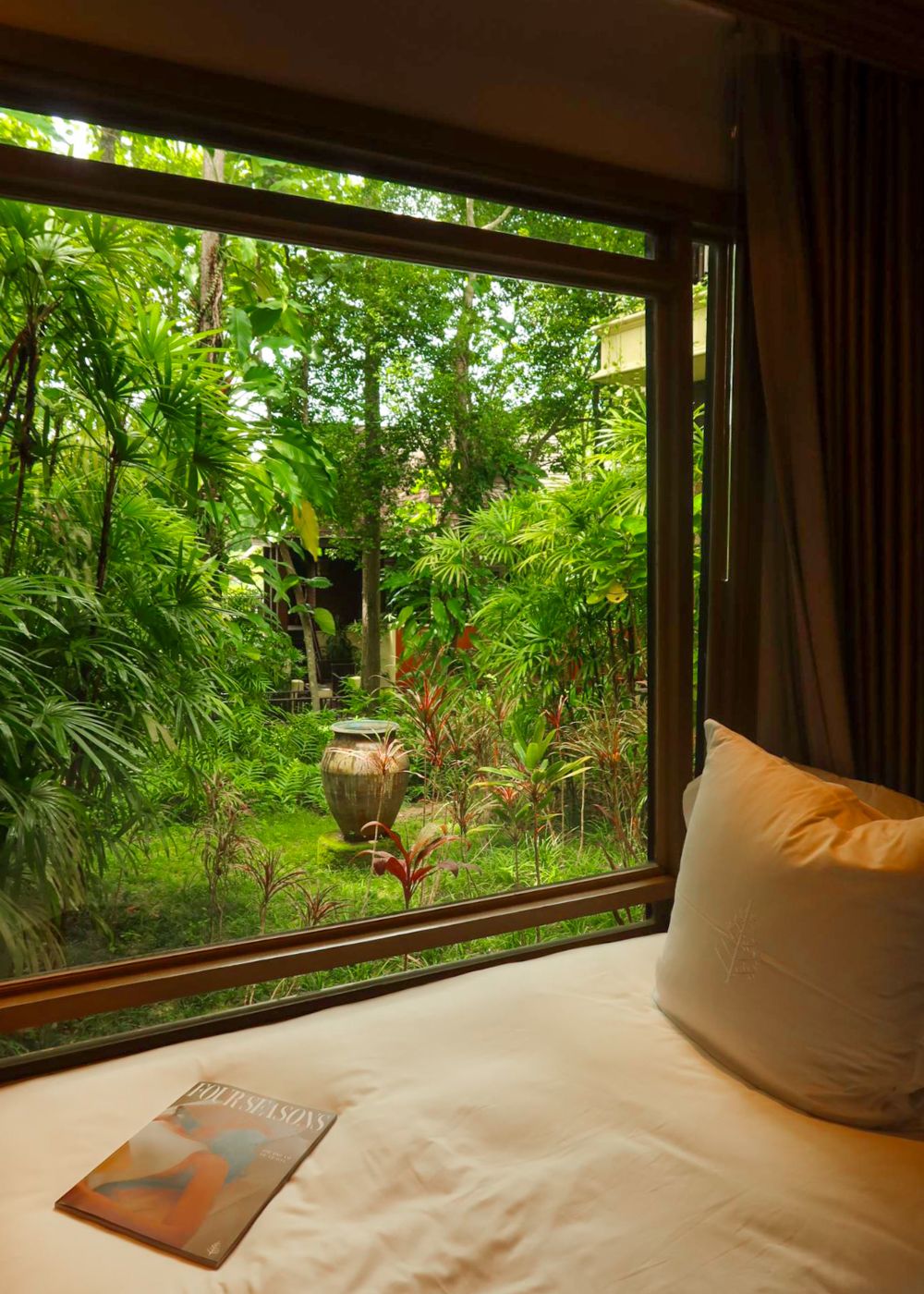
While the bathrooms (happily) boast modern comforts, a reverence for the ancient Lanna Kingdom is at the heart of the design of the living area. Hyperlocal luxury takes shape in the form of a warm colour palette of soft cream, pale sage, and mustard appointed with carved wood details, traditional screen prints and artwork, local textiles, rich silks, and fresh orchids that are surreptitiously replaced daily.
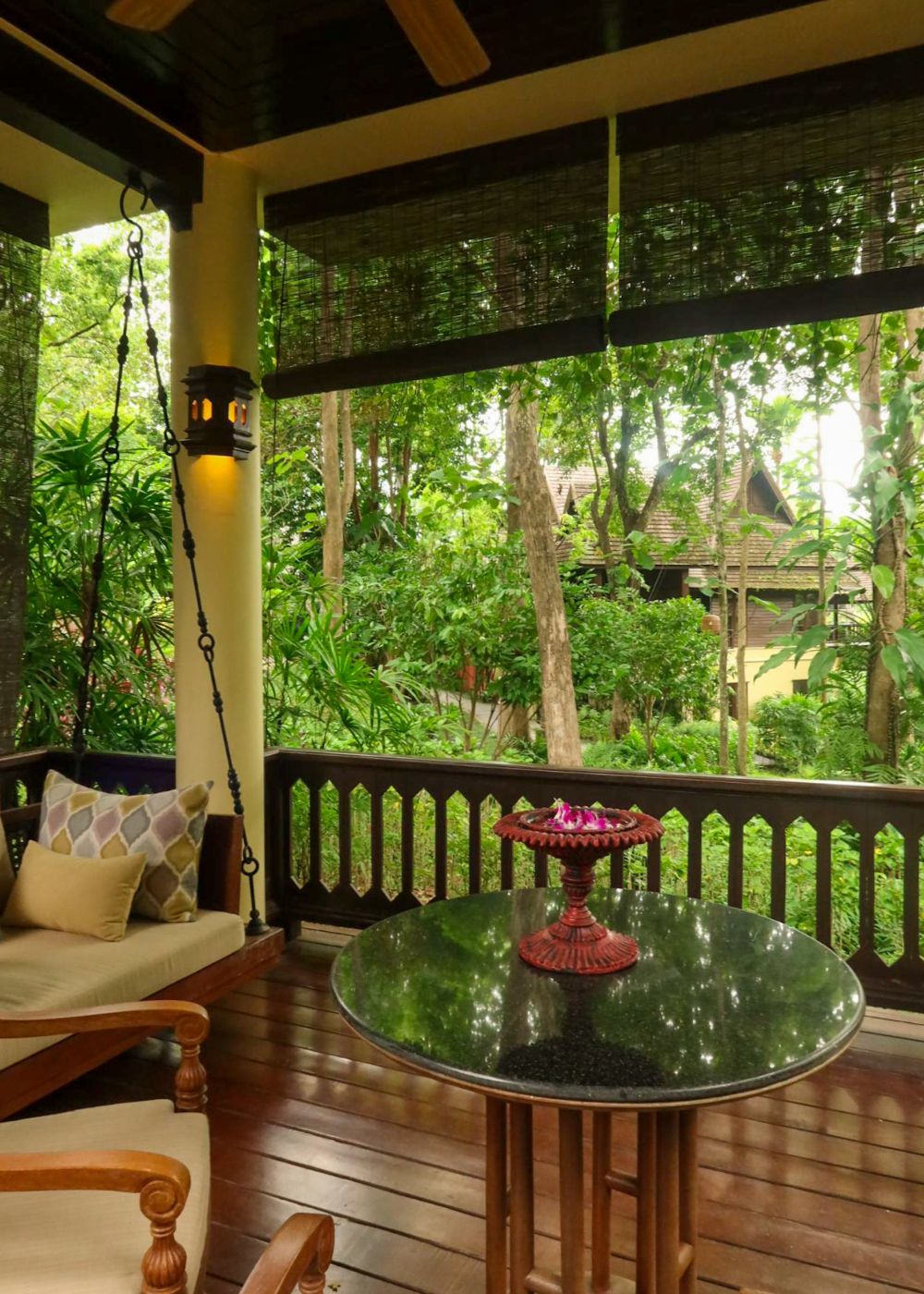
All pavilions have an outdoor wooden sala (or terrace) area. Complete with a sitting area and swing lounge, it overlooks the gardens or rice terraces and makes for an ideal location to pass the time (and perhaps spot a water buffalo at work).
Tea and coffee
Four Seasons Chiang Mai provides in-room tea and coffee facilities in the form of a kettle and Nespresso coffee pod machine. Tea bags are by Northern Thai brand Monteaco—with Thai Earl Grey, Jasmine Green. Thai Breakfast, and Lanna Oolong tea on offer—while coffee pods are by Nespresso, with both caffeinated and decaffeinated options on offer.
Bathroom products
Bathroom products are by Spanish luxury skincare and spa brand Natura Bissé, from the Rosemary & White Tea line. Expect to find full-sized, refillable pump bottles of shampoo, conditioner, and body wash in the shower, as well as hand soap and body lotion by the bathroom sink and bath salts by the freestanding bathtub.
Comfort factor
Four Seasons’ signature mattresses always ensure a comfortable, cloud-like sleep and the Chiang Mai location was no exception. Our 70m² Garden Pavilion had ample space for lounging, getting ready, and partaking in tea breaks between activities — as a party of three, we never felt like we were getting in each other’s way.
Our stay at the Four Seasons Chiang Mai fell during Thailand’s humid monsoon season, with good temperature control in the room and public indoor areas ensuring we were perpetually cool and comfortable. It is, however, worth noting that despite the pains staff take to mitigate their effects (there’s always someone ready to proffer organic insect repellent), it’s virtually impossible to avoid encountering a mosquito (or three) at the open-air restaurant North and when dining al-fresco for breakfast at Khao. This is northern Thailand, after all.
Food and drink
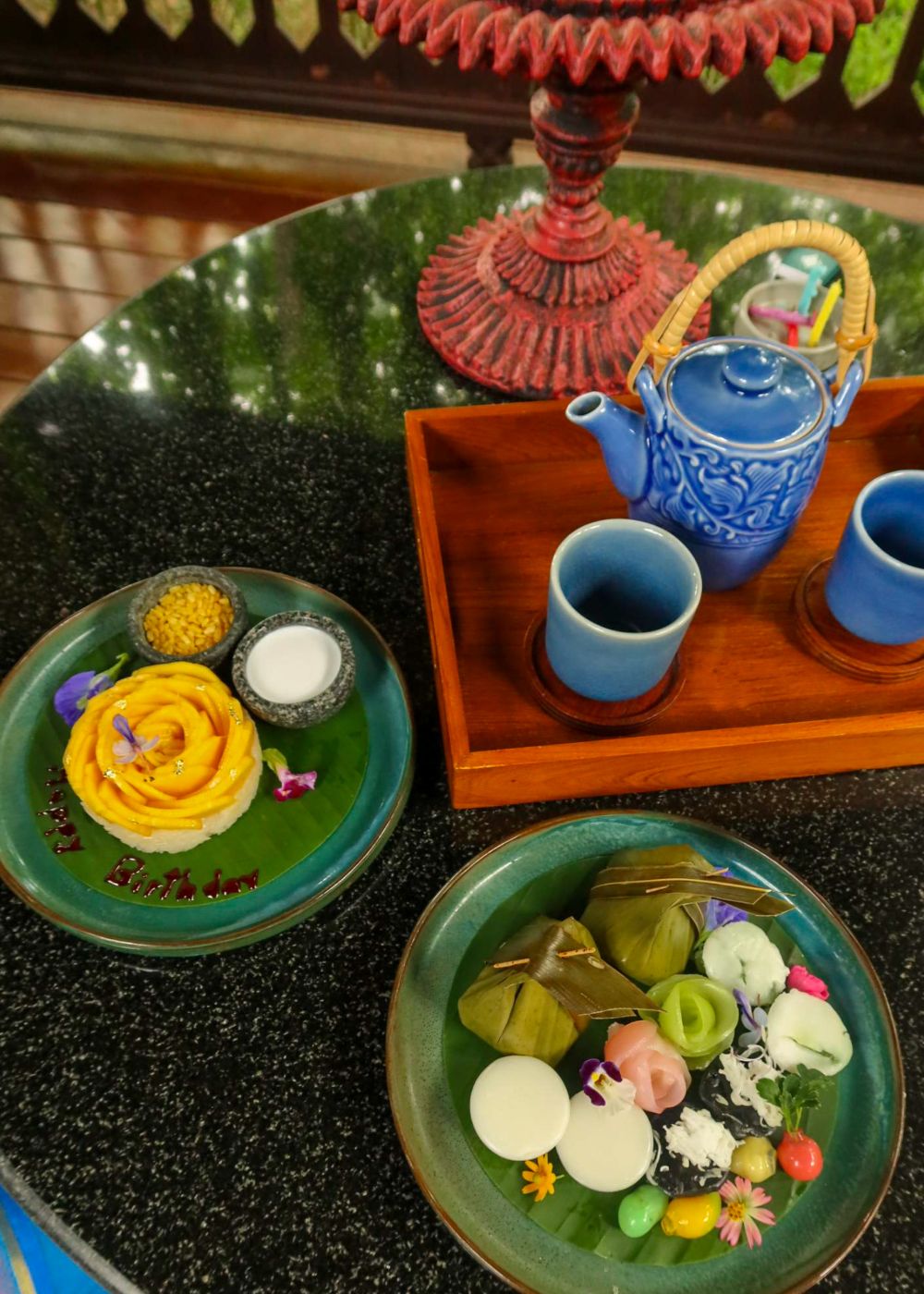
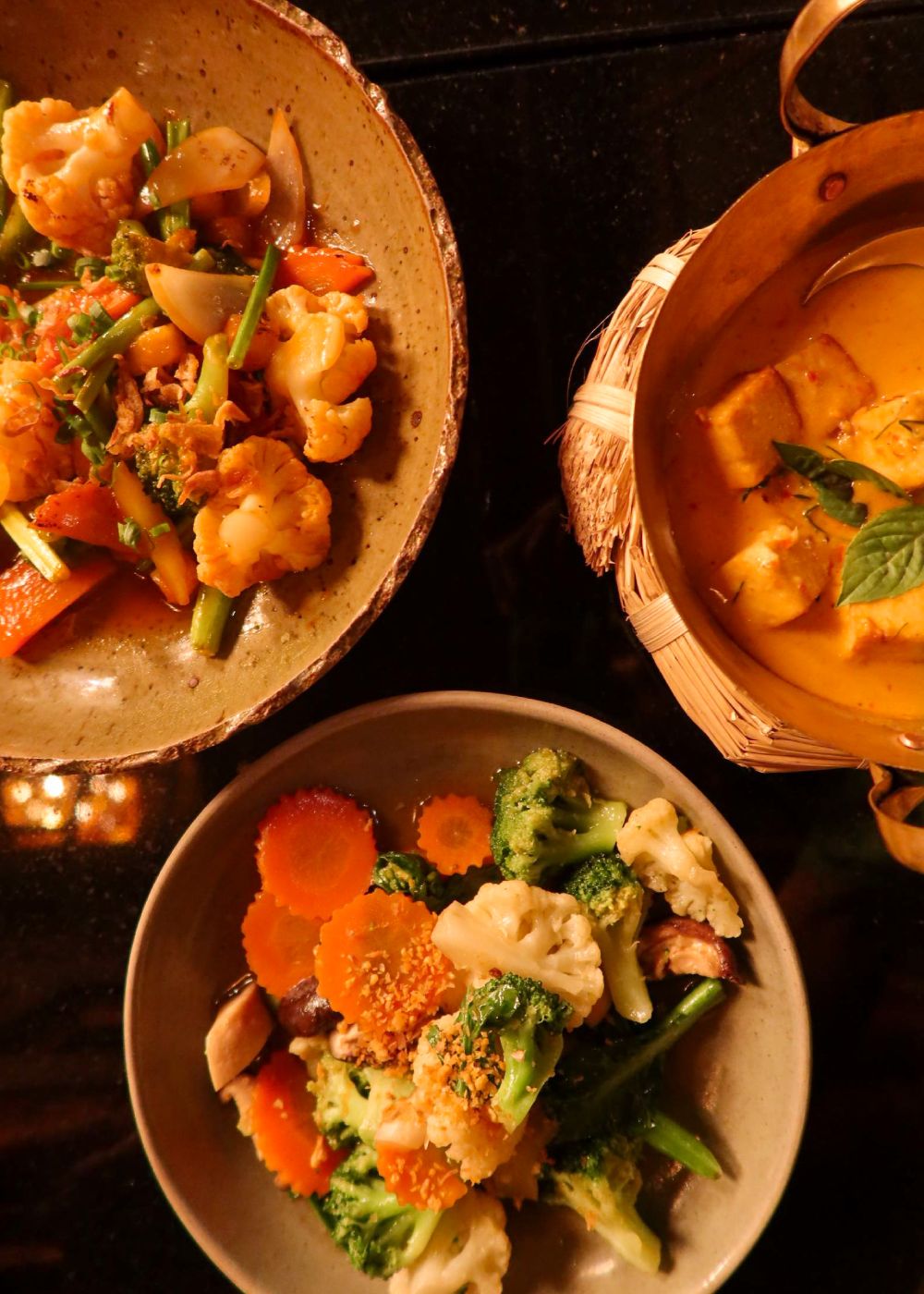
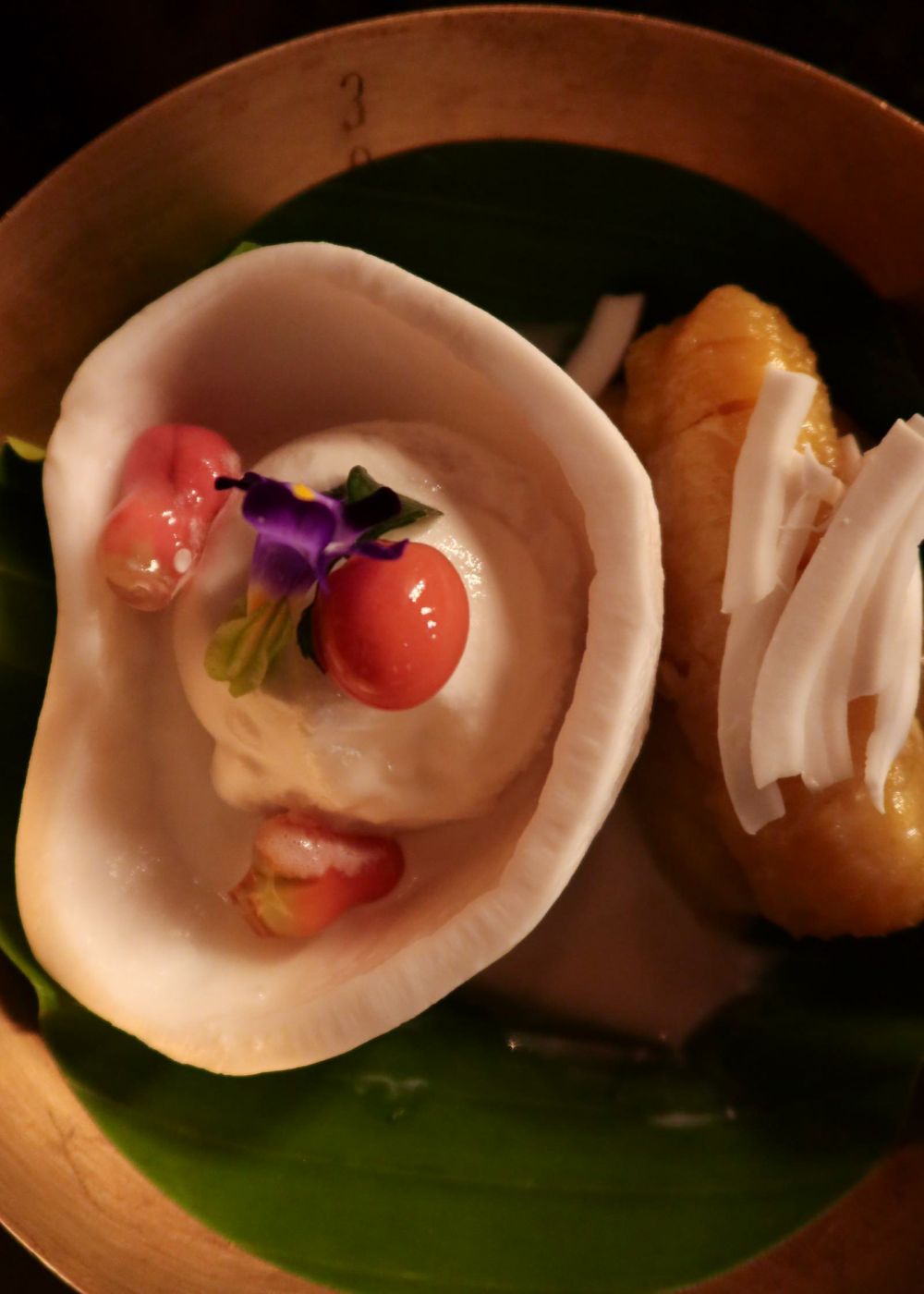
The Four Seasons Chiang Mai has two restaurants, Khao and North, as well as a cooking school, Rim Tai Kitchen, and the laidback Ratree Bar and Lounge on the upper deck of the swimming pool. Khao is the more traditional of the duo; with an emphasis on locality, it celebrates northern Thai flavours, while bringing in elements from the southern, central, and eastern regions as well as from nearby Myanmar. Our dinner at Khao was one of the culinary highlights of our trip to Thailand, with the restaurant deftly catering to our dietary requirements with a dedicated vegetarian menu. The panang tao hu (red curry) successfully translated the rich, spicy flavours of the central Thai specialty to a base protein of tofu, while seemingly simple dishes like tom yum pak (hot and sour clear vegetable soup) and mixed vegetables in sweet and sour sauce were executed with a light touch that placed emphasis on the quality of the produce. Desserts take a similarly localised tone, with dishes like kluay cheum kab i tim kati (banana simmered in syrup and served with coconut sorbet) and khao niew piak lumyai (black sticky rice with longan and coconut) showcase an elevated spin on regional staples.
North takes a more global approach, with a western palate with an emphasis on open wood-fire grilling, executed with theatrical flair in the statement firepit at the centre of the restaurant. While the celebration of southeast Asian flavours at Khao was more to our tastes, the food at North is more than serviceable. Although the emphasis here is on animal-based proteins, the restaurant easily catered to vegetarian diets, with an experimental approach to flavour profiles ensuring each dish felt complete.
Perhaps the most interesting culinary offering of all is Rim Tai Kitchen, although the quality of each dish is—quite literally—in your hands. Not to worry though, direction and guidance from the perpetually effervescent Chef Suwattana Boonyarattananusorn (‘Chef Tor’, to guests) ensures you’ll have an enjoyable lunch at the end of the session — and head home with more than a few tips and tricks on executing your own Thai dishes. Housed within a Bill Bensley-designed teak house, the culinary school offers comprehensive private and group cooking classes, with Chef Tor taking guests from the herb garden to table. While there are several menu options on offer, a highlight is the ‘Tour of Thailand’ set, which encompasses key dishes from each region.
Tell us about the breakfast
Breakfast is served at Khao, with the option to sit outside overlooking the rice paddy fields or in the air-conditioning, and consists of both a breakfast buffet and a selection of healthy à la carte options. The buffet includes a dedicated fruit station; eggs-your-way, waffles, and pancakes on demand, a bread and pastry station; international cheeses and cold cuts; a salad bar with locally sourced vegetables; hot western staples; and Thai options including dumplings, rice, noodles, and skewers.
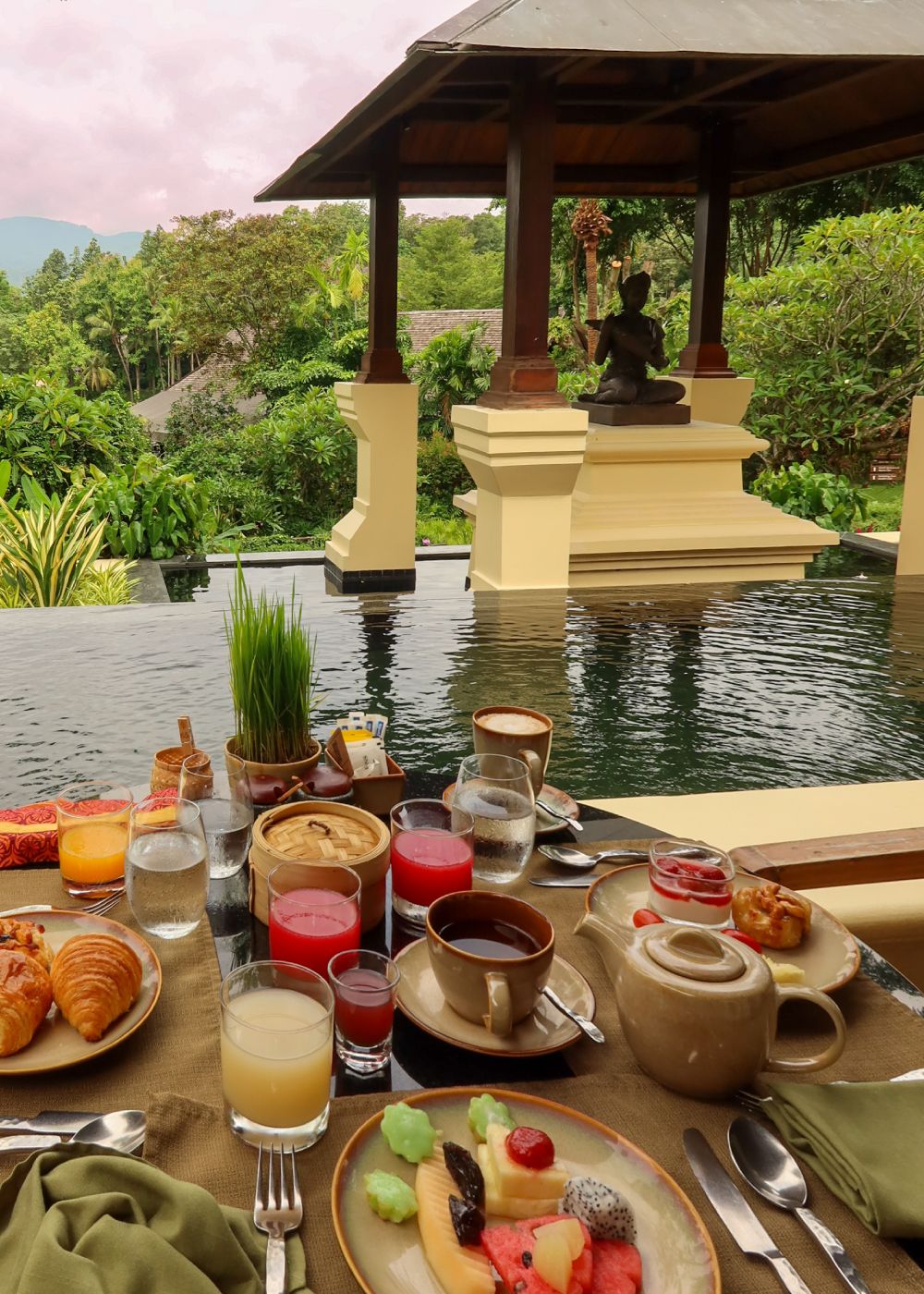
Highlights on the à la carte include the breakfast burrito and longevity smoothie bowl, however the chef on duty was more than happy to go off-menu and prepare us vegetarian-friendly dumplings and noodles.
Spa and facilities
With its dual focus on both traditional and agritourism wellness, the Four Seasons Chiang Mai has one of the most impressive suites of facilities and activities in the country.
Naturally, the usual suspects are there—two infinity pools, a health club, tennis courts, Muay Thai lessons, and a yoga studio—but it’s the (agri)cultural activities that stand out. The resort’s robust cultural program primarily takes place within the Chaan Baan. Located on the periphery of the resort, the Chaan Baan is modelled after a traditional Thai farmer’s living quarters and plays host to pottery, indigo dyeing, candle making, and saa paper making. It’s located next to the water buffalo stables, with guests gathering every afternoon to bathe the beasts after a day’s work assisting in the rice paddy fields. Nearby is the herb garden, where each cooking class commences.
Tucked away at the other end of the resort, past the lavish private residences and villas, the Wara Cheewa Spa promises unparalleled relaxation within a setting akin to a cross between a temple and a lavish Mediterranean home. Like the rest of the Four Seasons Chiang Mai, it prioritises indoor-outdoor design, with biophilic principles welcoming nature in. The comprehensive spa menu includes standard offerings like facials, massage therapy, and skin and body treatments, as well as other wellness offerings like reiki, crystal sound healing, breathwork, and vibrational sound healing.
Family affair
Both children and multi-generational families are not only catered for, but encouraged at the Four Seasons Chiang Mai. The daily activity schedule included dedicated kids’ programming, with many of the culturally immersive activities at the Chaan Baan—including pottery, tie-dye, and rice planting—modified to suit children, while water buffalo bathing and cooking classes at Rim Tai Kitchen can be enjoyed by the whole family.
The La-On Kids Club offers activities for children and teenagers from 9am to 6pm, with children over the age of five able to be left unattended.
There are also discounts when dining with children, with kids under four eating for free (when accompanied by their parents) at the resort’s restaurants and kids aged five to 11 enjoying half-priced meals.
The service
True to both Thailand’s and the Four Seasons’ notions of hospitality, service was both intuitive and anticipatory without being servile. Regardless of where we were in the hotel, we were always greeted with a ‘sawasdee ka’ or ‘sawasdee krap’, not only by the management, hospitality, and housekeeping staff but also by the grounds crew working on maintaining the gardens and in the rice paddy fields.
I was travelling with my mother and grandmother, the latter of whom required a buggy to travel anywhere longer than a short walk away. We never had to wait longer than a minute for a buggy to be at our door and the attentive staff consistently went out of their way to ensure she was comfortable; in fact, they often took the lead in giving her their arm and escorting her themselves.
The only unfortunate exception to the rule was at our dinner at Khao upon arriving at the Four Seasons Chiang Mai. Although there was only one other family dining and it was a couple of hours before closing time, we felt rushed through each course of the set menu, culminating in the staff informing us our desserts were ready halfway through our mains and actually attempting to bring them out at the same time. The entire encounter was a tad baffling and at odds with the calibre of the food we were enjoying (one course at a time, thank you).
While our first evening left us mildly apprehensive that the service at the resort wouldn’t be on par with other Four Seasons locations, subsequent interactions with the staff at the Chiang Mai outpost quickly sublimated this initial encounter. The service at North was a standout, particularly from our bubbly server Yu and the restaurant manager Ashley, both of whom shared a knack for striking the right balance between engaging us in conversation and knowing when to step away.
Unseen but always felt, housekeeping was a particular highlight; strewn about charging cords are always neatly looped up and errant glasses are bestowed with a rather welcome cleaning cloth.
Sustainability initiatives
The Four Season Chiang Mai’s ongoing commitment to environmental responsibility and sustainable hospitality include a reduction of single-use plastics (including the elimination of single-use plastic water bottles), supporting local farmers through responsible ingredient sourcing, and a food waste reduction program. The resort has implemented energy, carbon, and water efficiency practices, with solar lighting and road signage powered by renewable and carbon-free energy sources, while water recirculation systems maintain the resort’s ponds, waterfalls, and rice terraces.
AR Verdict
Its breathtaking setting and immaculate landscaping sets the scene for a luxurious, pastorally inclined getaway, but a scene without its players is nothing more than a set. Fortunately, the Four Seasons Chiang Mai nails the whole package, creating an immersive experience for guests through finely honed wellness and cultural programs that act as a microcosm of rural northern Thai life. All wrapped in ultra-soft Supima cotton sheets and chased with a coconut-infused rum cocktail, of course.
Four Seasons Chiang Mai is open for bookings, with rooms priced from around $1350AUD/night.
Address: 502 Moo 1, Mae Rim, Old Road, Samoeng District, Chiang Mai, Thailand
Words by T. Angel