

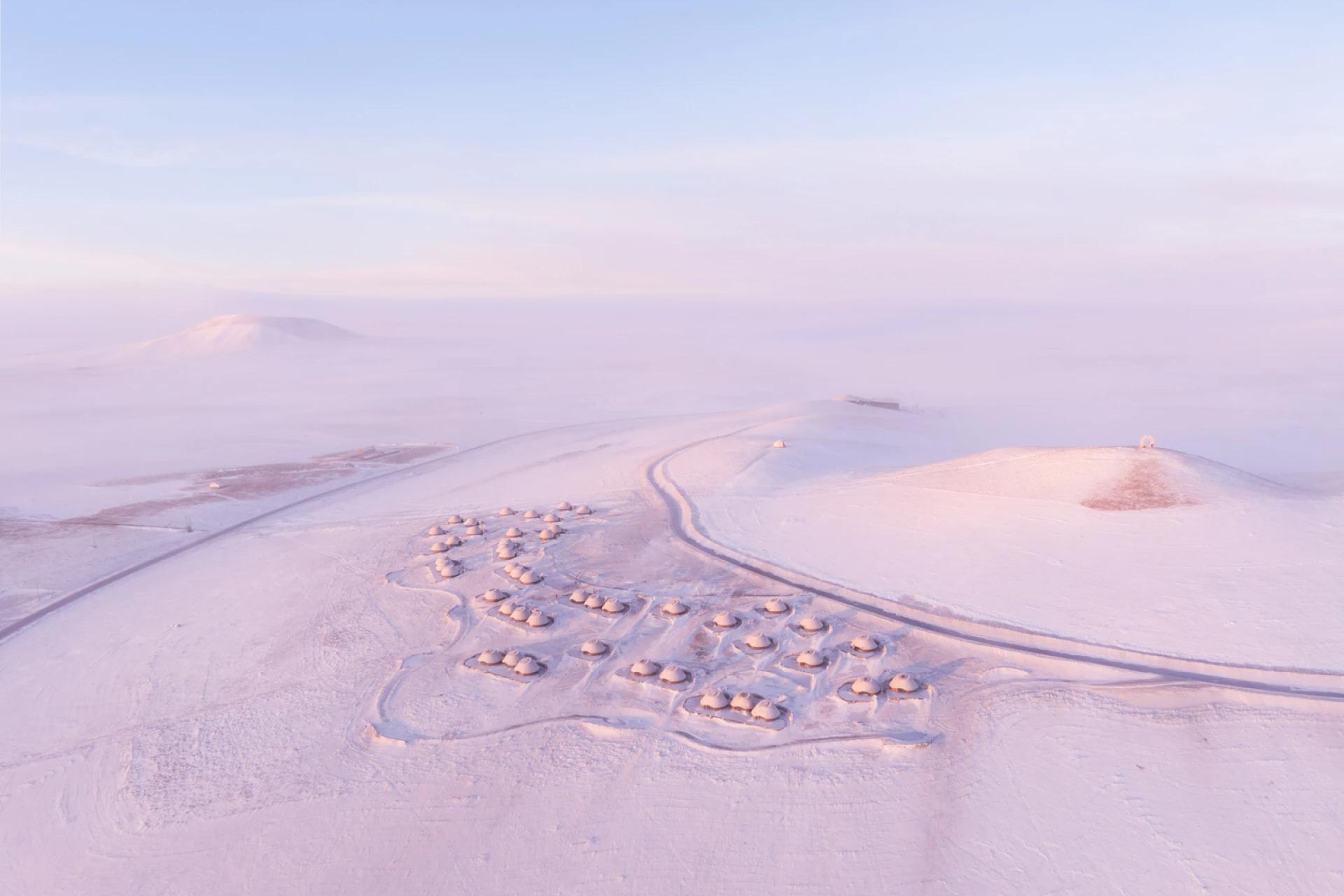
- Beijing-based architecture and design firm PLAT ASIA has completed the Volcano-In Hotel of Arrivals, located within the Baiyinkulun Steppe & Volcano Tourism Resort in Xilinhot, Inner Mongolia, China
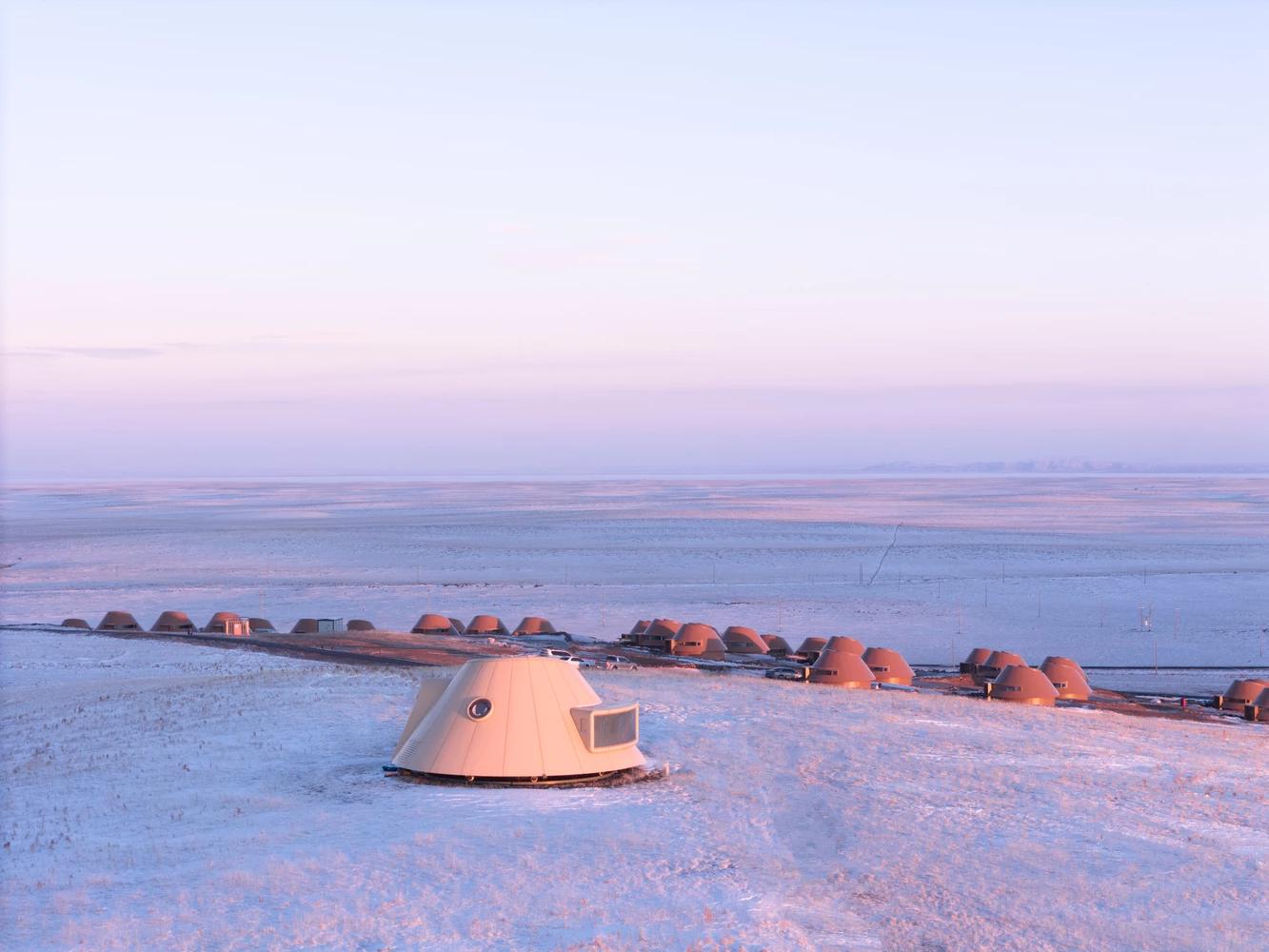
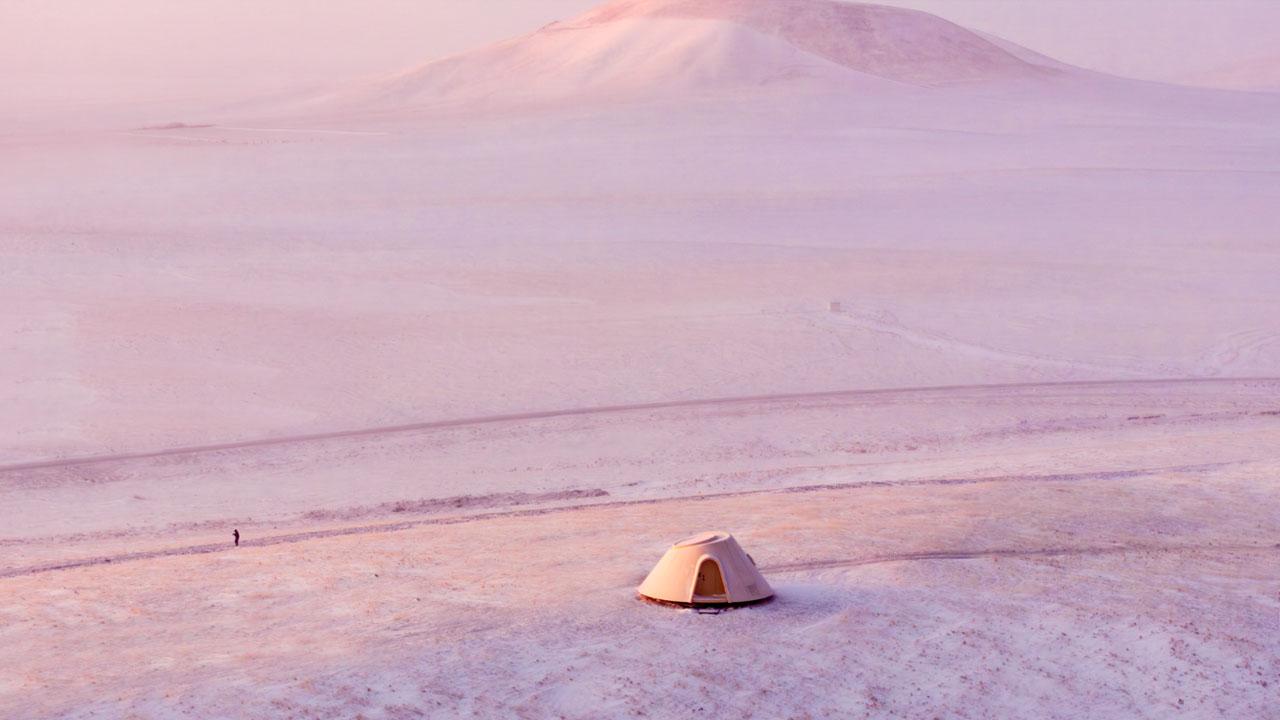
- The accommodation sits on the southern slope of a dormant volcano and comprises a series of individual guest cabins that resemble volcanoes
- Each cabin is fitted with a sleeping area, compact living space, bathroom, and a private terrace overlooking the steppe
- The design of the accommodation was intended to minimise construction impact, with the project also encompassing restoration of the ecosystem
In a novel feat of organic architecture, PLAT ASIA has unveiled its latest project. The Beijing-based architecture and design firm recently completed work on the Volcano-In Hotel of Arrivals, part of the Baiyinkulun Steppe & Volcano Tourism Resort located in Xilinhot, a region within Inner Mongolia, China.
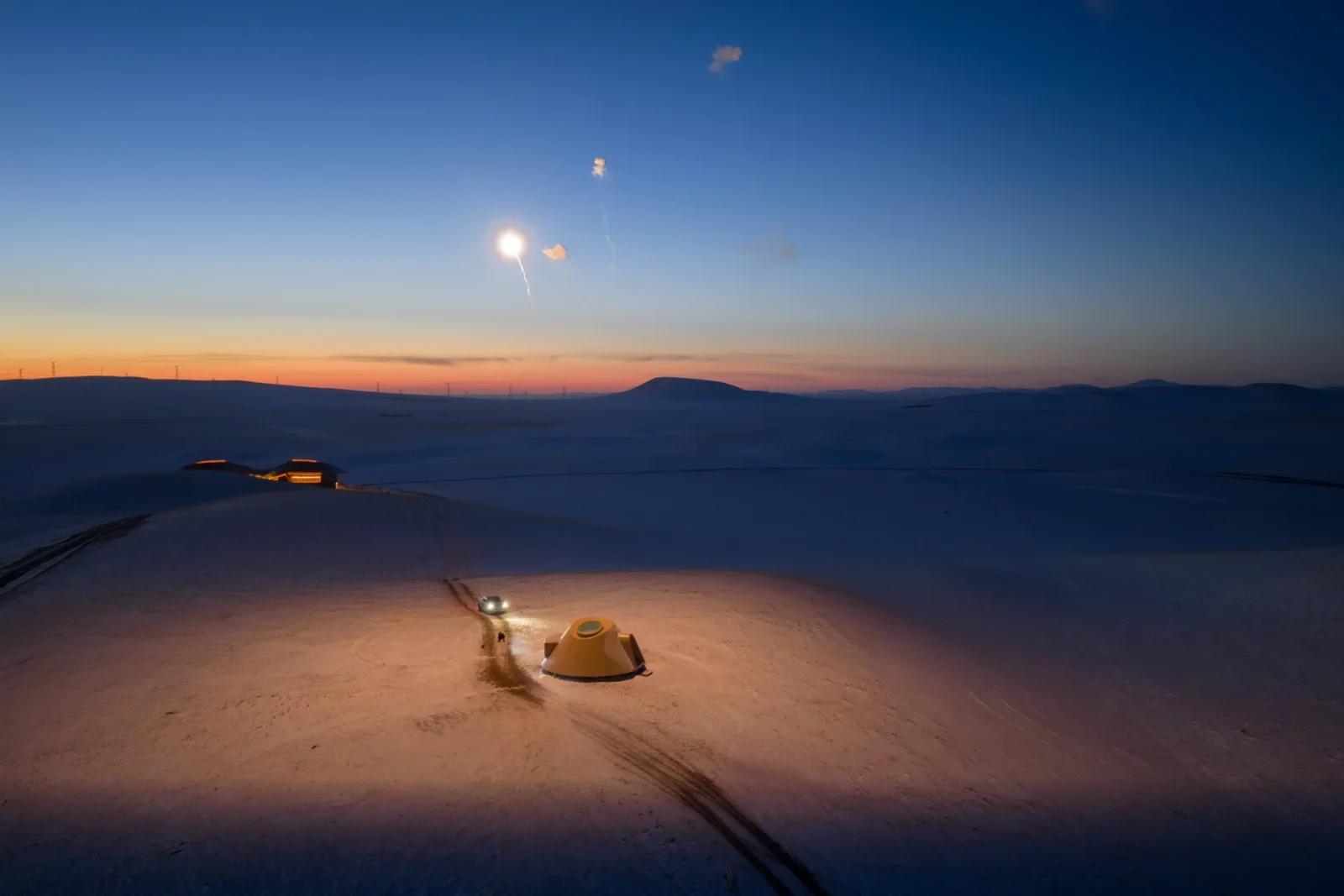
The low-impact hospitality project takes place across the southern slope of a dormant volcanic landscape. In contrast to the lush vegetation in the area surrounding the volcanoes, this section of land had undergone 150,000 years of erosion and was largely devoid of plant life. In collaboration with geologists and local herders, the design team—led by principal architect Bian Baoyang—undertook geological research that found that wind movement has caused shifts in sand and snow, creating depressions in the land and resulting in poor soil conditions not conducive to plant life. To minimise impact to the area, the Volcano-In Hotel of Arrivals was intentionally placed over two-metre-deep sand pits in order to prevent their expansion and replace them with a new, thriving ecosystem.
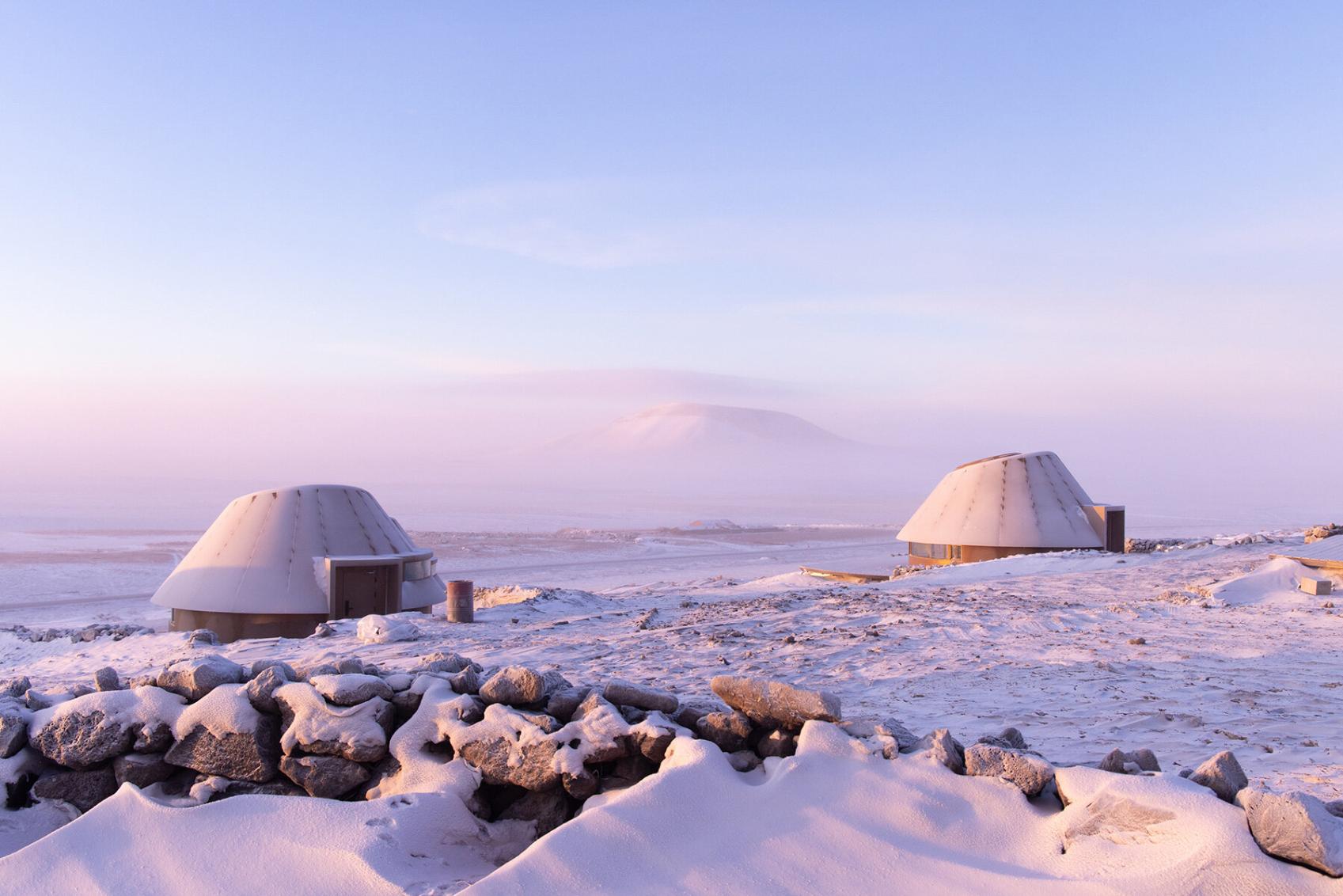
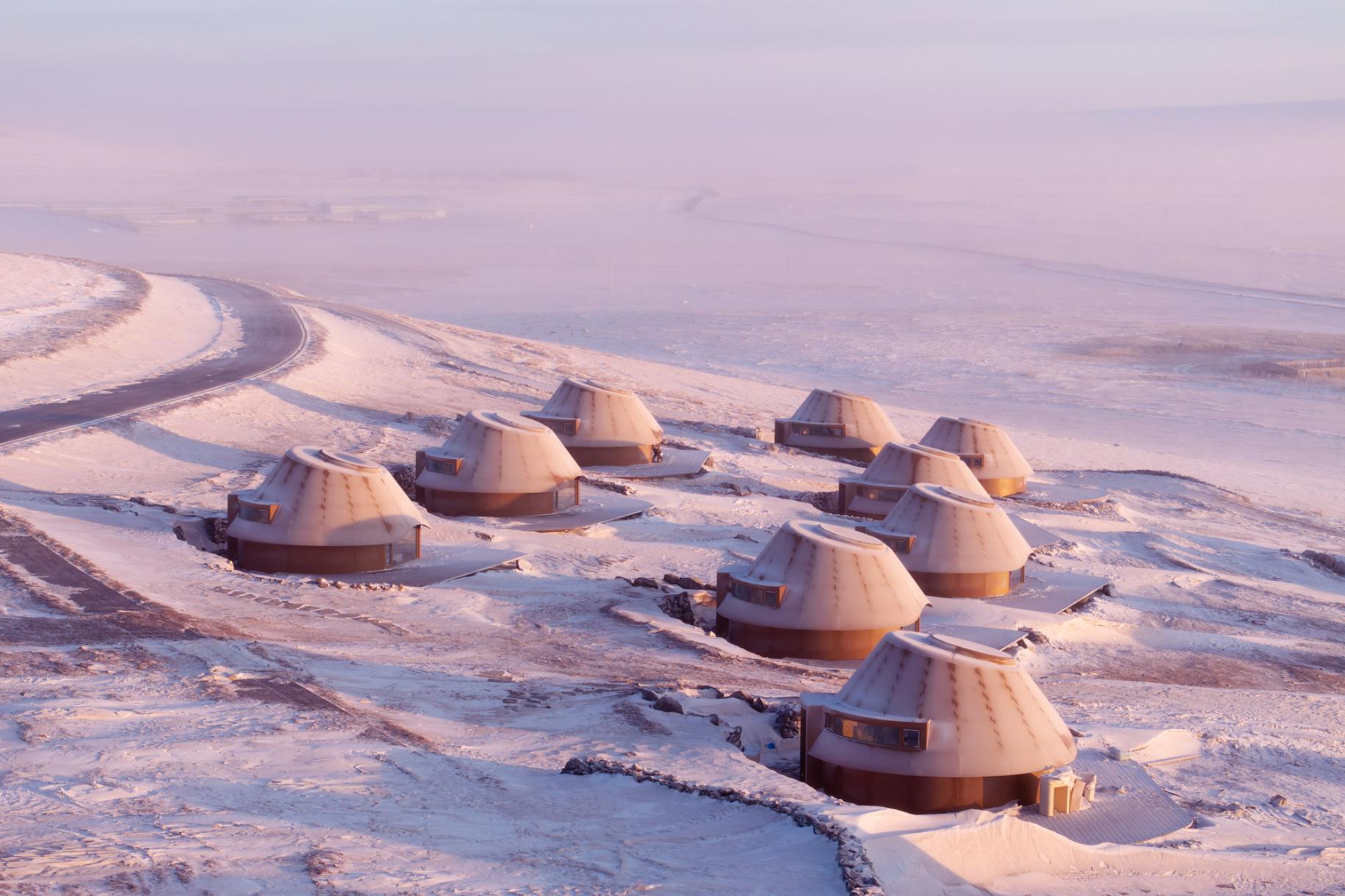
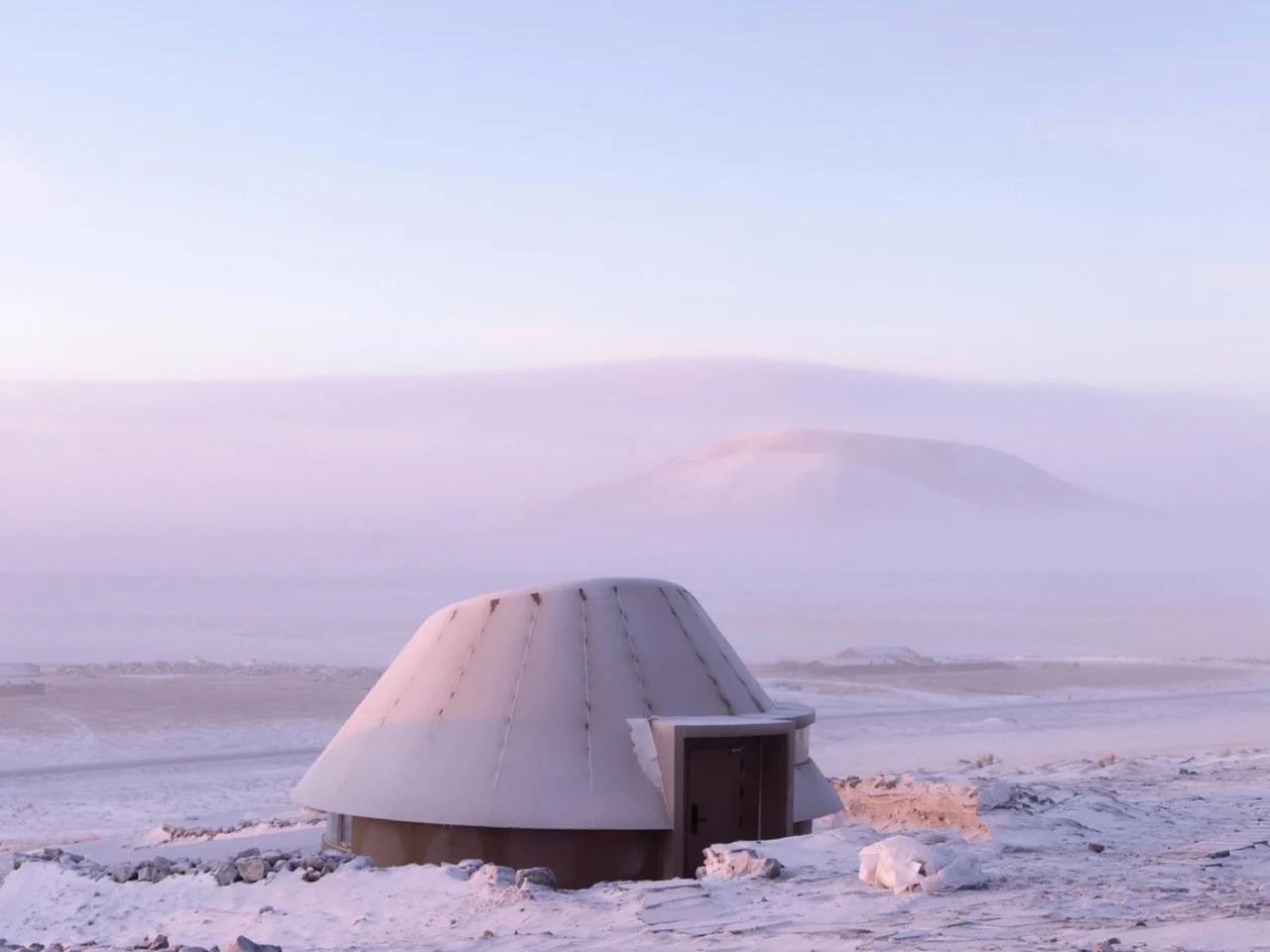
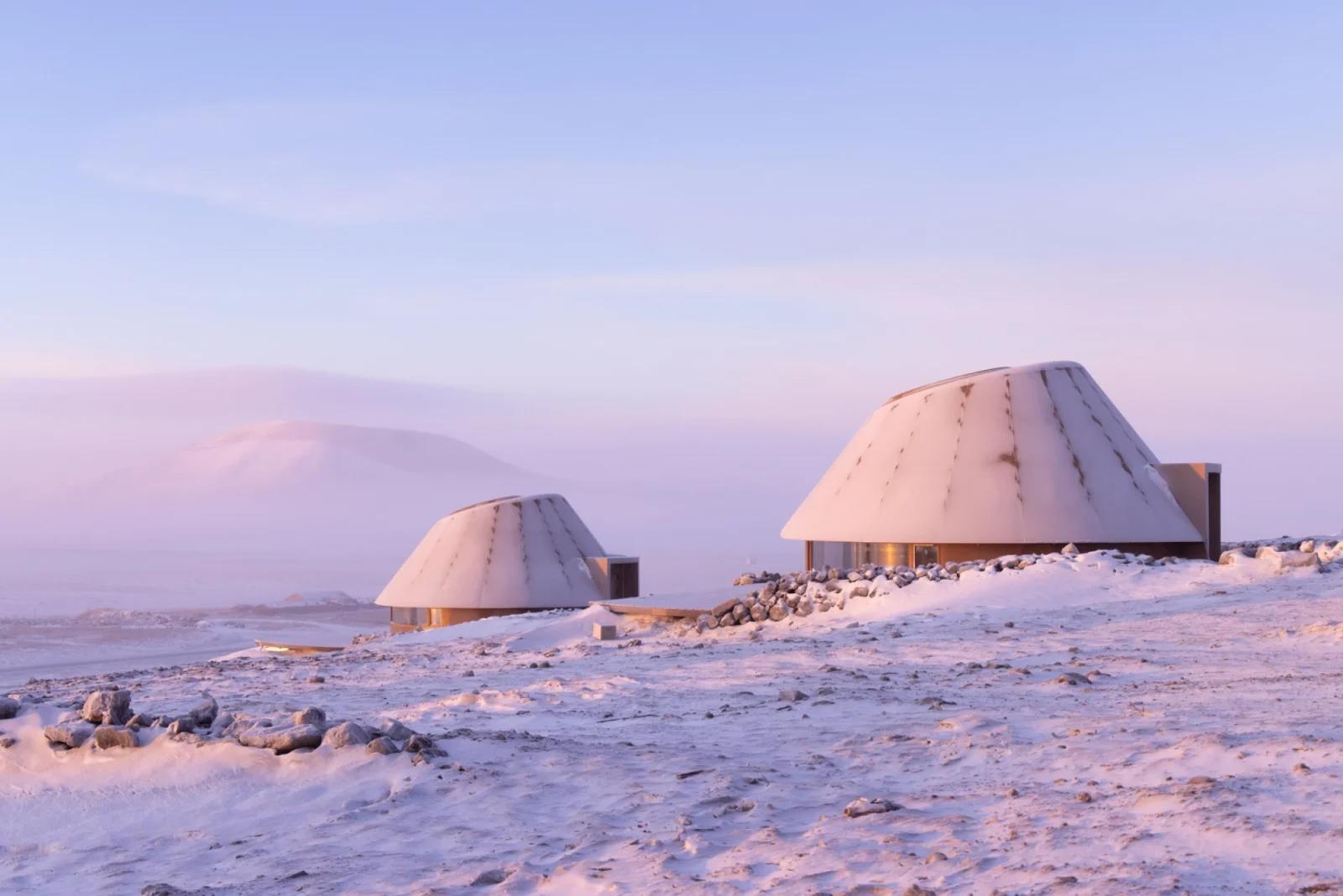
Spanning 1634 sqm, the Volcano-In Hotel of Arrivals takes form as a series of compact circular cabins dotted across the sloped landscape, arranged in clusters of twos and threes, with each oriented to take in views of the steppe, lake, and surrounding landscape. The cabins are framed by curved snow barriers, which work to retain water and protect the soil, improving planting conditions over time.
The design of the cabins reflects the geometry of volcanic cones. Each cabin is clad in russet metal panels, encircled by a glass curtain wall, and topped with a cone-shaped aluminium veneer roof that reflects the stark surrounding landscape. The russet hue was selected based on Bowen’s reaction series, a geological concept that details the order of crystalisation in cooling lava. The cabins were constructed using prefabricated materials that were manufactured off-site and assembled on location, with this method selected for its minimal disruption to the fragile landscape. The clusters of cabins are linked by paths paved with volcanic rock, which further integrates the hotel into the landscape.
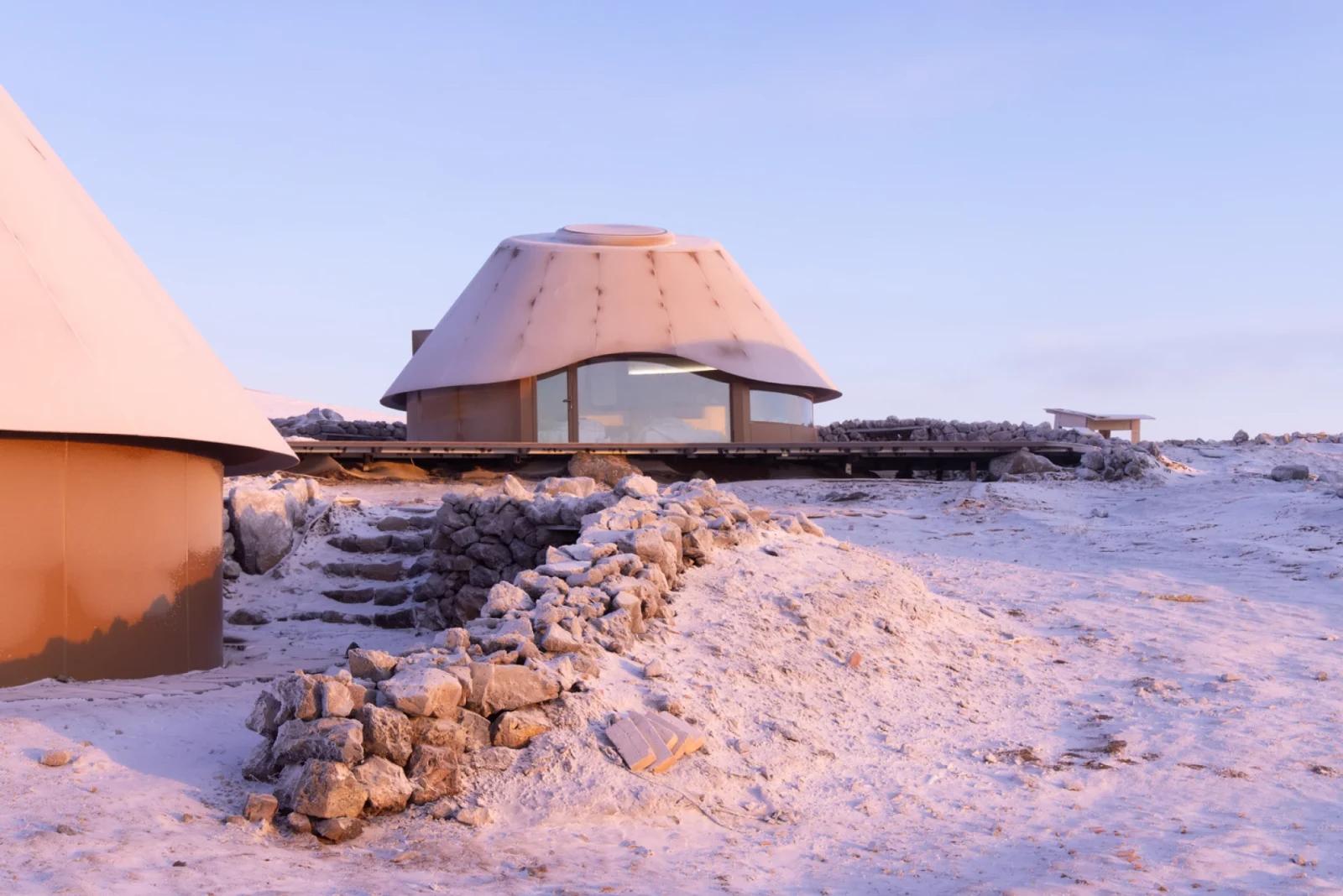
Each of the 45 cabins is fitted with a sleeping area, compact living space, bathroom, and a private terrace. Inside, every suite features a full-view horizontal window framing views of the steppe, as well as an oval skylight above the sleeping area for stargazing, and a hanging scroll window inspired by traditional Chinese handscroll paintings. The graduated windows thoughtfully bring in views of the steppe, lake, sandy landscape, and sky in orderly frames, creating a curated impression of the rugged land beyond.
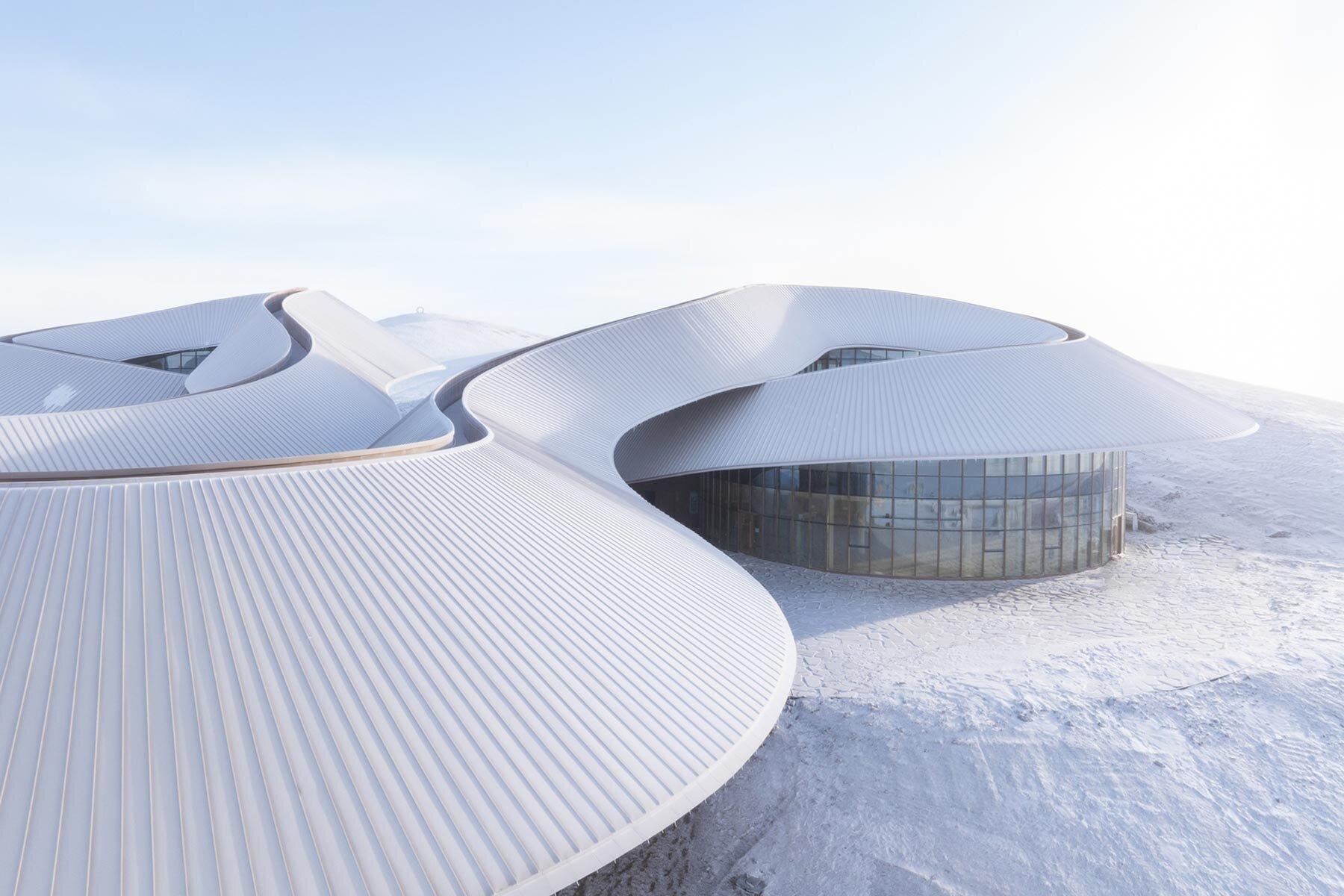
The Volcano-In Hotel of Arrivals was completed in December 2025 and follows the completion of the Volcano-In Visitor Centre, also designed by PLAT ASIA.
The Volcano-In Hotel of Arrivals is part of the Baiyinkulun Steppe & Volcano Tourism Resort, located in Xilinhot, Inner Mongolia, China.
Words by Henry Blake