

- Dries van Noten commissioned Dutch artist Bouke de Vries to create a series of porcelain works celebrating the emblematic Soie Malaquais fragrance
- Soie Malaquais was one of ten gender-neutral fragrances Dries van Noten’s perfume line debuted with in 2022
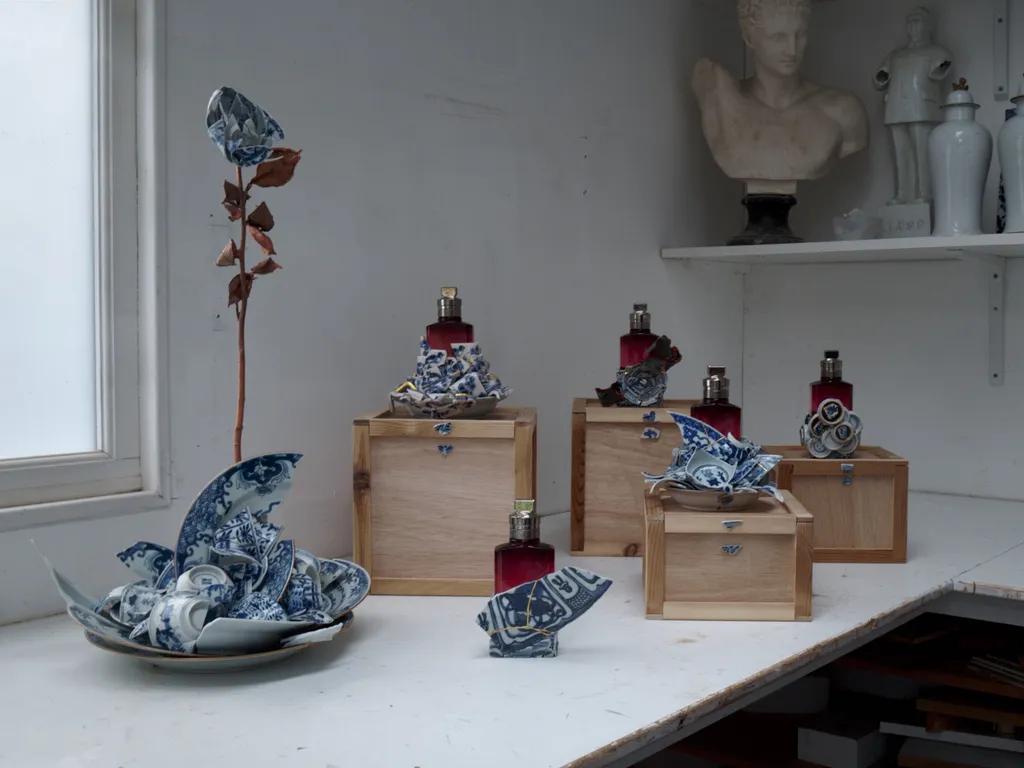
- Bouke de Vries has created a quintet of limited-edition bottles, as well as still life and flower artworks, each celebrating the delftware aesthetic of the Soie Malaquais packaging
Created in partnership with perfumer Marie Salamagne, who “fell in love with Dries’ silk dresses in his Quai Malaquais boutique,” Soie Malaquais is a fragrance inspired by lush texture and materiality. “The texture was so fluid it merged with the skin, which gave me the idea for a silky, enveloping perfume, a mix of chestnut with sensual vanilla,” explained Salamagne.
One of the ten fragrances Dries van Noten’s eponymous fragrance brand debuted with upon launch in 2022, Soie Malaquais stands out from the decuplet as the scent most emblematic of the brand. Evoking the smoothness of silk through a blend of blackcurrant, rose, silk accord, chestnut, and cocoa, Soie Malaquais has a rich warmth that keeps you coming back to smell your own wrist.
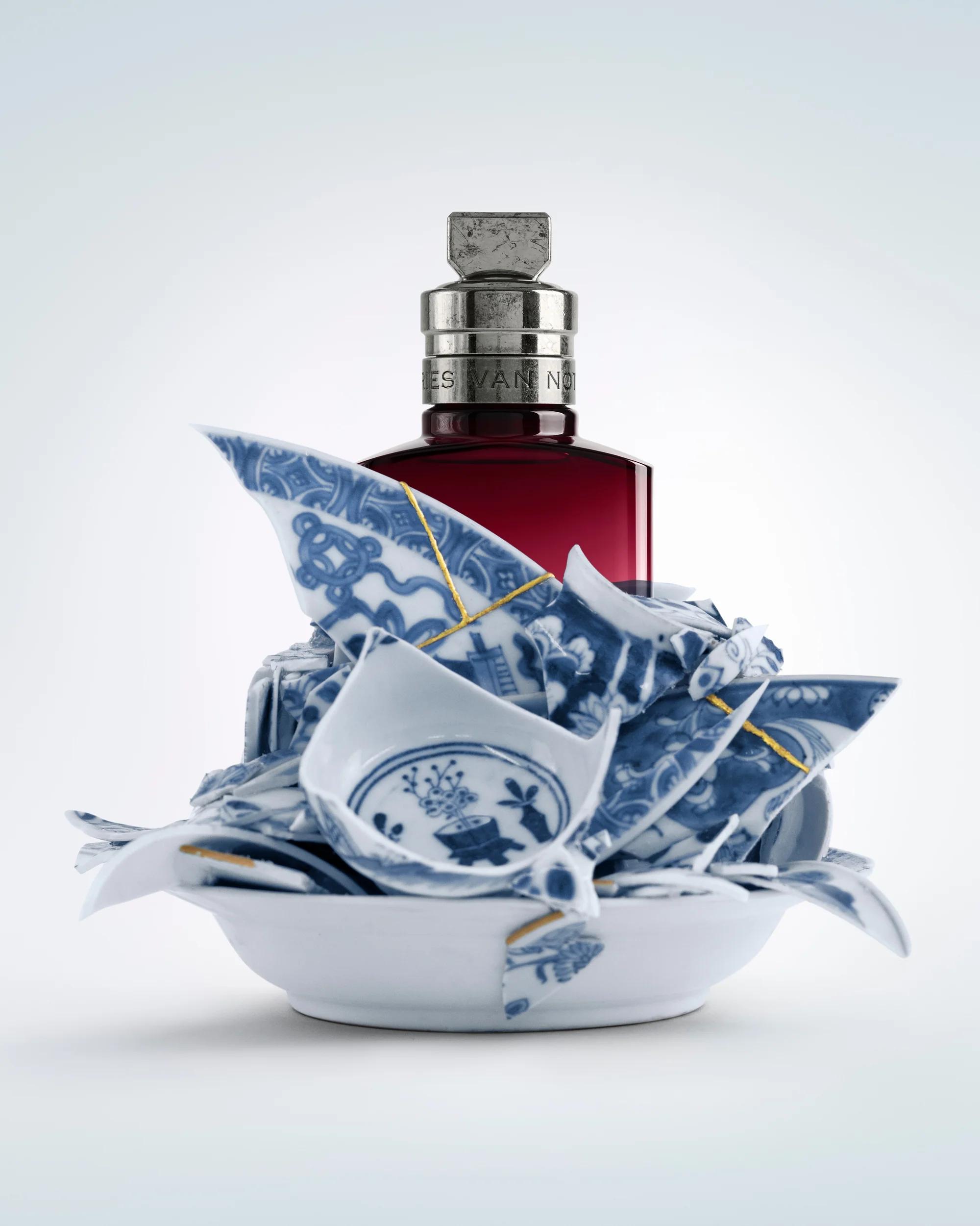
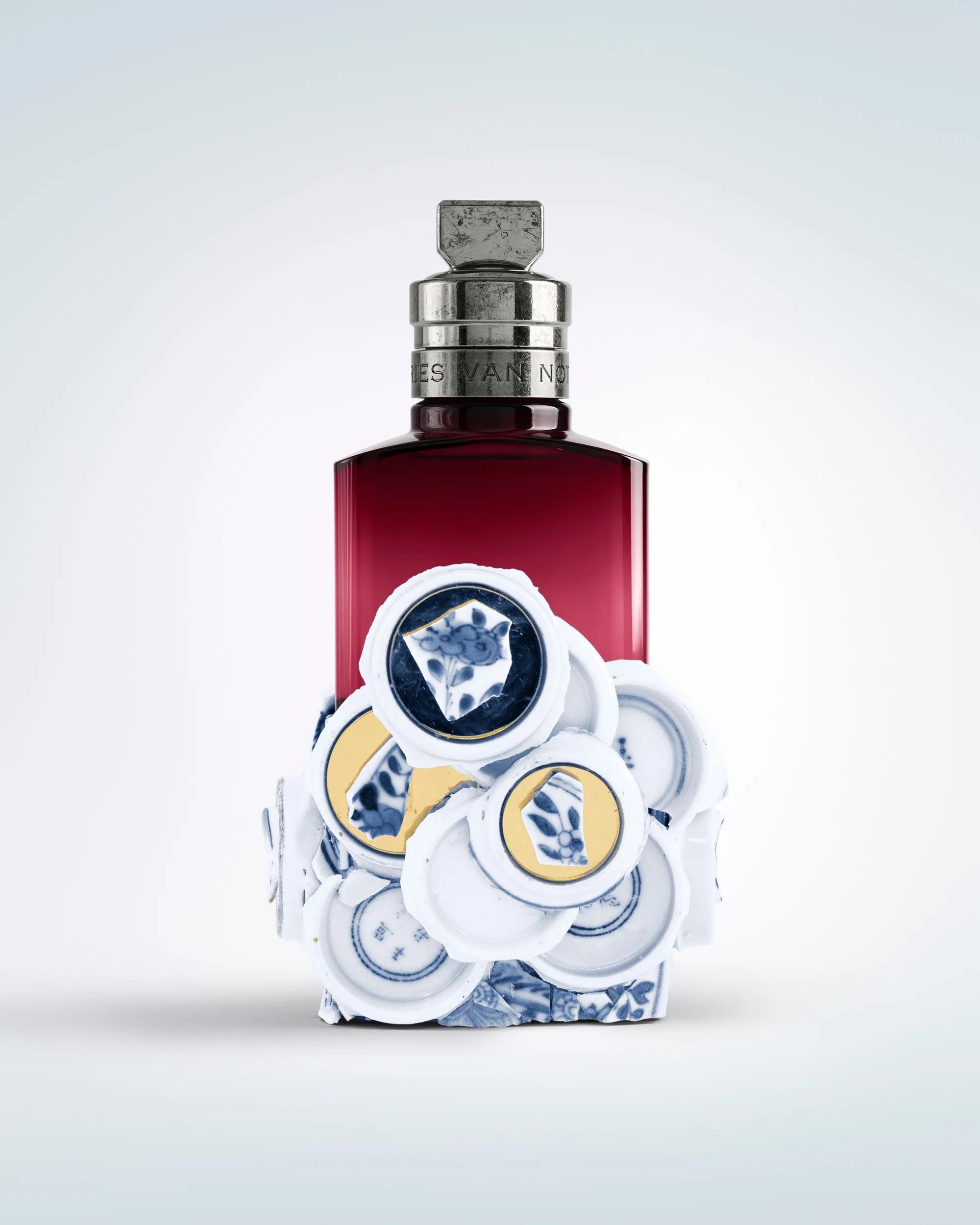
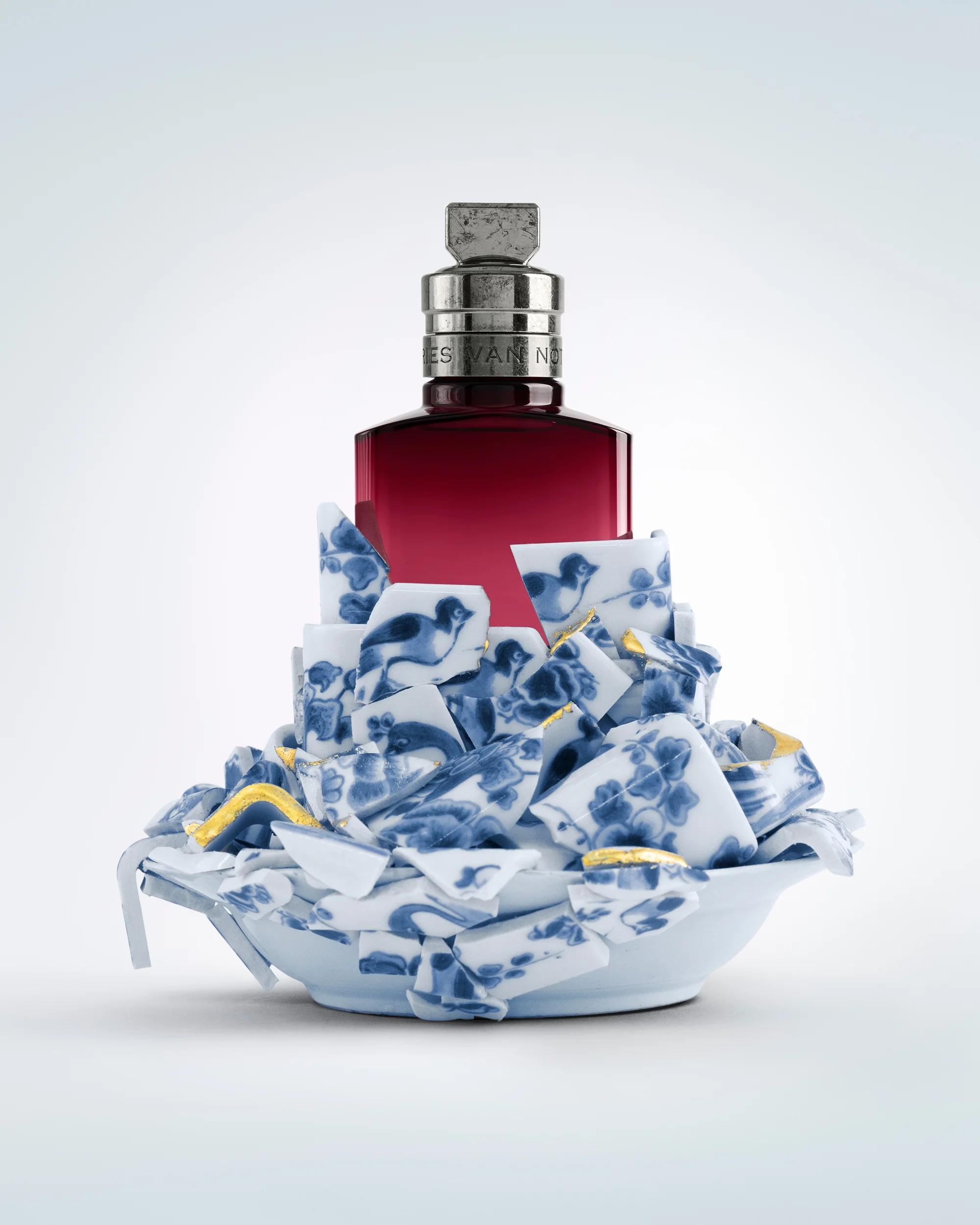
Each of Dries van Noten’s fragrances is known for its distinctive packaging that juxtapose a plain opaque or translucent upper half with a patterned, sartorially led bottom half. The Soie Malaquais bottle is a particularly beautiful one, pairing purple glass with a gradient effect with a blue-and-white pattern reminiscent of delftware (or qinghua) ceramics. Playing into this connection, Dries van Noten tapped Dutch porcelain and ceramic artist Bouke de Vries to create a series of limited-edition bottles and artworks celebrating the scent.
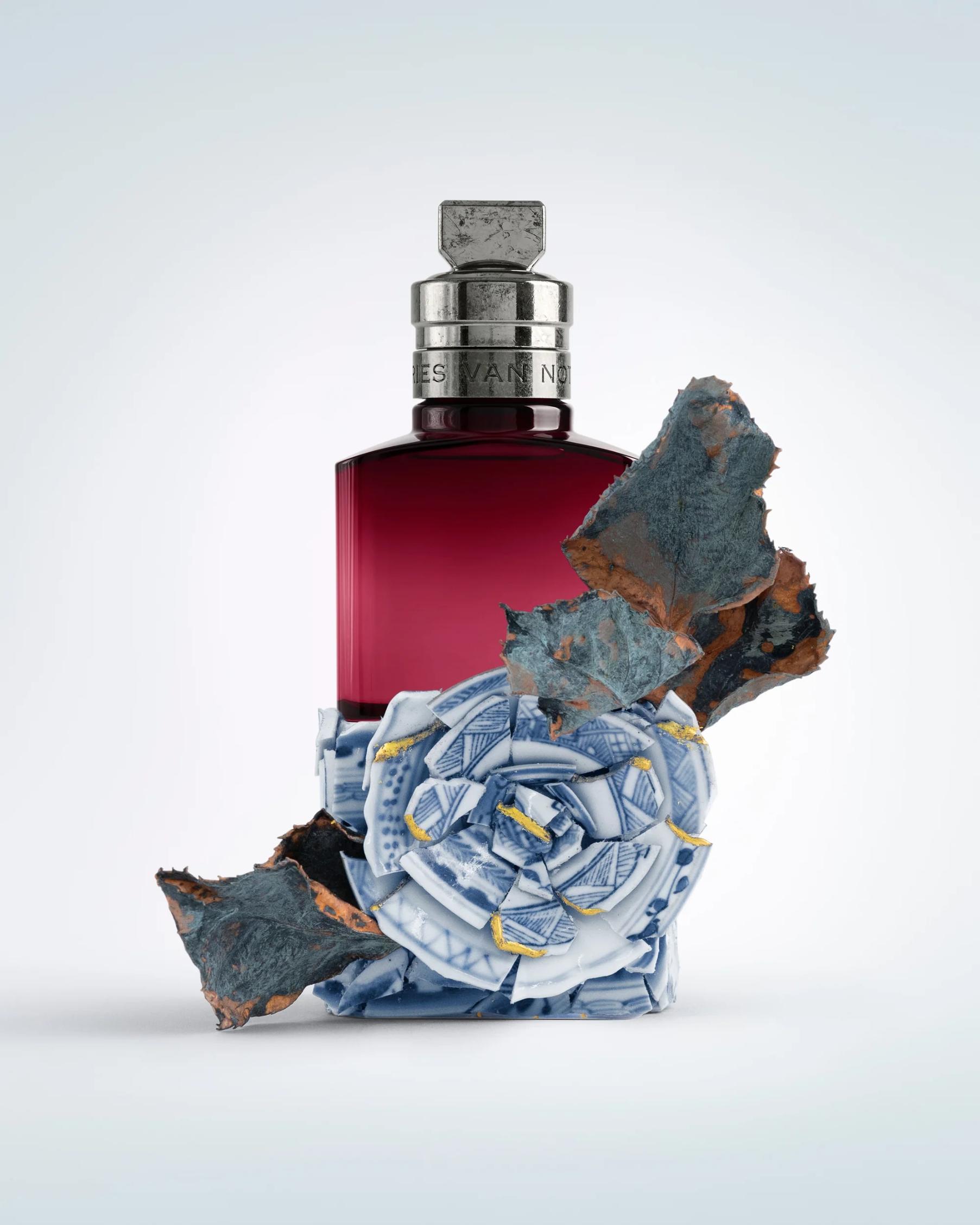
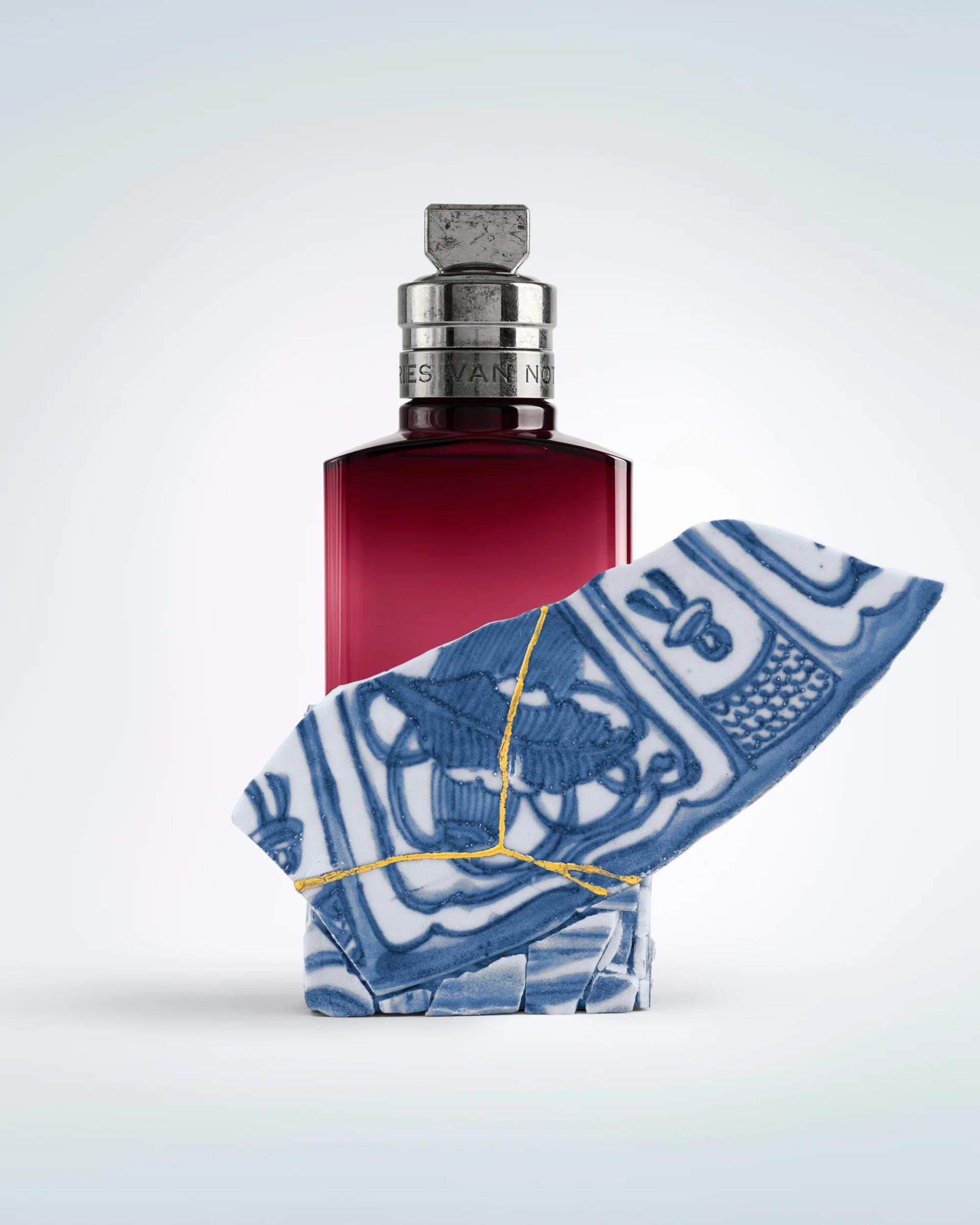
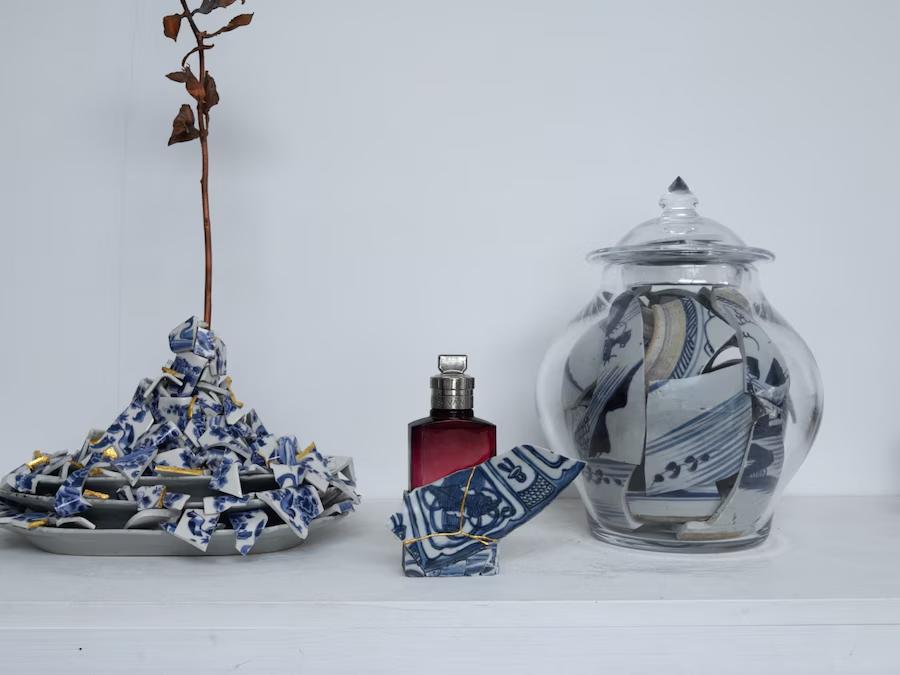
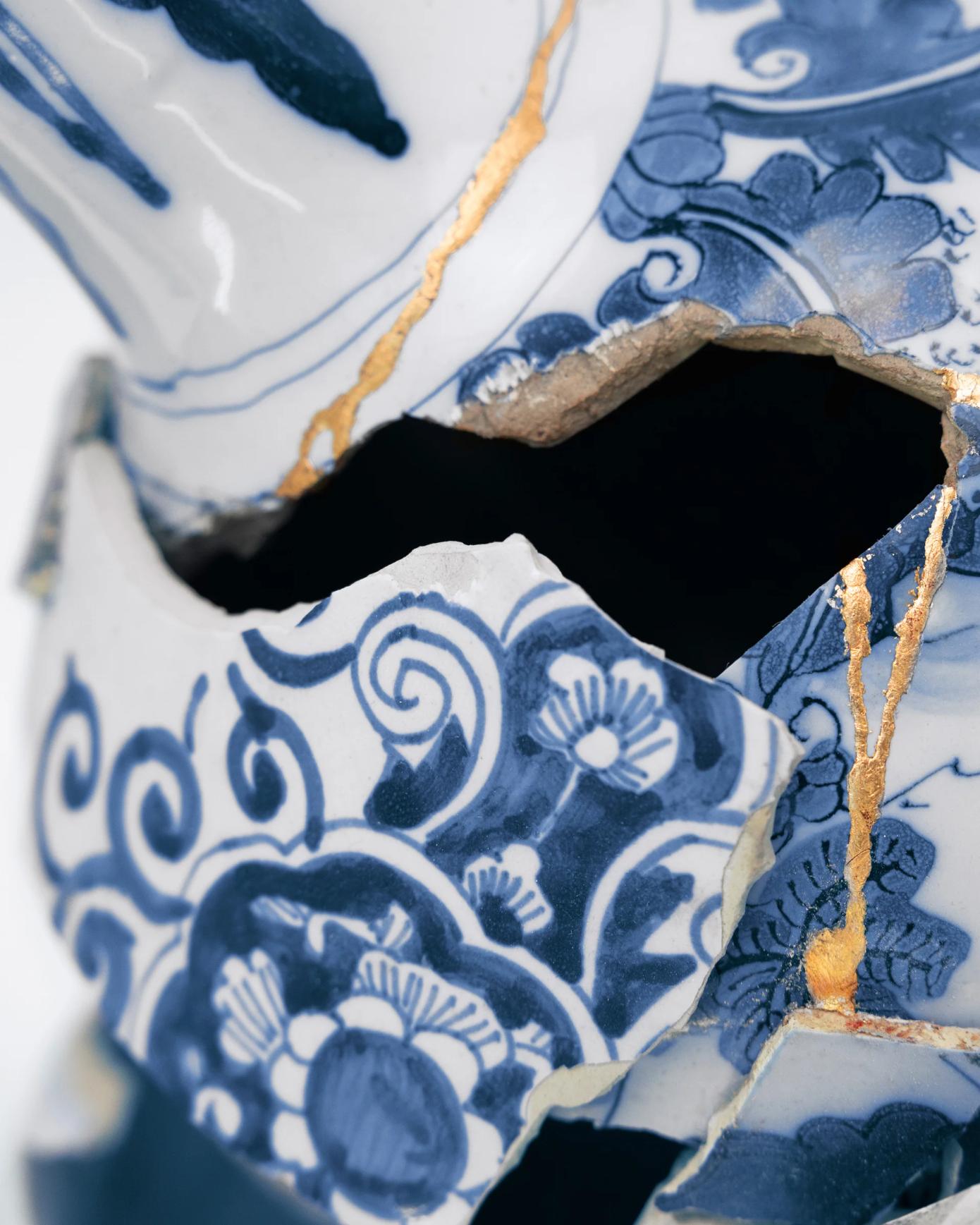
The result is five unique ‘masterpiece’ bottles using reconstructed ceramic fragments, pieced together using techniques like kintsugi to create motifs such as birds, buttons, and roses.. The fragments come from de Vries’ personal collection and predominantly comprise 17th- and 18th-century porcelain from China and delftware from the Netherlands. The Dutch artist also creates a series of complementary sculptures of golden tulips and roses rising from the same deconstructed, fragmented, and reconstructed porcelain.
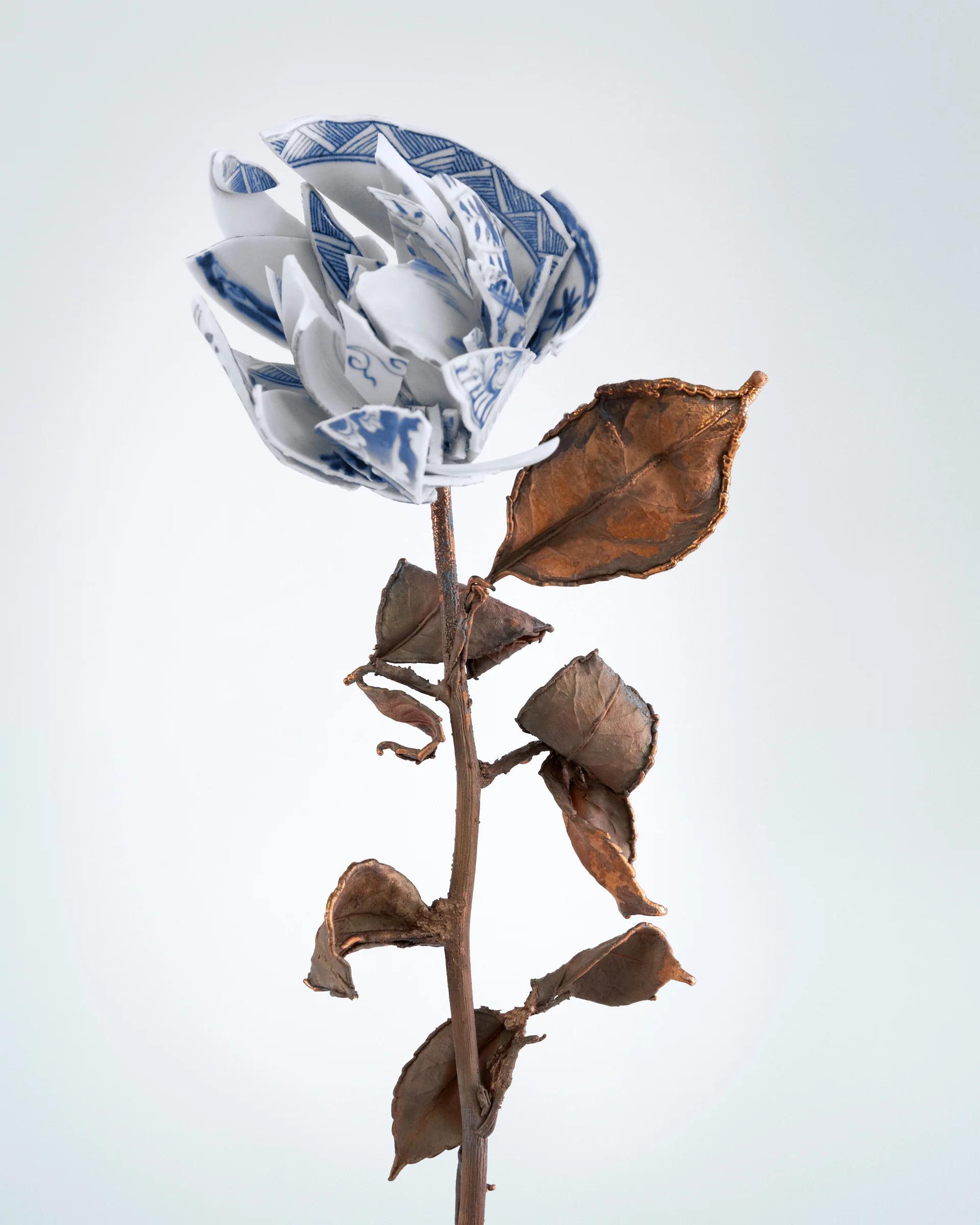
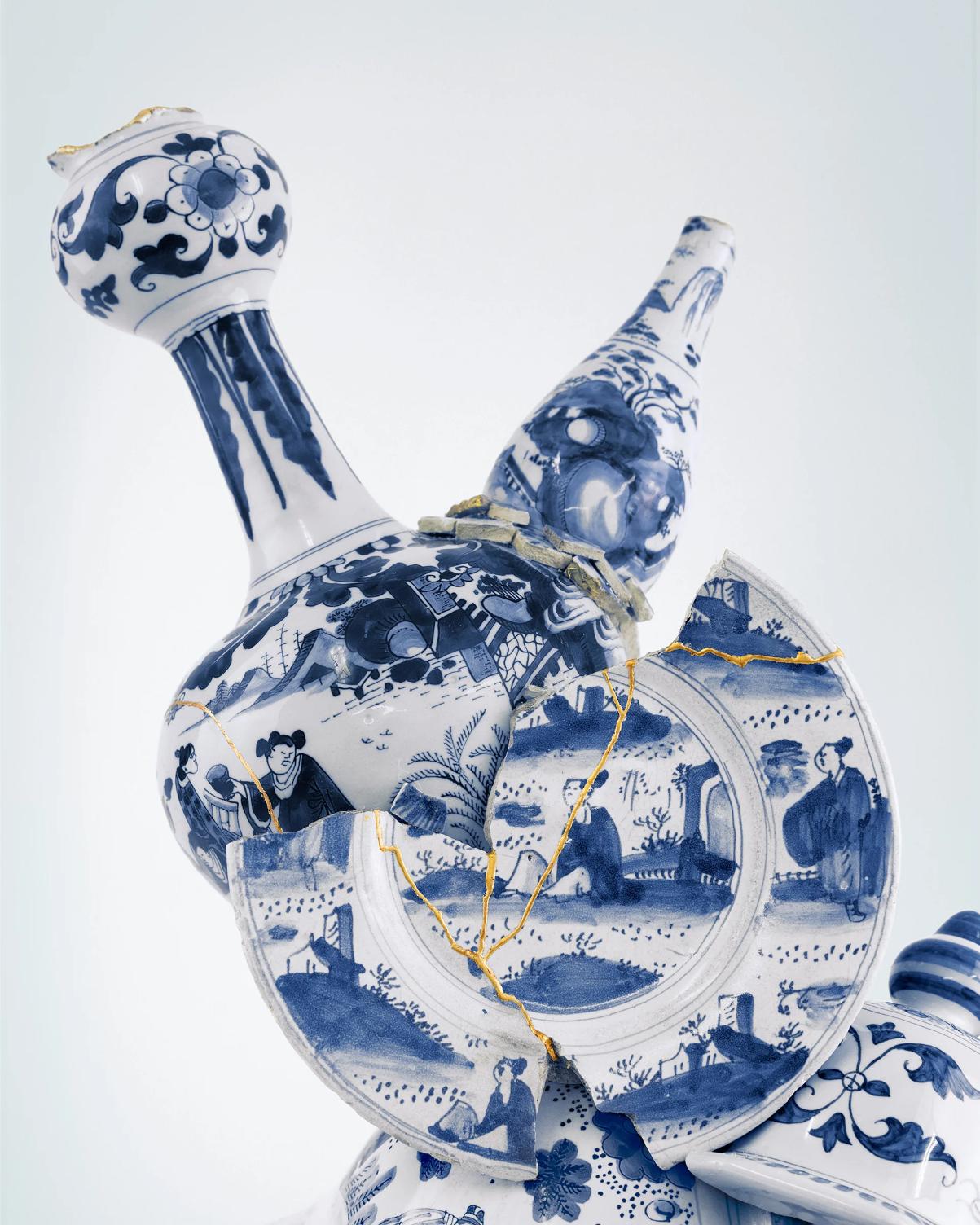
While the five bottles and the porcelain sculptures are for display only, there’s a special-edition Soie Malaquais bottle with golden kintsugi thread running through the porcelain available for purchase, in a limited run of 100 examples.
The Soie Malaquais limited edition porcelain works by Bouke de Vries are available to view in Dries van Noten’s London and New York stores from the 10th of February onwards.
Words by Esmé Duggan