

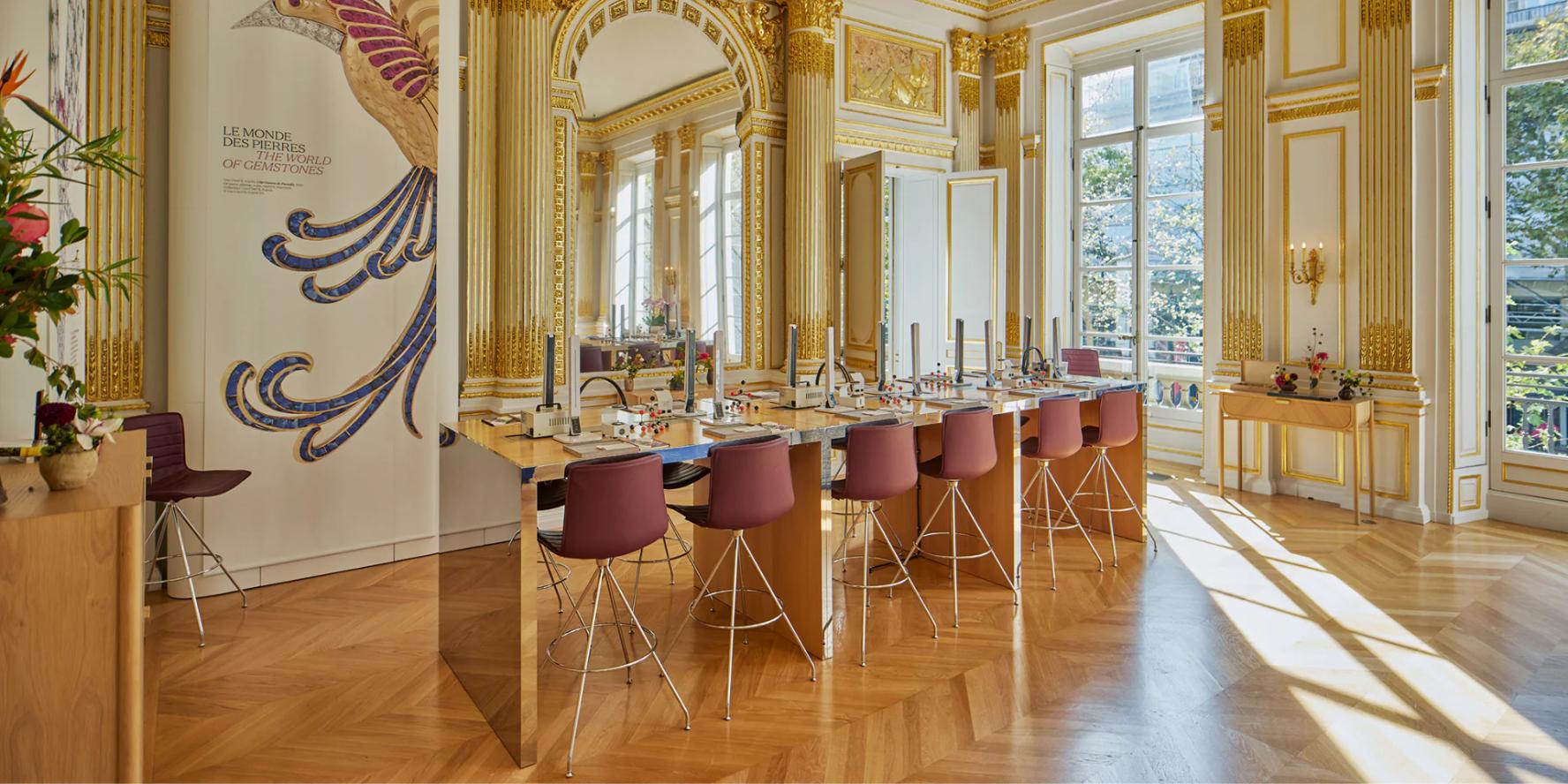
The world of high and fine jewellery has long been a guarded one, with wisdom and technical knowledge typically passed down to a select few. However, since its founding in 2012 under the aegis of Van Cleef & Arpels, L’ÉCOLE School of Jewellery Arts has worked to draw back the golden veil, elucidating the knowledge and culture surrounding jewellery and the jewellery industry with the general public. The initiative prides itself on its accessibility, providing hands-on lessons and courses as well as talks and exhibitions to a wide ranging audience from diverse backgrounds. Put simply — you needn’t own high jewellery to learn about it.
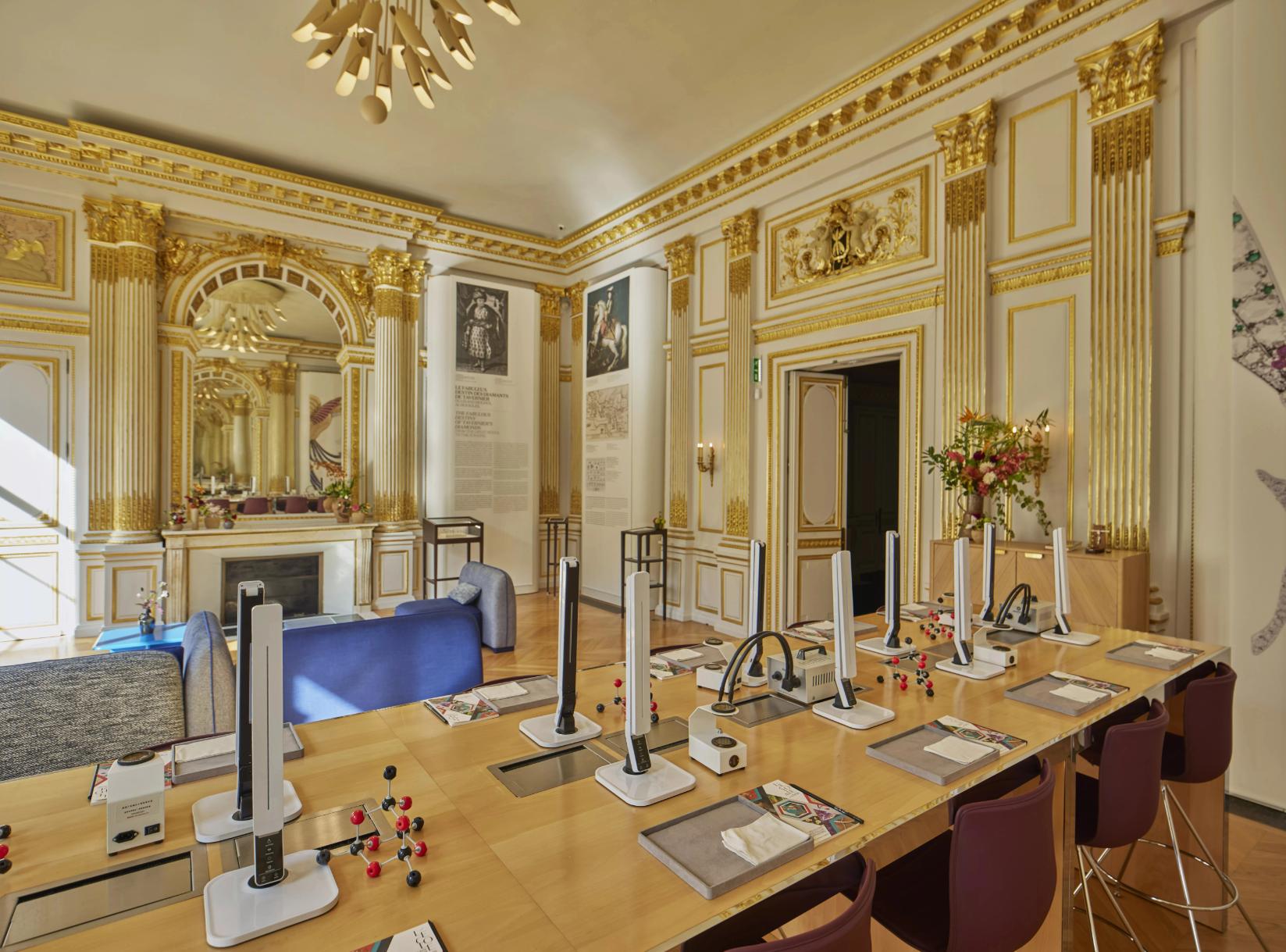

With five permanent campuses—two in Paris and one each in Shanghai, Hong Kong, and Dubai—as well as regular nomadic pop-ups, L’ÉCOLE School of Jewellery Arts has cemented itself as the foremost destination for jewellery education for the public. Each permanent campus—as well as the ephemeral schools—plays host to discussions, hands-on workshops and courses, and exhibitions, built around three core pillars: the history of jewellery, craftsmanship and savoir-faire, and the world of gemstones. Alongside the permanent and nomadic campuses, L’ÉCOLE School of Jewellery Arts regularly publishes a diverse array of books on jewellery, from the introductory The Art of The Jeweller and The Fabulous Destiny of Tavernier’s Diamonds to its Dédale series, which focuses on works of fiction tangentially related to the world of jewellery. Cementing its commitment to literature, L’ÉCOLE’s newest Parisian campus in the 18th-century Hôtel de Mercy-Argenteau is home to a specalised library and the L’Escarboucle bookshop.
“We deeply and sincerely value the dimension of transmission, of opening the doors to the widest audiences, because it’s to create a spark [of interest],” shares Julie Clody-Medina, president of Van Cleef & Arpels, Asia Pacific, in conversation with Albert Review. Clody-Medina reinforces that L’ÉCOLE School of Jewellery Arts is designed for those with an interest in jewellery at all levels, from amateurs to connoisseurs and serious collectors, adding that the initiative seeks to open the door to the jewellery arts in an engaging way, placing an emphasis on participative, hands-on learning.
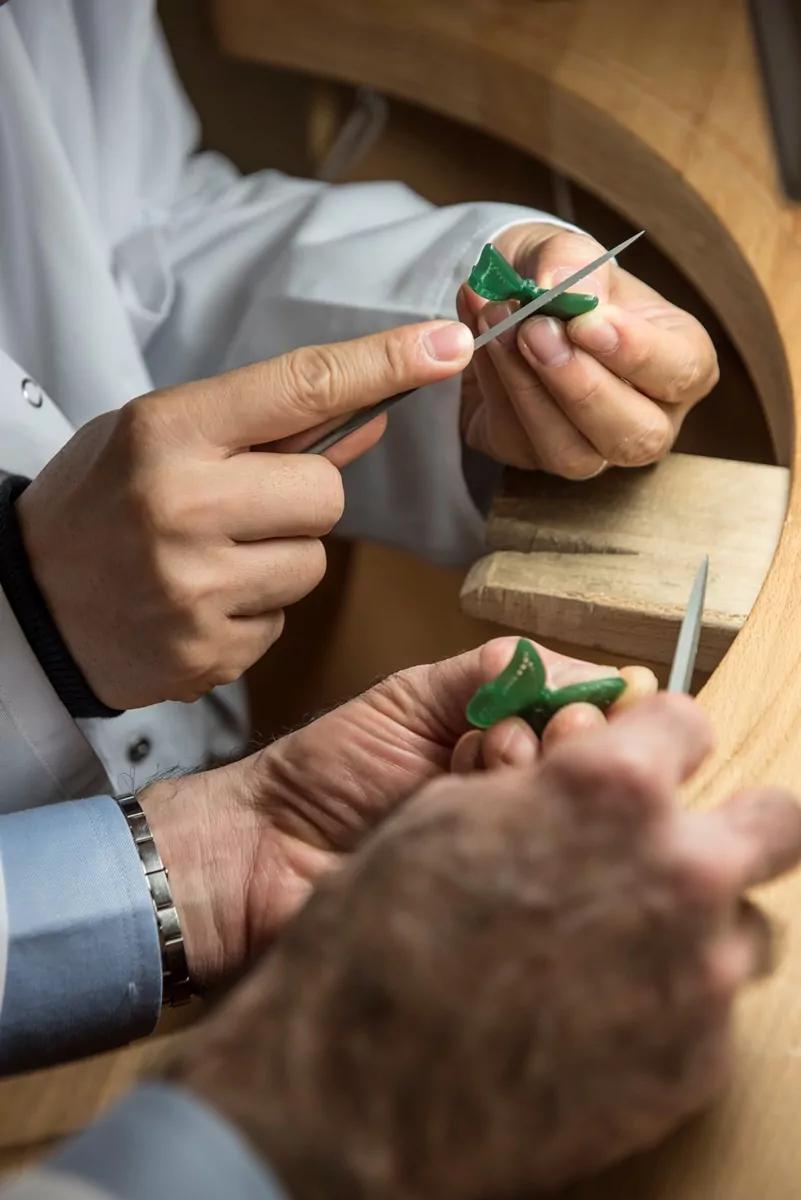
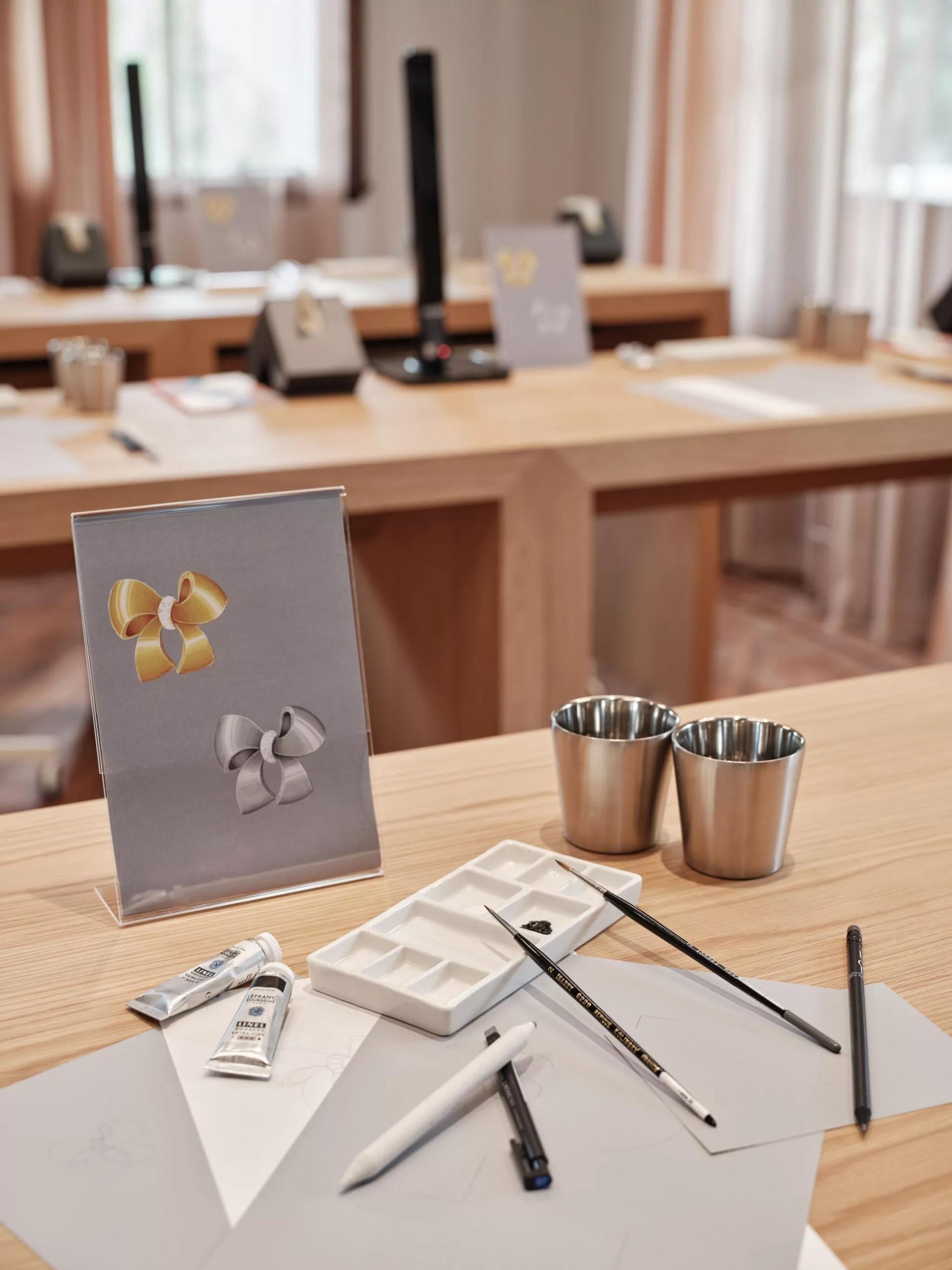
“We strongly believe ultimately that appreciation will generate understanding, and understanding can generate passion,” explains Clody-Medina. “It’s not a given for the general public to know what kind of jobs are behind a jewellery creation, so we want to demystify it.” To that end, the syllabus at L’ÉCOLE School of Jewellery Arts spotlights the full breadth of roles that go into each jewellery creation, from gemologists and lapidaries to designers, goldsmiths, and gem setters.
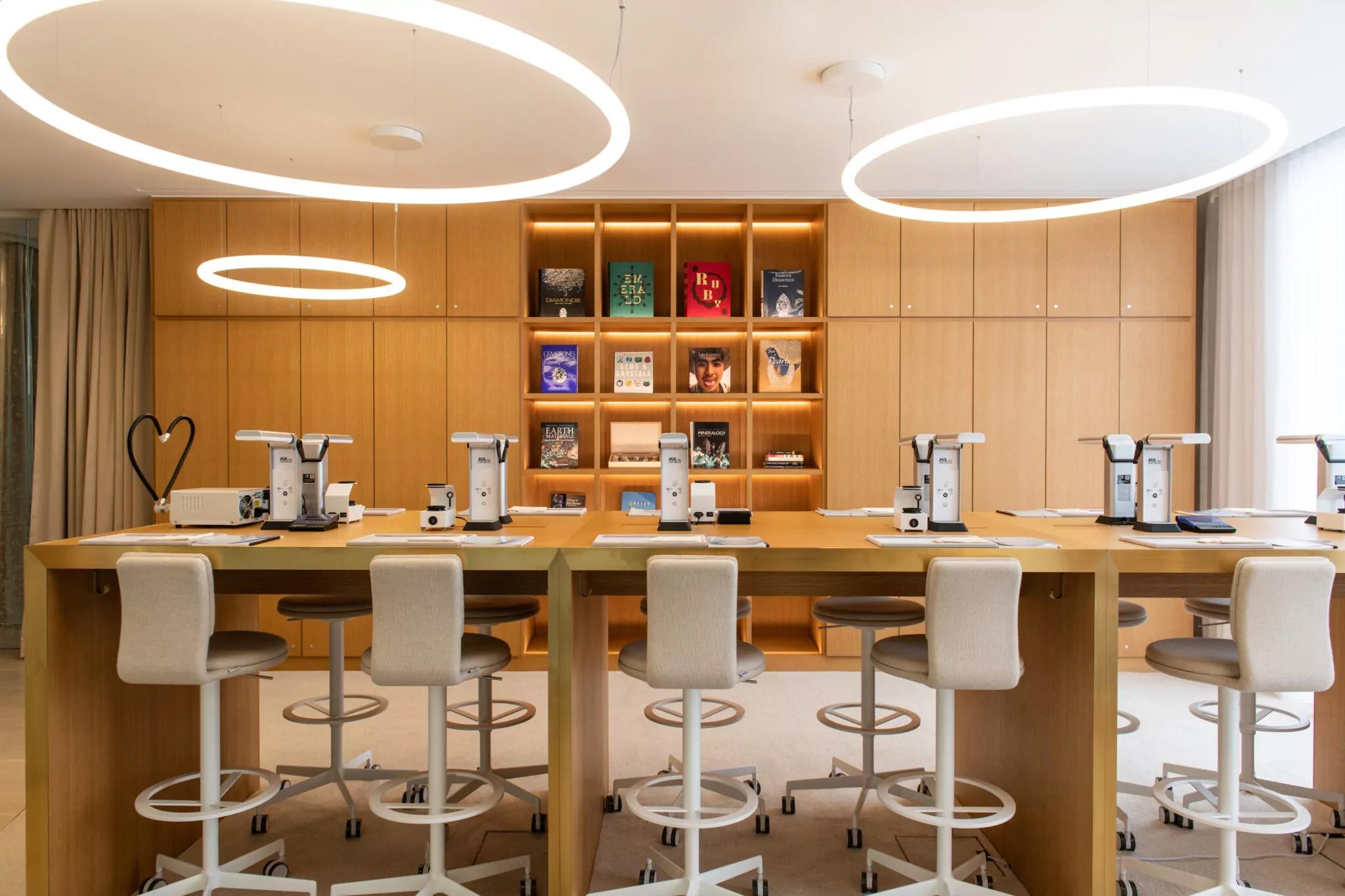
Core to the goal behind L’ÉCOLE School of Jewellery Arts is planting the seed of interest in the next generation of jewellers. “If a young child left L’ÉCOLE saying “mummy, I want to become a jeweller,” I think that’s the best thing that could happen.”
Cynics may dismiss L’ÉCOLE as a mere means of expanding Van Cleef & Arpels’ potential clientele. But the maison is clear that the former is an independent operation, more focused on cultivating future jewellers than customers.
Lise Macdonald, president of L’ÉCOLE School of Jewellery Arts, emphasises that despite the initiative being founded and solely supported by Van Cleef & Arpels, the French maison’s work is only used when illustrative to the topic at hand. “Our mandate is jewellery culture at large,” states Macdonald, “we don’t have the mandate to speak about Van Cleef & Arpels.” Indeed, the classes and exhibitions heavily feature the works of other seminal maisons, from Van Cleef & Arpels’ contemporaries like Cartier and Boucheron, to the now defunct Lacloche.
“It’s super important that we keep this freedom — not to speak of the maison when it’s not relevant or to speak of the maison when it is relevant,” says Macdonald. “When we were created, the maison wanted to speak about jewellery culture at large and not just about Van Cleef & Arpels.”
Words by T. Angel