
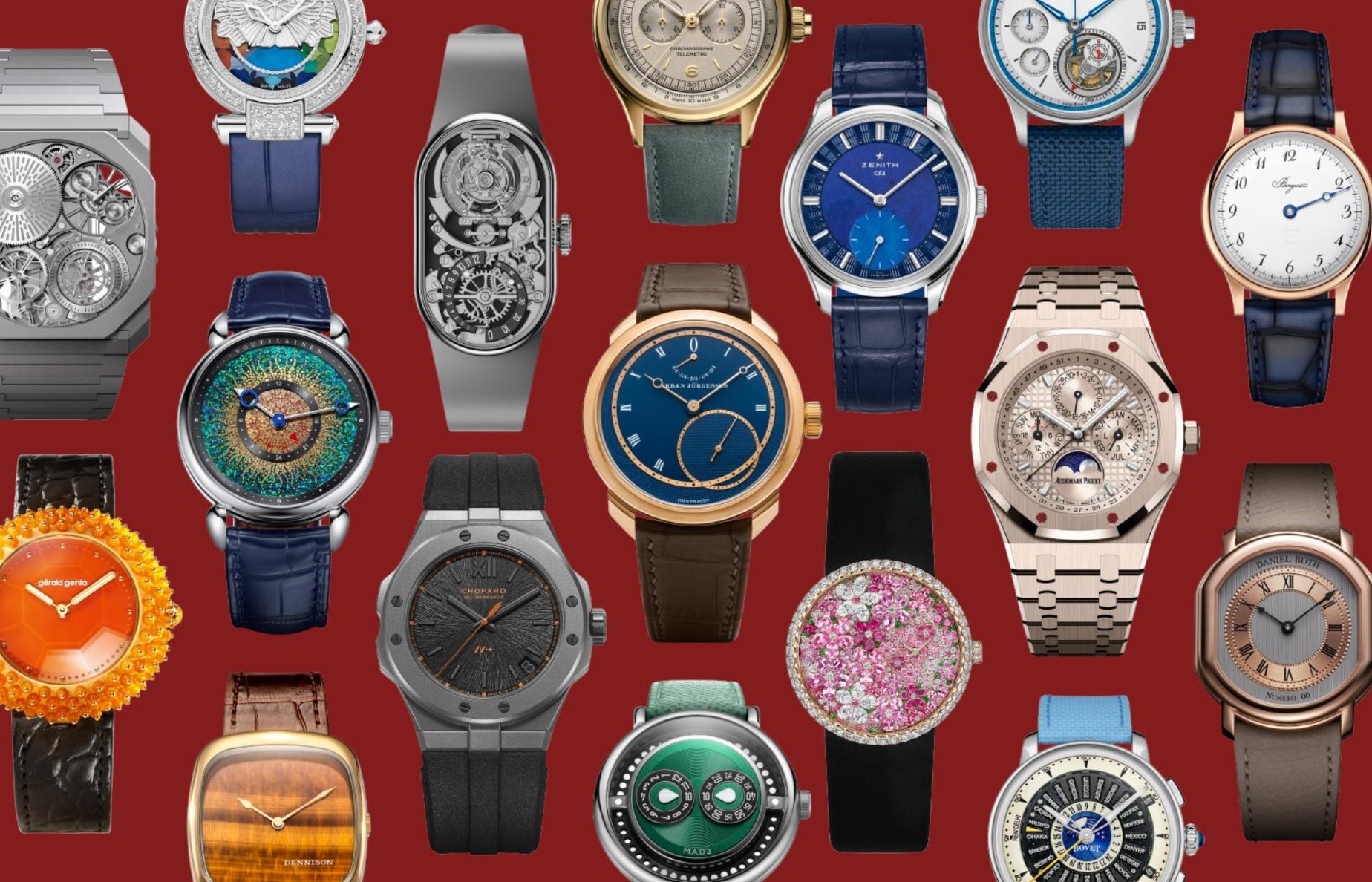
- The 2025 Grand Prix d’Horlogerie de Genève saw the Breguet Classique Souscription take home the Aiguille d’Or, the GPHG awards’ top honour
- Akin to the Oscars of the watch world, the Grand Prix d’Horlogerie de Genève is an annual awards ceremony that celebrates excellence in watchmaking
- Other highlights include the Daniel Roth Extra Plat Rose Gold taking home the Time Only prize and the Audemars Piguet Royal Oak Perpetual Calendar winning the Iconic Watch Prize
- Each year, around 20 prizes are awarded, with the Aiguille d’Or being the most prestigious of the lot
The Grand Prix d’Horlogerie de Genève (GPHG) awards are often dubbed the ‘Oscars of Watchmaking’, with the annual event celebrating and promoting excellence in watchmaking. Founded by Gabriel Tortella and Jean-Claude Pittard in 2001, the Grand Prix d’Horlogerie de Genève celebrates the finest watch creations across a variety of categories, including Time Only, Iconic Watch, Men’s Watch, Ladies’ Watch, Sports Watch, Jewellery Watch, Artistic Crafts, and Challenge Watch. Each year, around 20 prizes are awarded, with the top honour being bestowed the Aiguille d’Or. Open to heritage manufactures, established and emerging independent watchmakers, and microbrands alike, the GPHG awards are eligible for timepieces—i.e. watches, and for some categories, clocks—released between summer of the preceding year and autumn of the award year. This year, that encompasses timepieces released between May 2024 and October 2025.
Taking home the top gong is the Breguet Classique Souscription, marking the maison’s first Aiguille d’Or win in over a decade. Read on to discover the rest of the winners from the 2025 Grand Prix d’Horlogerie de Genève (GPHG) awards.
‘Aiguille d’Or’ Grand Prix: Breguet Classique Souscription 2025
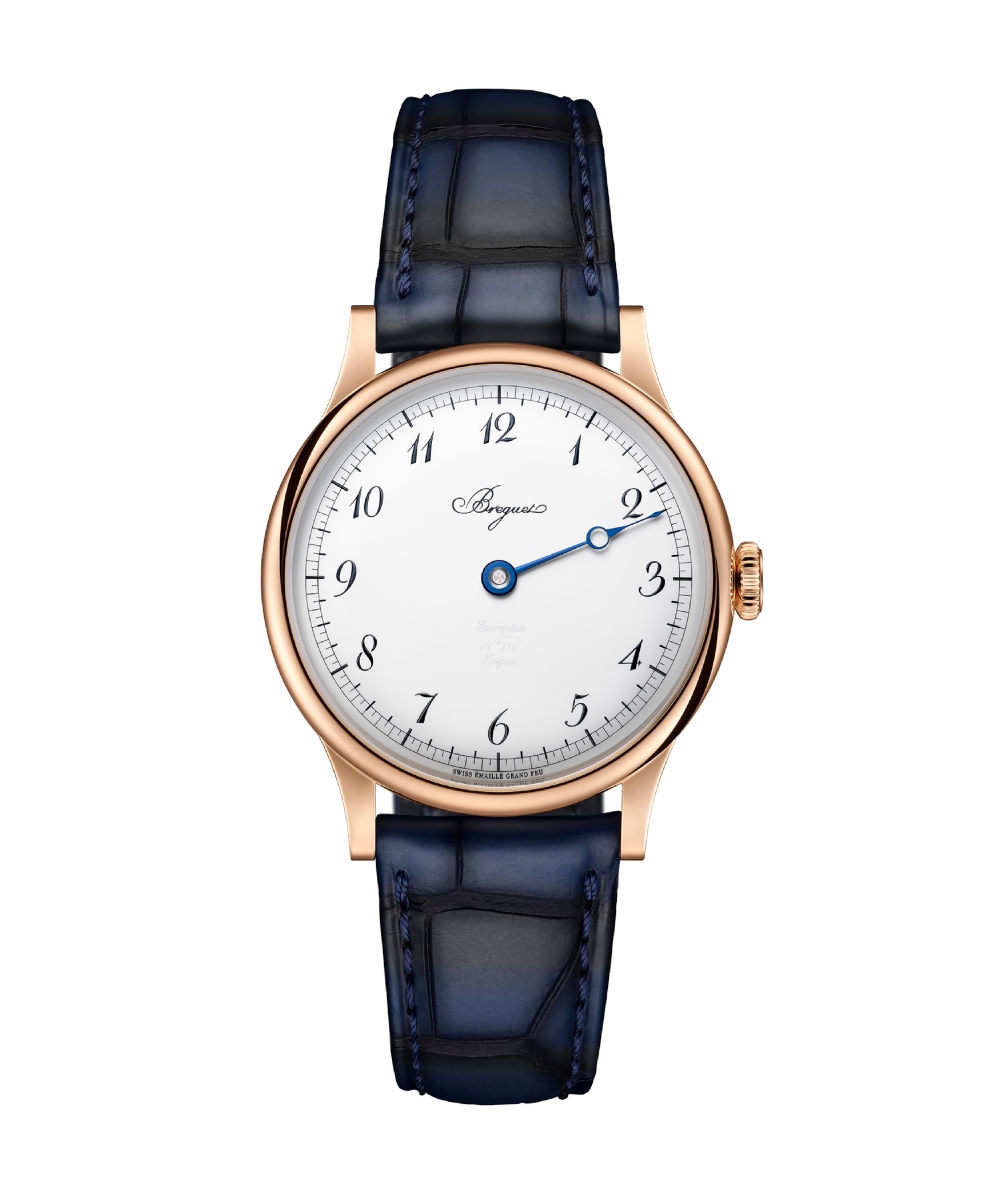
Defined by its restraint, the Breguet Classic Souscription 2025 revisits the pocket watches developed by Abraham-Louis Breguet and issued through a subscription model. This recent reimagining translates the essentialist design language of the original into wristwatch form, with the 40mm Breguet gold case housing a dazzling white grand feu enamel dial (echoing its predecessors once produced in the Quai de l’Horloge workshop). The single blued open-tipped hand and slim Breguet numerals add to the understated charm, while the hand-wound calibre VS00 keeps things running.
Time Only: Daniel Roth Extra Plat Rose Gold
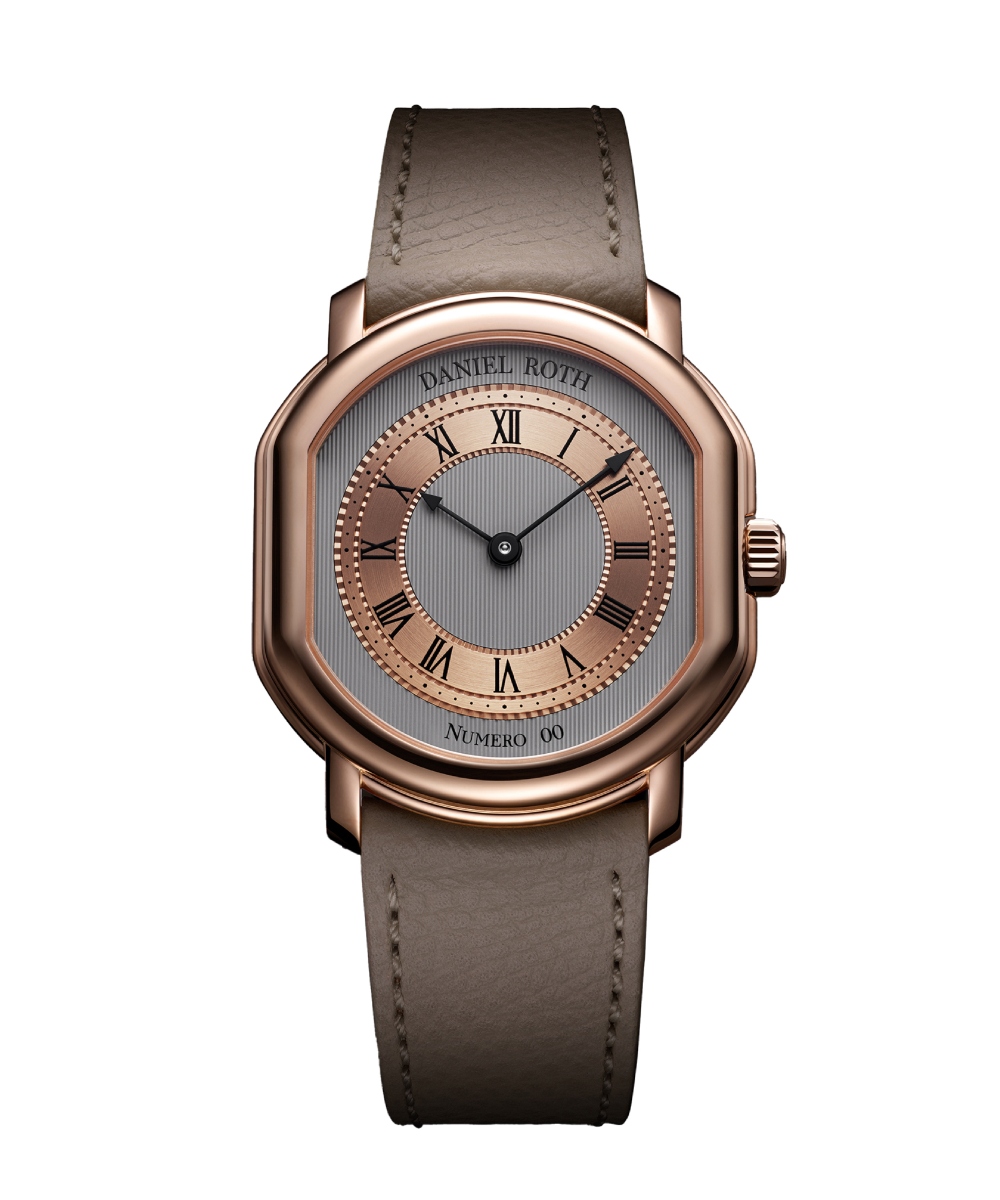
Taking home the Time Only award is the Extra Plat Rose Gold, courtesy of the recently revived Daniel Roth brand. Housed within a 35.5mm x 38.6mm rose gold case in the iconic ellipsocurvex shape, it has a hand-guilloché white gold dial topped with a circular sector in rose gold housing the numerals. Its exhibition caseback showcases the manually wound calibre DR002 crafted by master watchmakers Michel Navas and Enrico Barbasini at La Fabrique du Temps Louis Vuitton.
The Daniel Roth Extra Plat Rose Gold was chosen as the Time Only winner for its elegant balance between tradition and modernity.
Ladies’ Watch: Gérald Genta Gentissima Oursin Fire Opal
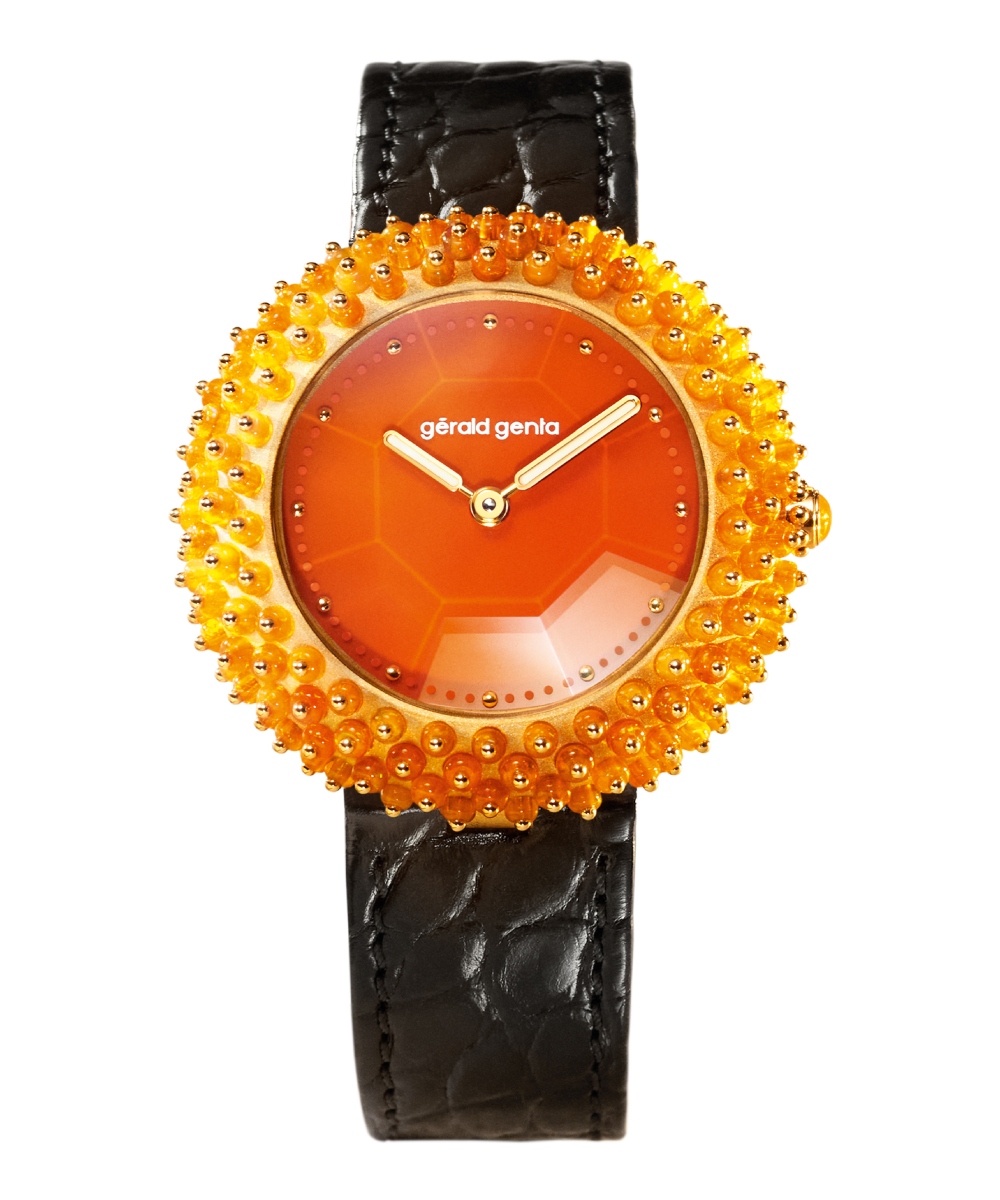
The Ladies’ Watch prize winner goes to the Gentissima Oursin Fire Opal, created under the revived Gérald Genta brand. The timepiece sees a 36.5mm yellow gold case bestowed with with 137 individually set fire opals, with the resultant shape referencing the spherical, spiky structure of sea urchins. The colour scheme continues onto the dial, with an orange cornelian dial topped with a faceted crystal and slightly octagonal inner bezel, in a subtle nod to the late watchmaker’s seminal shape. It’s powered by the calibre GG-005, an automatic movement based off the Zenith Elite.
The GPHG jury recognises the Gentissima Oursin Fire Opal for its audacious attitude and intent to spark joy and curiosity.
Men’s Watch: Urban Jürgensen UJ-2 (double wheel natural escapement)
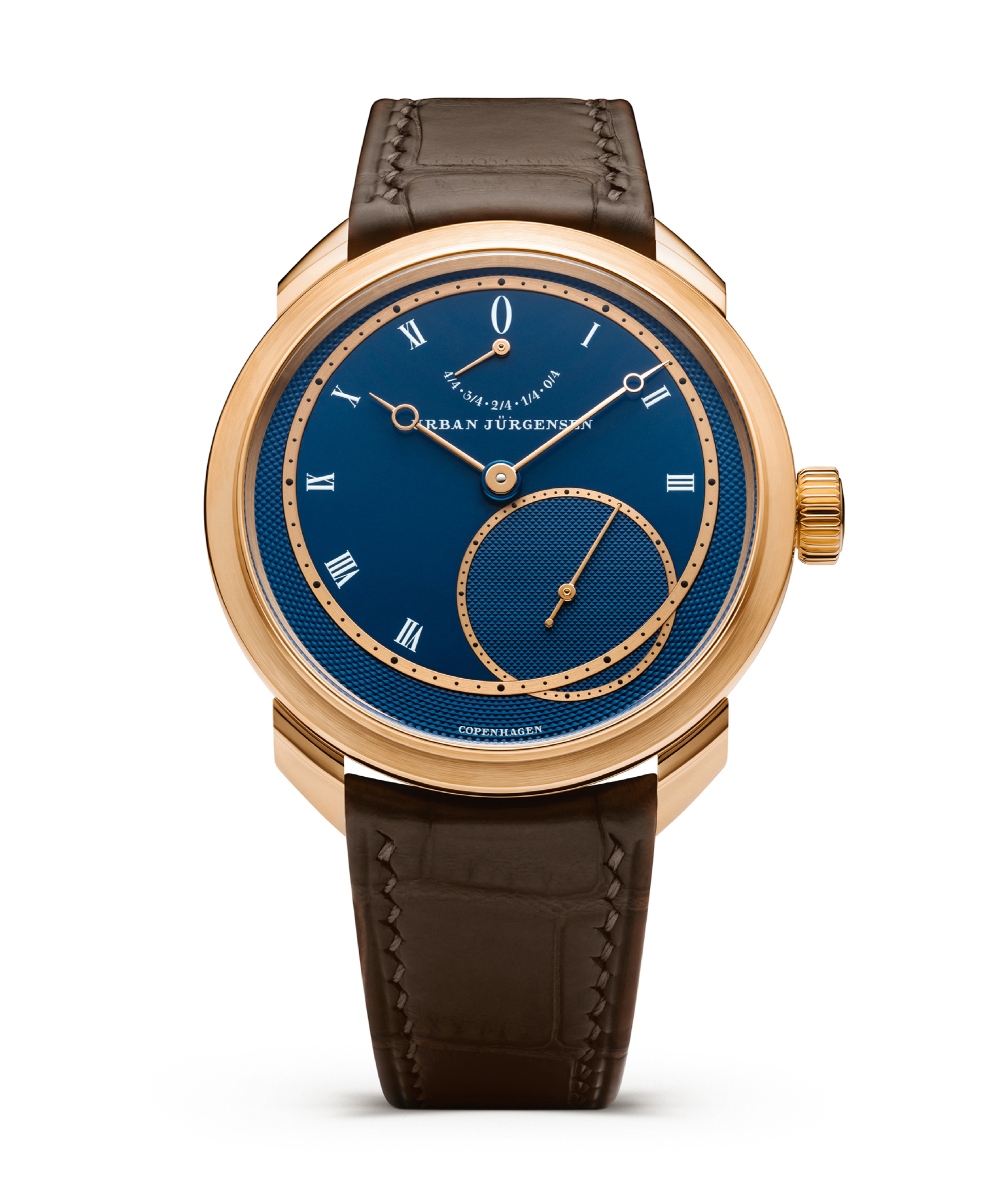
One of the longest continually operating watch brands in the world, Urban Jürgensen has had several eras. Its current one under co-CEOs Kari Voutilainen and Alex Rosenfield is perhaps its most alluring, with the brand currently focusing on dress watches with a distinct yet pure design language. At the heart of the Urban Jürgensen UJ-2 is a double wheel natural escapement system, with GPHG jury acknowledging the hand-finishing on every component of the manually wound movement.
The timepiece was selected not for its complexity, but for the “relentless pursuit of perfection in even the simplest things.”
Ladies’ Complication Watch: Chopard Imperiale Four Seasons
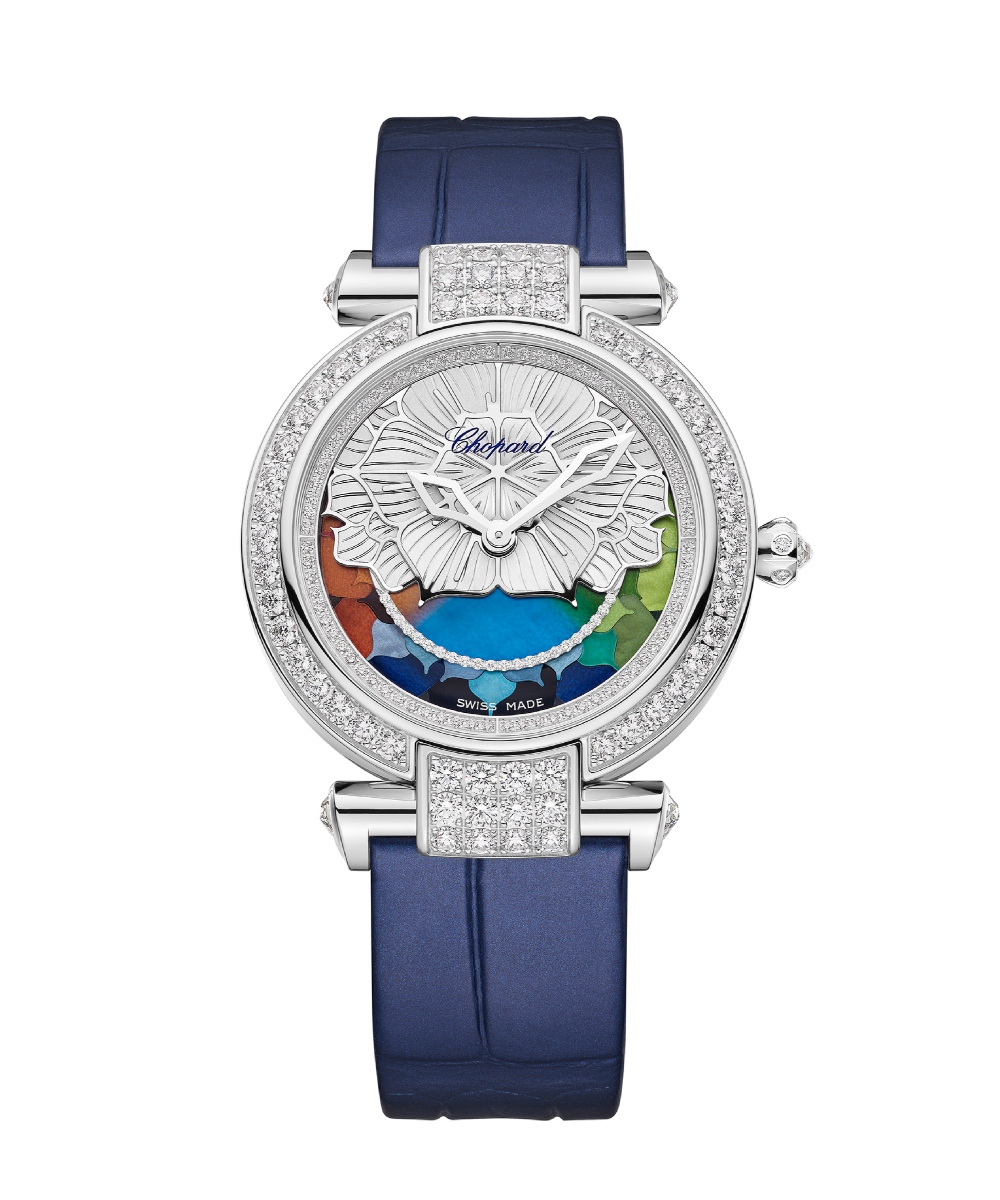
Exemplifying beauty for beauty’s sake, the Chopard Imperiale Four Seasons sees a 36mm white gold case set with diamonds house a rotating disc that completes a full revolution over 365 days, evoking the gentle cycle of the seasons. Mother-of-pearl marquetry in varying colours evokes a landscape, shifting subtly with time. On the upper half of the dial is a lacework lotus motif crafted from white gold whit satin-brushed gold petals. It’s powered by the in-house calibre L.U.C 96.31-L, an automatic movement equipped with the unique Four Seasons module.
Men’s Complication Watch: Bovet 1822 Récital 30
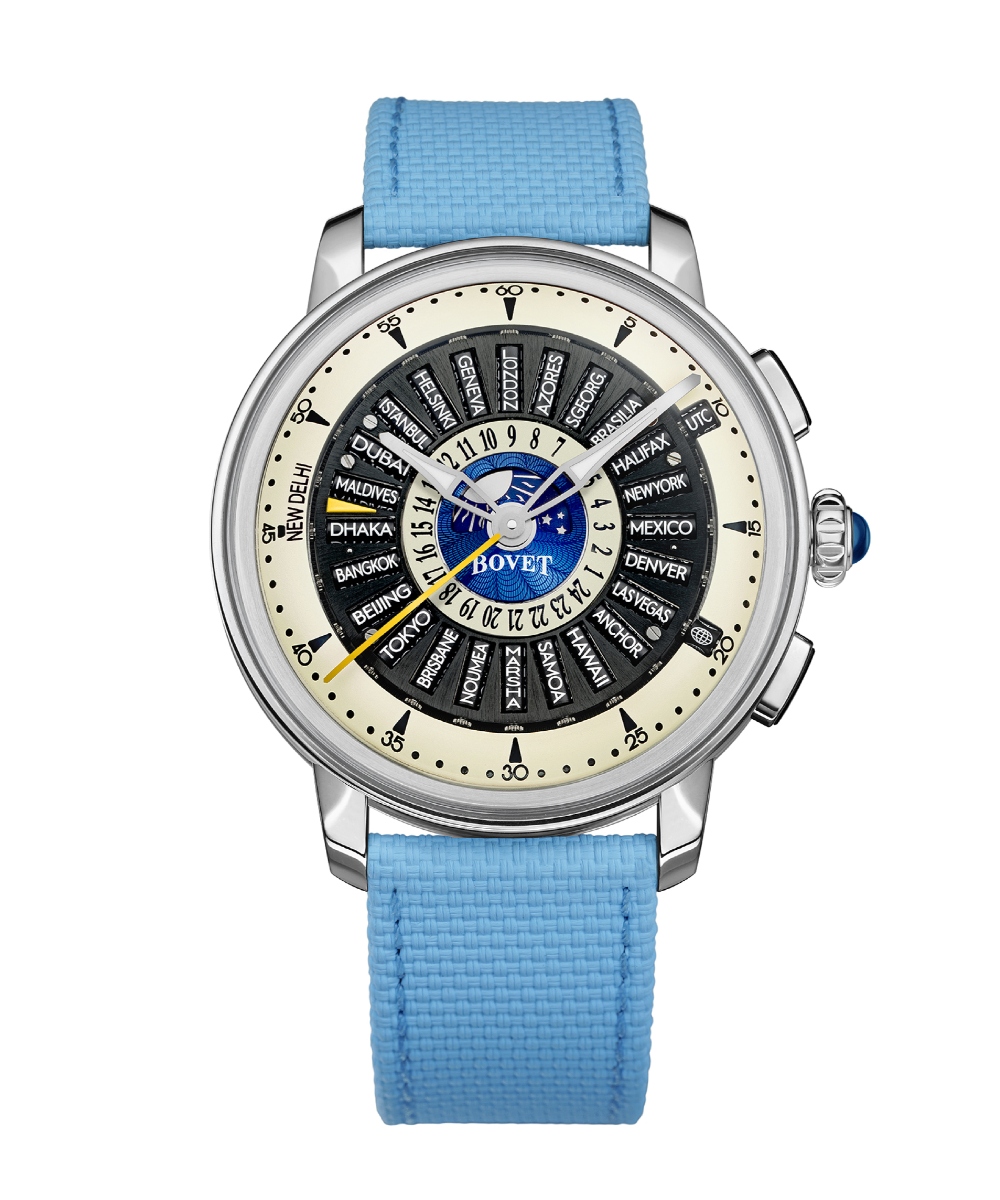
The Bovet 1822 Récital 30 took home the accolade for Men’s Complication Watch, thanks to its unique world time system that uses rollers for improved legibility and accounts for Daylight Saving Time, as well as New Delhi, India (indivated with the yellow arrow), which is typically eschewed on world time watches for its challenging 30-minute off-set time.
Iconic Watch: Audemars Piguet Royal Oak Perpetual Calendar
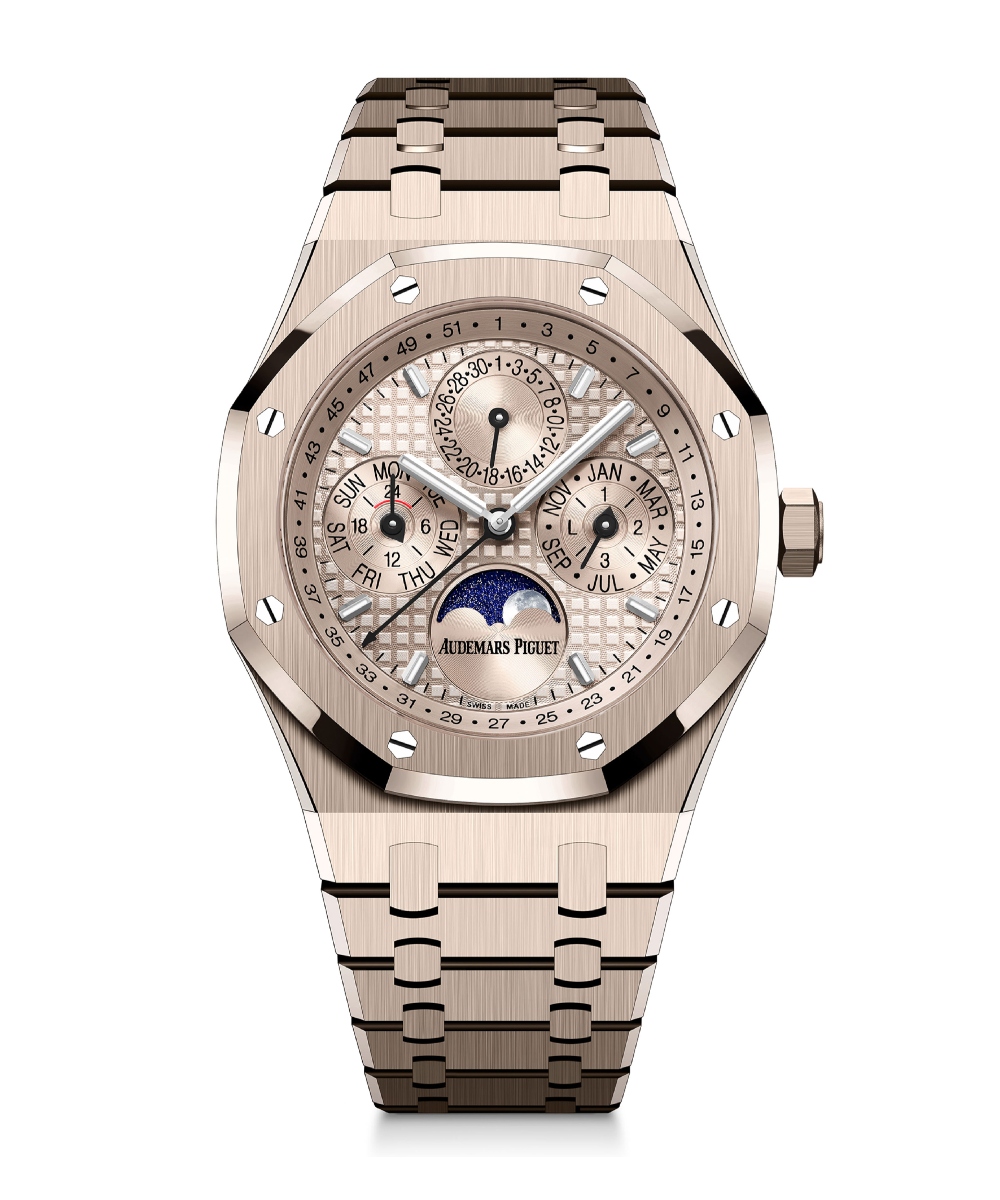
A watch that’s retained its cultural clout since the early 1970s rightly deserves recognition. Released as part of Audemars Piguet’s 150th anniversary celebrations, the Royal Oak Perpetual Calendar takes home the Iconic Watch prize thanks to its eminently recognisable case shape which has been fitted with the calibre 7138, an automatic movement that revolutionises the perpetual calendar experience through an all-in-one crown.
Tourbillon Watch: Bulgari Octo Finissimo Ultra Tourbillon
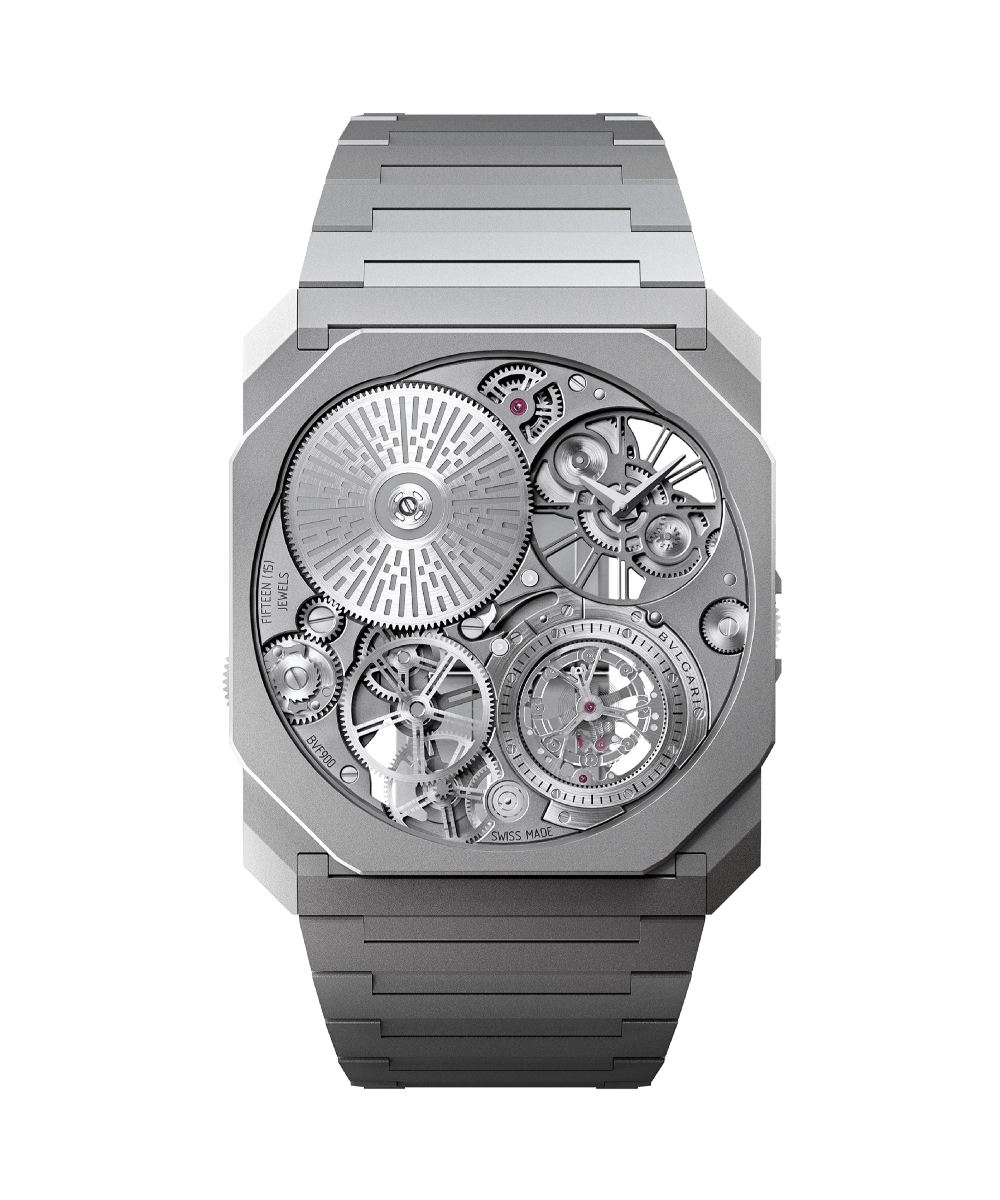
Beyond its ultra-thin watchmaking statements, the Bulgari Octo Finissimo Ultra Tourbillon takes a structurally essentialist approach to the regulatory mechanism, integrating the tourbillon into its movement while using skeletonisation to minimise space and maximise light diffusion through the dial and movement itself. Here, the tourbillon is a natural part of the movement’s structure rather than an embellishment.
Mechanical Exception Watch: Greubel Forsey Nano Foudroyante
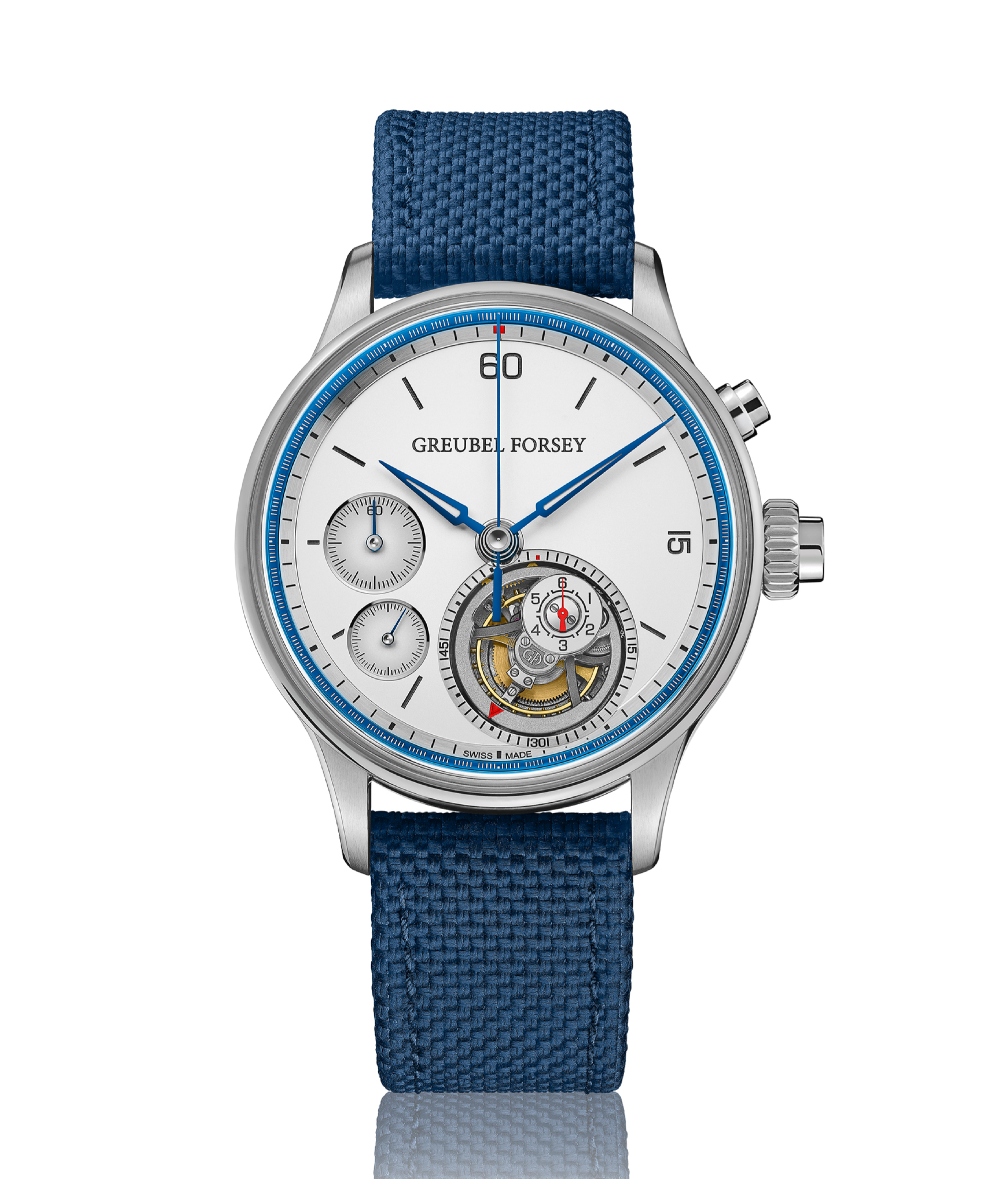
The relatively classic appearance of the white gold Greubel Forsey Nano Foudroyante belies the mechanics within. The result of several years of research, this timepiece is based on nanomechanics; the control of energy at the nanojoule scale inside a mechanical movement. The eponymous complication uses just 16 nanojoules per jump (compared to 30 microjoules in traditional movement designs) and is integrated into the manufacture’s first flying tourbillon. The Nano Foudroyante divides each second into six segments using a lightweight, red-treated hand that rotates once per second, driven directly by the oscillations of the 3 Hz balance wheel. Instead of a traditional gear train, a series of low-inertia wheels efficiently distributes energy through the movement.
Chronograph Watch: Angelus Chronographe Télémètre Yellow Gold
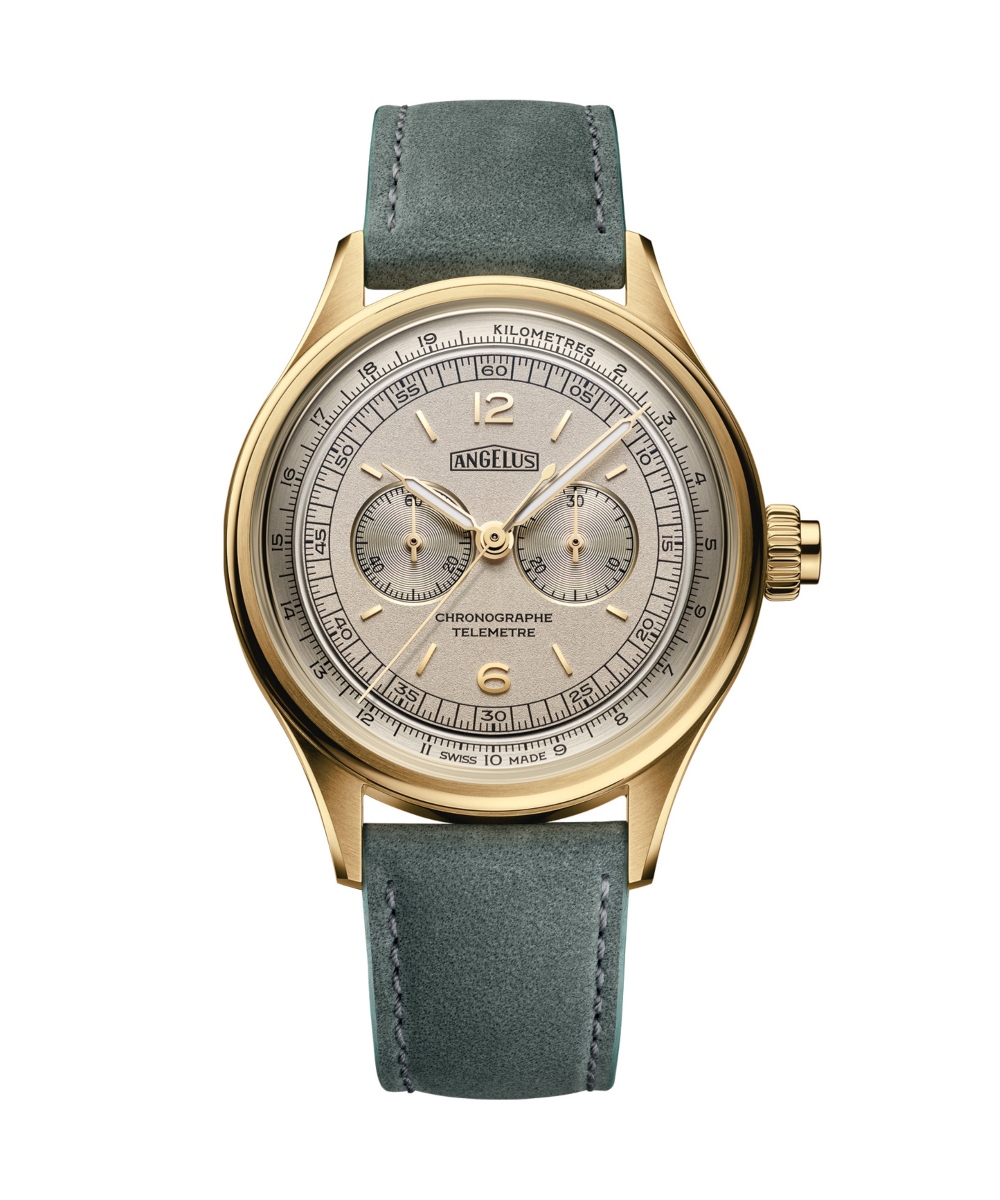
Founded in Le Locle in 1891, Angelus specialised in alarm clocks, minute repeaters, and chronographs. The latter takes shape here, with a 37mm yellow gold case surrounding an elegant grained dial. The Chronographe Télémètre has a telemeter scale which allows for the distance of events to be measured using the chronograph function. It’s powered by the in-house calibre A5000, a manually wound movement with an integrated mono-pusher.
Sports Watch: Chopard Alpine Eagle 41 SL Cadence 8HF
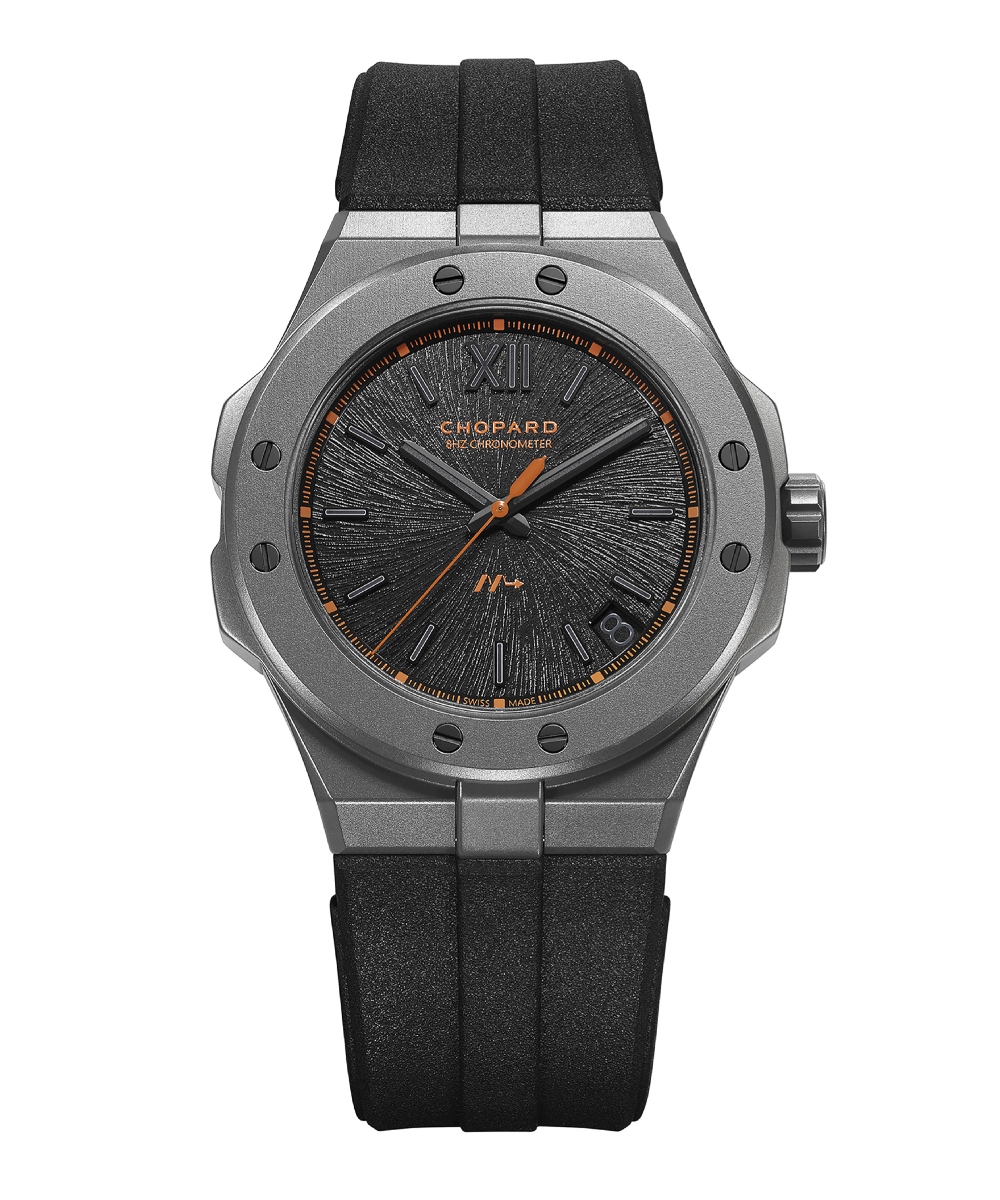
First released in 2019 as a fresh take on the archival St. Mortiz collection, Chopard’s Alpine Eagle line has been continually iterated and refreshed. Here, the 41mm ceramisised titanium timepiece took home the Sports Watch prize for its high-frequency, chronometer-certified calibre 01.14-C, an automatic movement beating at a rate of 8Hz. The high beat rate was made possible through the use of monocrystalline silicon, a lightweight, self-lubricating material used to minimise the high friction experienced by the pallet-lever, escape-wheel, and impulse pin.
Jewellery Watch Prize: Dior La D de Dior Buisson Couture
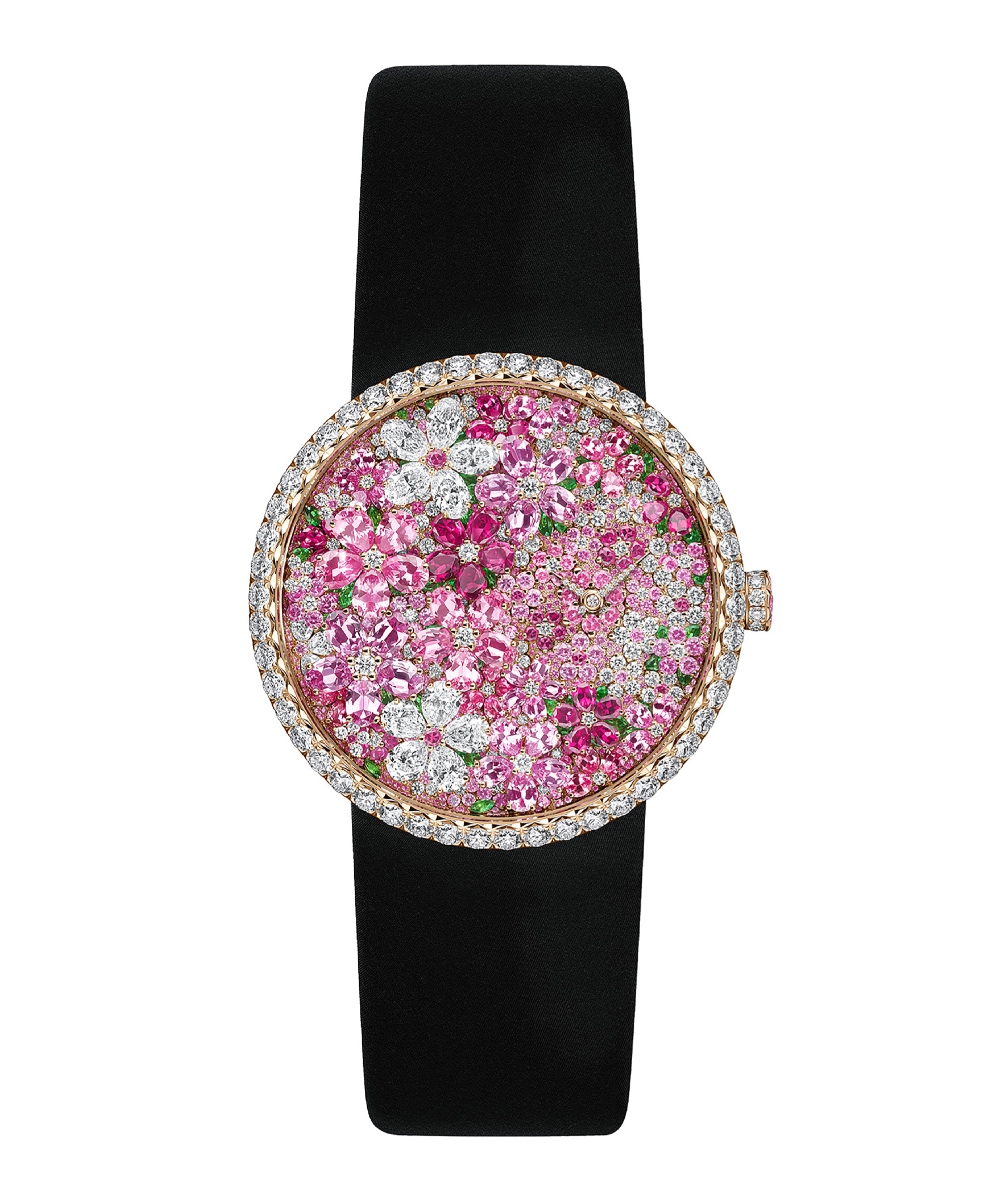
A horological extension of Dior’s Les Jardins de la Couture High Jewelery collection, devised by Victoire de Castellane, creative director of jewellery at Dior, the La D de Dior Buisson Couture timepiece is an ode to Monsieur Dior’s love of gardens and flowers. Each gemstone acts as a petal, with diamonds, pink sapphires, and tsavorite coming together to form a lush bouquet on the dial. Time-telling fades into the background, with the diamond-set hands of the off-centre time-indication at 3 o’clock almost completely disappearing into the dial.
Artistic Crafts Watch: Voutilainen 28GML SOUYOU
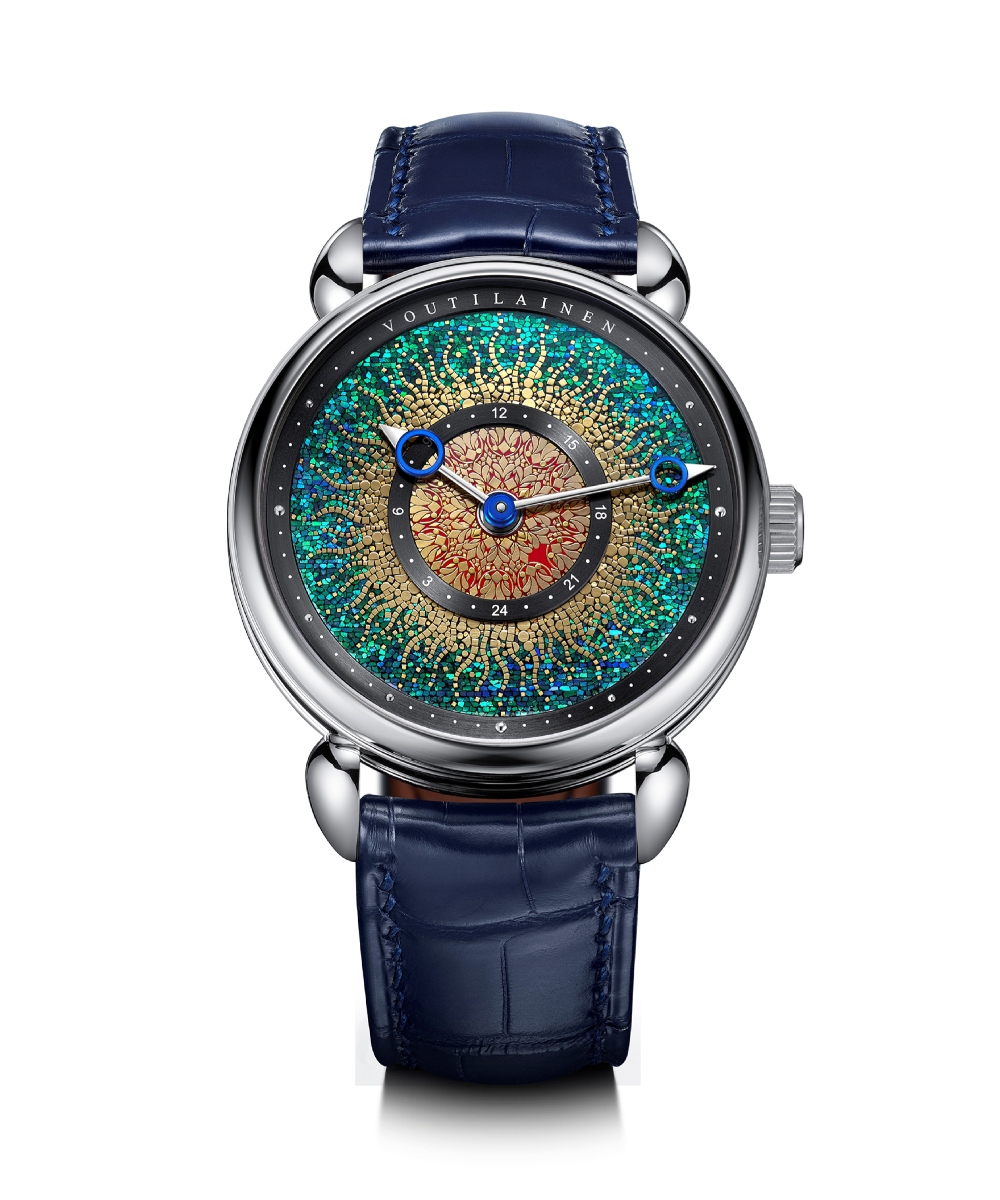
‘SOUYOU’ (蒼陽) is a coined word that reflects the contrast between blue, green, gold, and red colours. According to Voutilainen watches, ‘SOU’ (蒼) is reflected through the deep, clear blue-green hues on the outer part of the dial, intended to evoke the sea, while ‘YOU’ (陽) symbolises solar energy through the organic forms of gold and red in the centre.
Executed by Japanese lacquer artist Tatsuo Kitamura, the Voutilainen 28GML SOUYOU incorporates raw materials such as Urushi (tree sap), Kinpun (gold powders), Kirigane (cut gold sheets), and Kirigai (cut shell from New Zealand abalone and the great green turban).
The 39mm platinum timepiece houses the manufacture calibre 28GML, with the manually wound movement designed, developed, and crafted at the Voutilainen workshop. The GPHG recognised the Voutilainen 28GML SOUYOU for its blend of eastern and western influences, as well as its aesthetic and mechanical excellence.
‘Petite Aiguille’ Watch: M.A.D.Editions M.A.D.2 Green
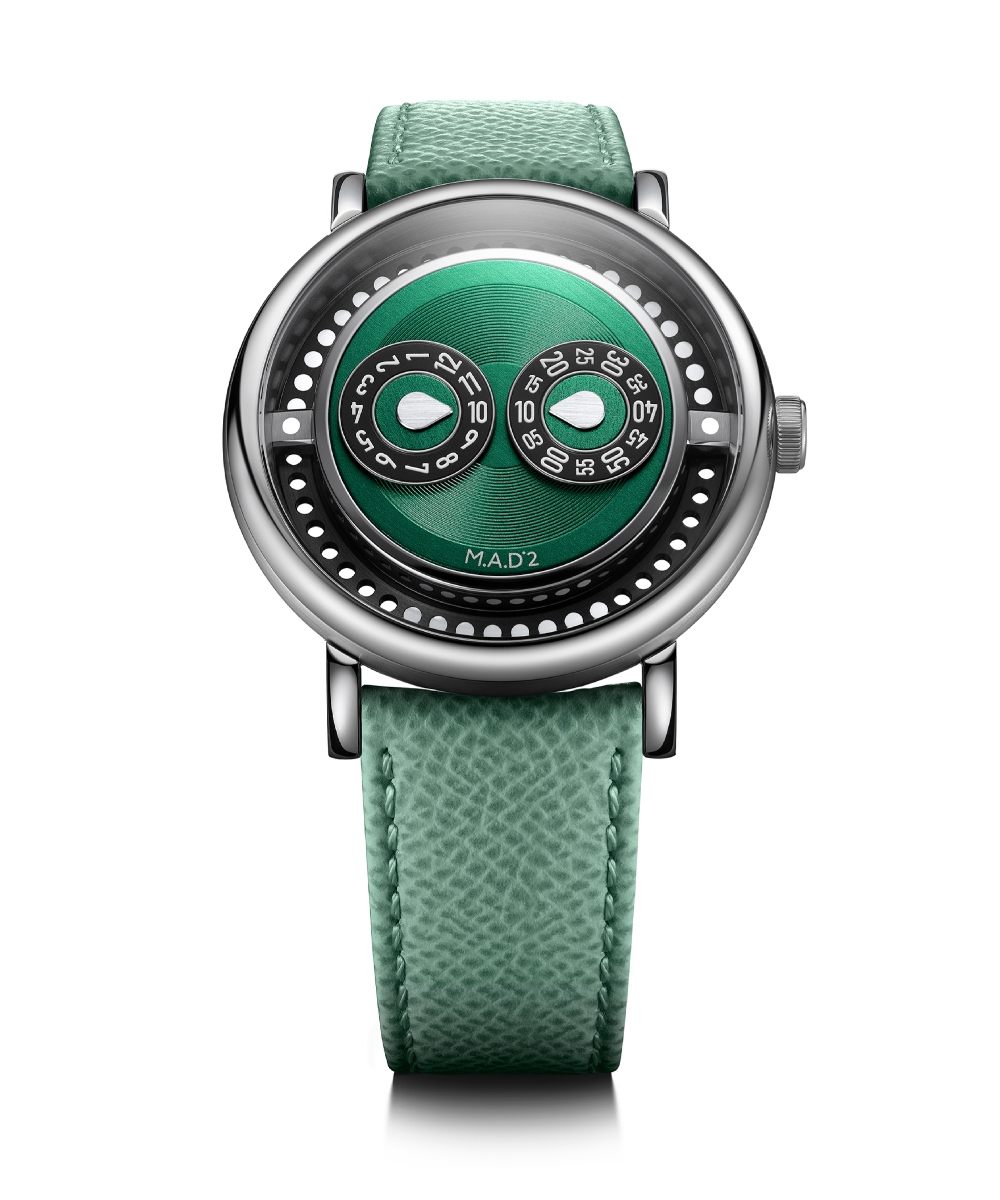
Designed by MB&F collaborator and designer Eric Giroud, the M.A.D.Editions M.A.D.2 Green takes it back to the 1990s, with the timepiece inspired by club culture. The bicompax layout’s raised central subdials (displaying the hours and minutes, respectively) reference a DJ’s turntable and hover above a snailed central dial that mimics vinyl textures. Adding to the fun is that the M.A.D.Editions M.A.D.2 Green houses a jumping hour complication; while not visible upon first glance, the guitar pick-shaped hands indicate the jumping hours and dragging minutes at the centre of the dial.
Challenge Watch: Dennison ALD Natural Stone Tiger Eye In Gold
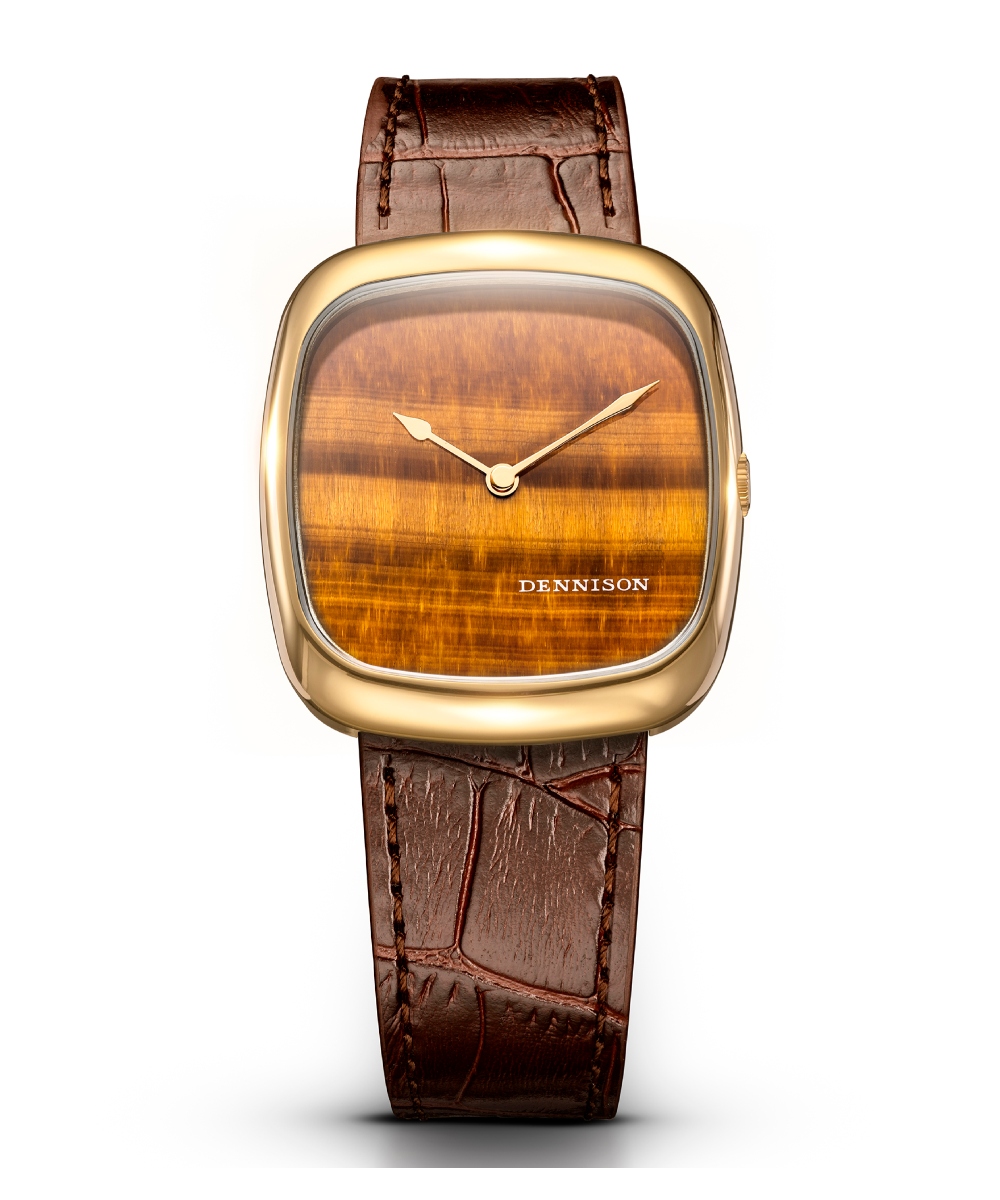
Part of revived brand Dennison’s ALD collection—recognisable by its 37mm x 33.5mm cushion-shaped case—the ALD Natural Stone Tiger Eye In Gold is crafted from gold PVD stainless steel, with its minimalist time-only approach allowing its natural stone dials to shine.
Mechanical Clock: L’Epée 1839 Albatross L’Epée 1839 X MB&F
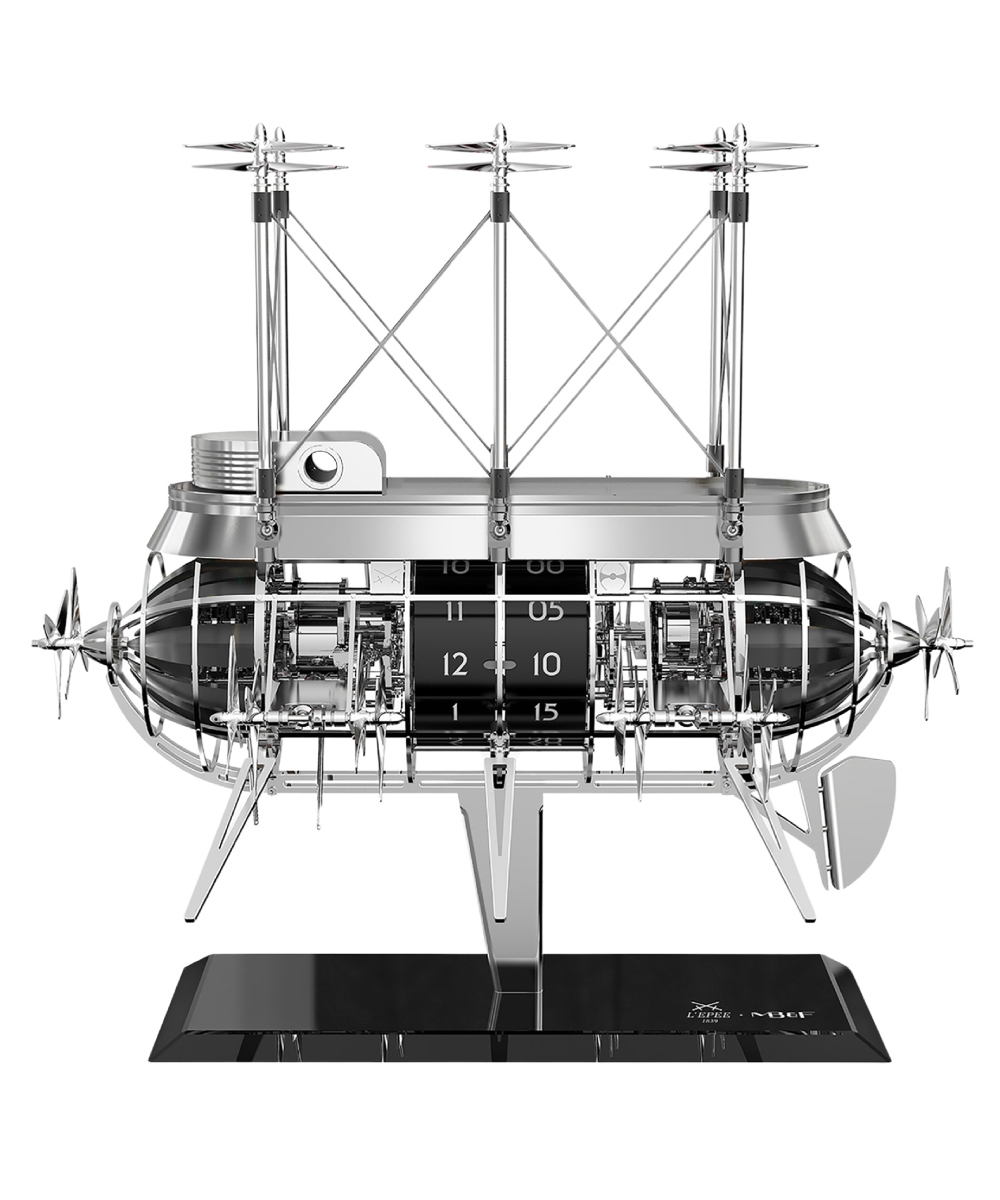
The first ‘propeller hour’ clock ever created, the L’Epée 1839 Albatross L’Epée 1839 X MB&F features a striking hour function that both the specific hours on the hour and a single strike on the half-hour, as well as an automation comprising 16 pairs of propellers that launch into action every hour. A mechanical computer allows the owner to choose between full operation . A mechanical computer lets the owner choose between full operation mode, full quiet mode, silent mode with the propellers running, or just the chime.
The mechanical clock was conceived by designer Eric Meyer, who drew inspiration from the ‘Albatross’ airship in Jules Verne’s novel Robur the Conqueror, as well as Verne’s overarching fascination with flight, rockets, and hot air balloons.
Audacity Prize: Fam Al Hut Mark 1 Möbius
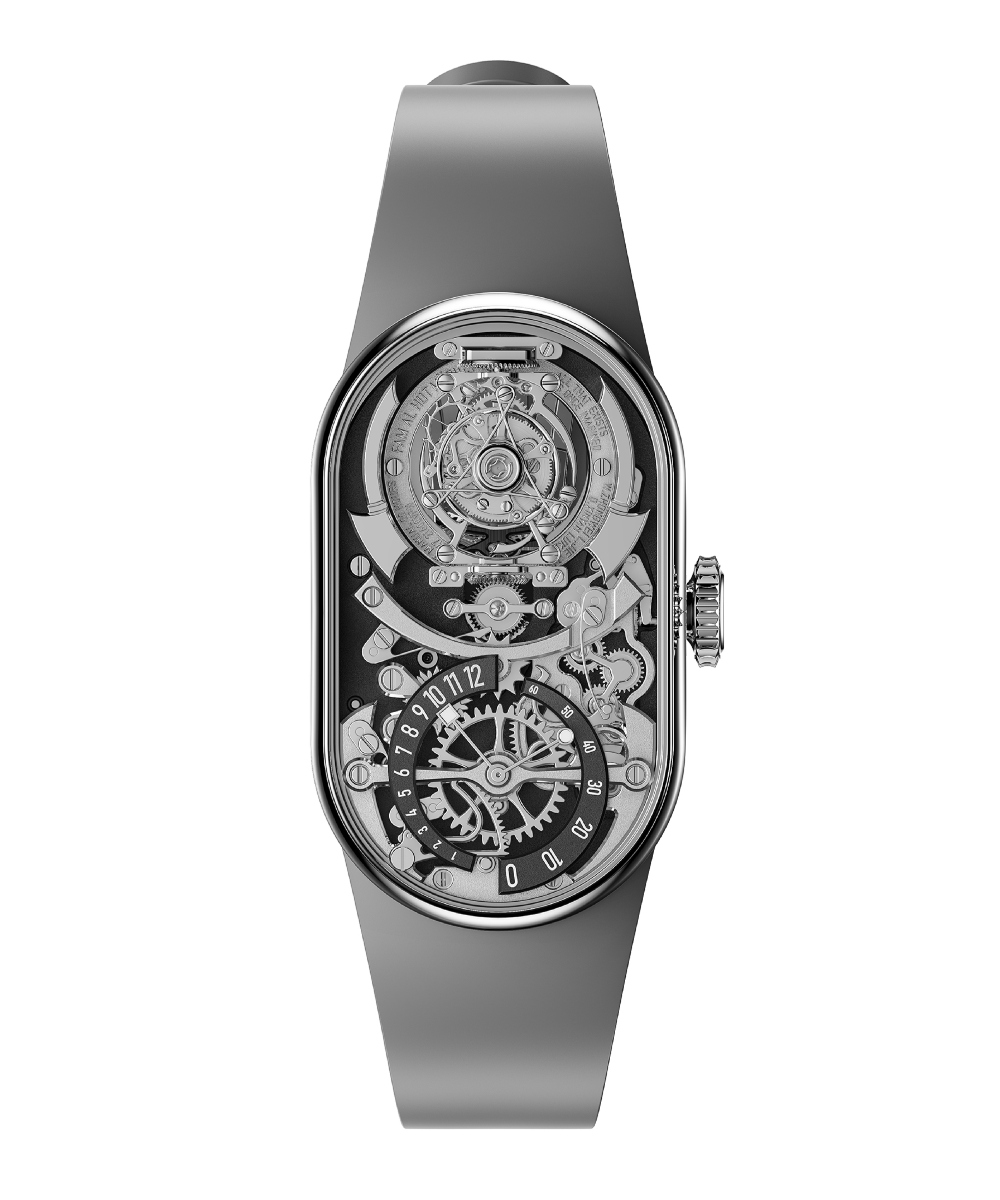
This year, the Audacity Prize goes to Chinese watch brand Fam Al Hut. The brand’s debut Mark 1 Möbius sees an in-house bi-axis tourbillon housed within a strikingly compact ellipse case, measuring just 42.2mm x 24.3mm. The skeletonised capule-style movement capsule-style movement unfolds like a miniature mechanical city, with its layered appearance creating visual interest. Despite its mechanical complexity, time-telling is intuitive and its ergonomic slightly concave case design means it’s comfortable on the wrist.
Horological Revelation Prize: Anton Suhanov St. Petersburg Easter Egg Tourbillon Clock
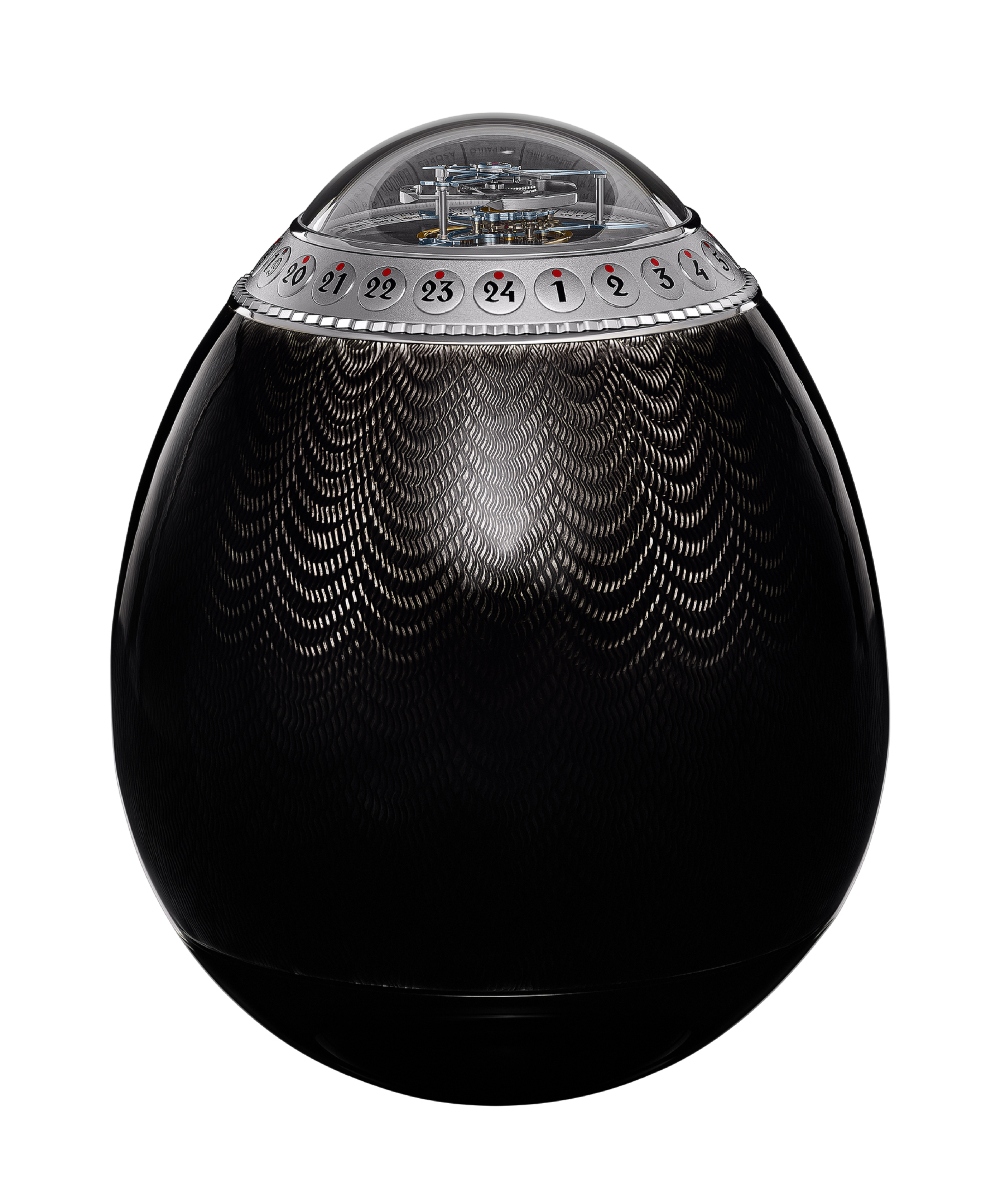
Independent watchmaker Anton Suhanov takes home the Horological Revelation prize for his innovative blend of tradition and modernity. Nodding to Carl Fabergé’s Easter egg objects, the St. Petersburg Easter Egg Tourbillon Clock is both restrained in its aesthetically minimalist design, yet unabashed in its technical mastery. Bestowing the Easter egg clock with a modern outlook, Suhanov’s design comprises three main parts: a base made of mirror-polished stainless steel, the main ‘shell’ made of a hand-guilloched silver case decorated with translucent hot enamel, and a domed sapphire crystal placed above the tourbillon and time displays. The only component slightly distrupting the smooth egg is the notched bezel, which allows the seconds to be measured by the tourbillon. The clock itself has a world time function, with the sector with the local time of Moscow (and St. Petersburg) hihglighted by a subtle radial brushing that contrasts with the smooth surface of th other 23 sectors of the city disc.
Chronometry Prize: Zenith G.F.J. Calibre 135
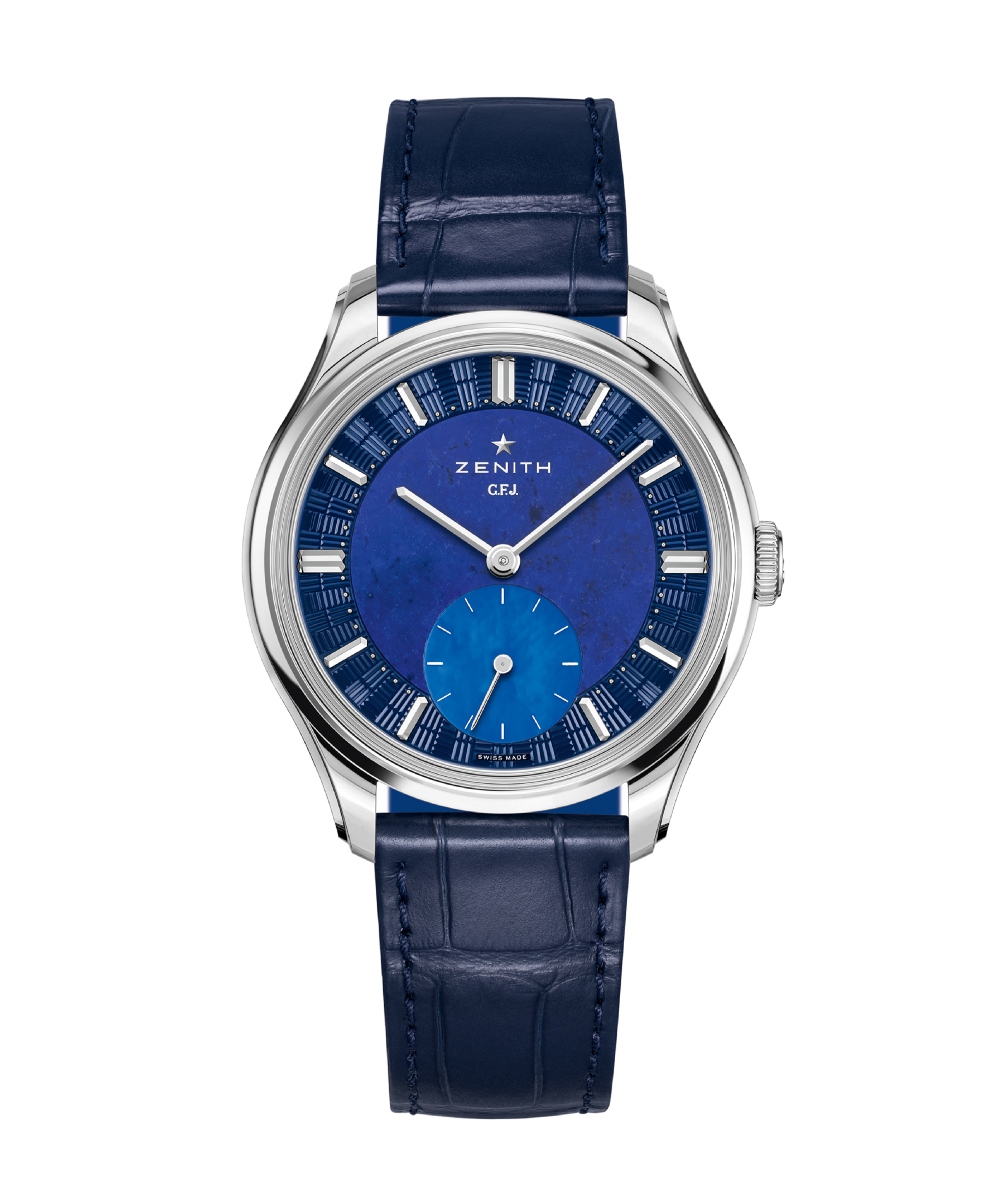
A boastful revival of Zenith’s calibre 135, the G.F.J. Calibre 135 is inspired by the maison’s founder Georges Favre-Jacot’s quest for precision. Nodding to the movement that swept up prizes at chronometry competitions at the Observatories of Neuchâtel, Geneva, Kew Teddington, and Besançon, the G.F.J. Calibre 135 pairs the dimensions, aesthetic, and architecture of its predecessor with modern re-engineering and materials, allowing for a 72-hour power reserve (up from 40 hours in the 1950s) and increased efficiency. It’s presented here within a refined 39.15mm platinum case, topped with a lapis lazuli dial.
Who selects the Grand Prix d’Horlogerie de Genève (GPHG) winners?
There are two primary ways to enter a timepiece in the Grand Prix d’Horlogerie de Genève. Either the GPHG Academy invites brands to enter a specific model into a category or a brand can enter a timepiece themselves. For the former, the brands will then decide whether or not to confirm the entries of the proposed models and may enter other timepieces for the competition. There is an entrance fee of $800CHF per timepiece.
The winners are decided by a jury of 30 academy members, comprising journalists and editors, industry executives, watchmakers, collectors, and experts. This year, the jury is led by British historian and luxury journalist Nick Foulkes, who authored the coffee table book The Impossible Collection of Watches.
Words by Theo Rosen